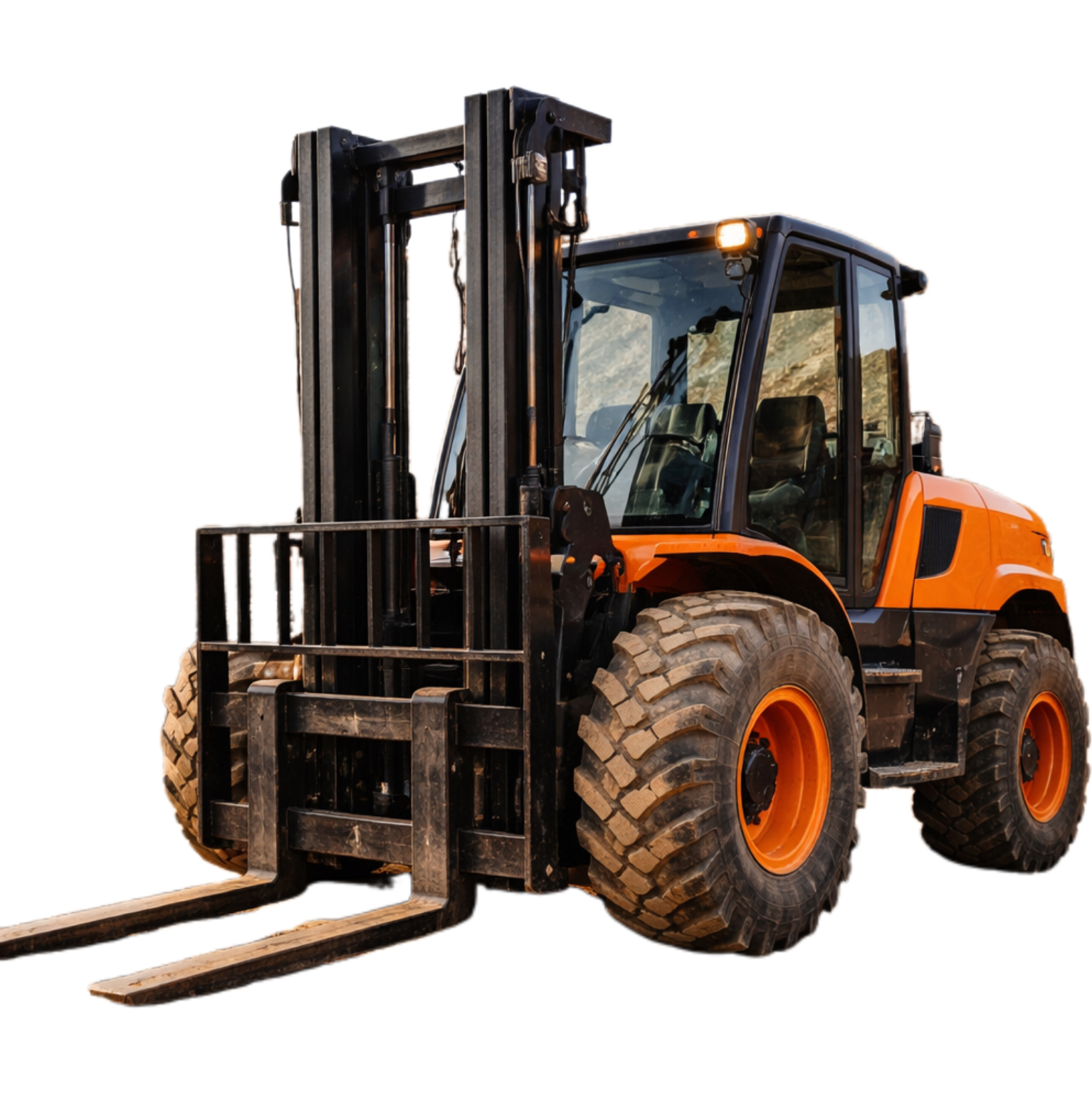


Electric Forklifts in Automated Warehouses: Perfect Collaboration with Automation Systems
Automated warehouses (also known as stereoscopic warehouses) have become the core infrastructure for modern logistics and manufacturing with their advantages of high space utilization, efficient operation, and reduced manual intervention. In such warehouses, the material handling link relies heavily on the collaborative operation of automation equipment, among which electric forklifts, as flexible and efficient handling tools, play an irreplaceable role in connecting automated storage systems (AS/RS), conveyor lines, and other equipment. Unlike traditional warehouses, automated warehouses have strict requirements for the accuracy, real-time performance, and data interactivity of material handling equipment. How to realize the perfect collaboration between electric forklifts and automation systems (such as WMS, WCS, AGV) has become a key factor in improving the overall operational efficiency of automated warehouses. This article will deeply analyze the collaborative logic between electric forklifts and automation systems in automated warehouses, elaborate on targeted application strategies, and help enterprises maximize the value of automated logistics operations.
I. Core Characteristics and Material Handling Pain Points of Automated Warehouses
Automated warehouses are characterized by high-rise shelves (usually 10-30 meters), dense storage layouts, and full-process automated operation, which bring unique challenges to material handling:
High Requirements for Handling Accuracy: The storage and retrieval of goods in high-rise shelves require millimeter-level positioning accuracy of handling equipment. Any deviation may lead to collision with shelves or goods damage, affecting the normal operation of the automated system.
Strict Real-Time Collaboration Requirements: Automated warehouses rely on the coordinated operation of multiple equipment (AS/RS, conveyor lines, electric forklifts). The material handling rhythm of electric forklifts must be highly consistent with the operation rhythm of other automation equipment. Any delay will cause bottlenecks in the entire logistics chain.
Complex Data Interactivity Requirements: The handling process needs to realize real-time data sharing between electric forklifts and automation systems, including task assignment, position information, goods status, and equipment operation status. The lack of effective data interaction will lead to information islands and reduce the automation level of the warehouse.
High Requirements for Equipment Flexibility: Although automated warehouses are highly automated, they still face scenarios such as special goods handling, equipment maintenance, and emergency disposal that require flexible intervention. Rigid automation equipment (such as fixed conveyor lines) cannot meet these needs, requiring electric forklifts with strong flexibility.
II. Why Electric Forklifts Are the Core Collaborative Equipment for Automated Systems?
In automated warehouses, electric forklifts have inherent advantages in matching the needs of automation systems compared with traditional fuel-powered forklifts and other handling equipment, which are the key reasons for their wide application:
1. Precise Control and Easy Integration with Automation Systems
Electric forklifts are driven by motors and controlled by electronic systems, which can achieve precise control of traveling speed, lifting height, and steering angle (positioning accuracy up to ±5mm). At the same time, the electronic control system of electric forklifts is easy to connect with automation systems (WMS, WCS) through communication interfaces (such as Ethernet, CAN bus), realizing real-time data interaction and automatic task execution.
2. Low Noise and Zero Emissions, Adapting to Closed Automated Warehouses
Automated warehouses are usually closed to ensure the stable operation of automation equipment and the safety of goods. Fuel-powered forklifts emit exhaust gases and generate high noise during operation, which will pollute the warehouse environment and interfere with the operation of precision automation equipment. Electric forklifts have zero exhaust emissions and low operating noise (≤70dB), which can maintain a clean and quiet warehouse environment and ensure the stable operation of the entire automation system.
3. Diverse Models and Strong Adaptability to Automated Warehouse Scenarios
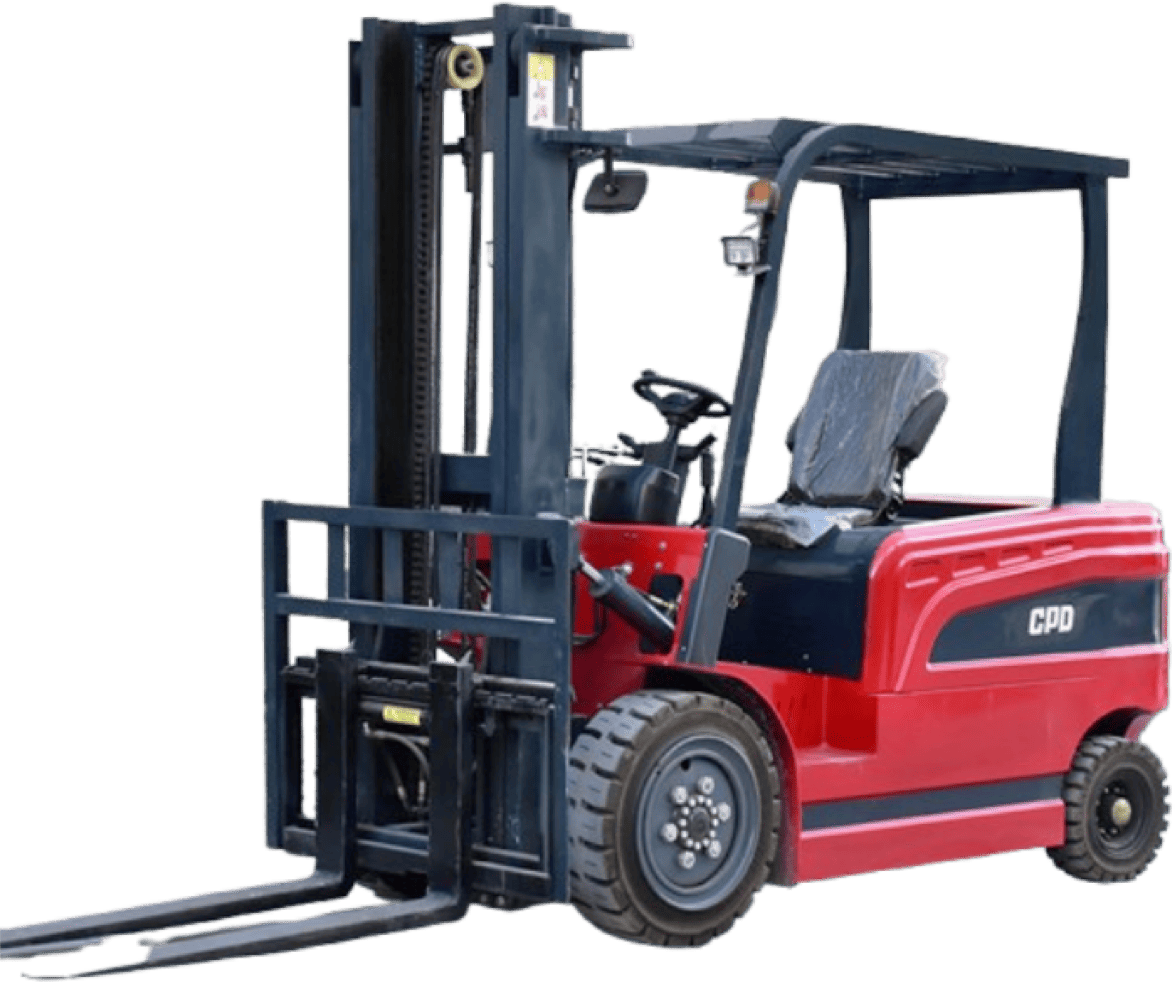
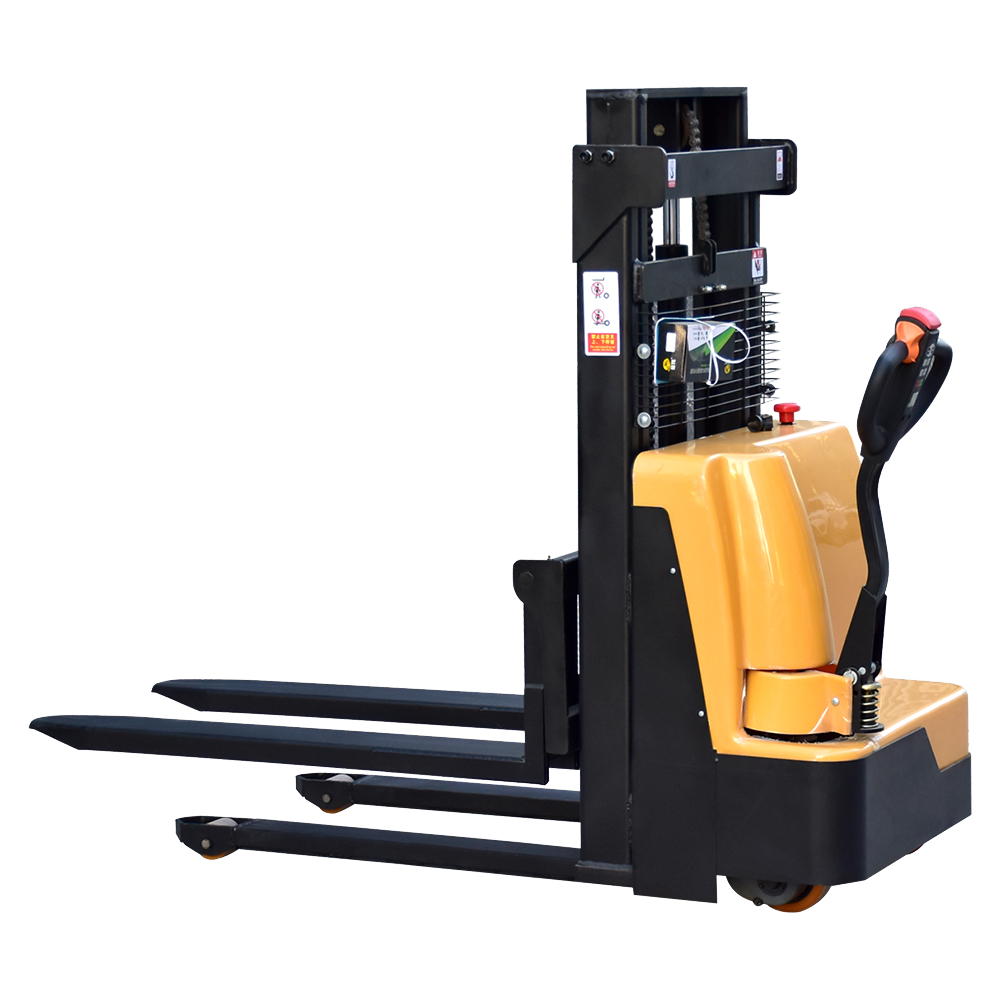
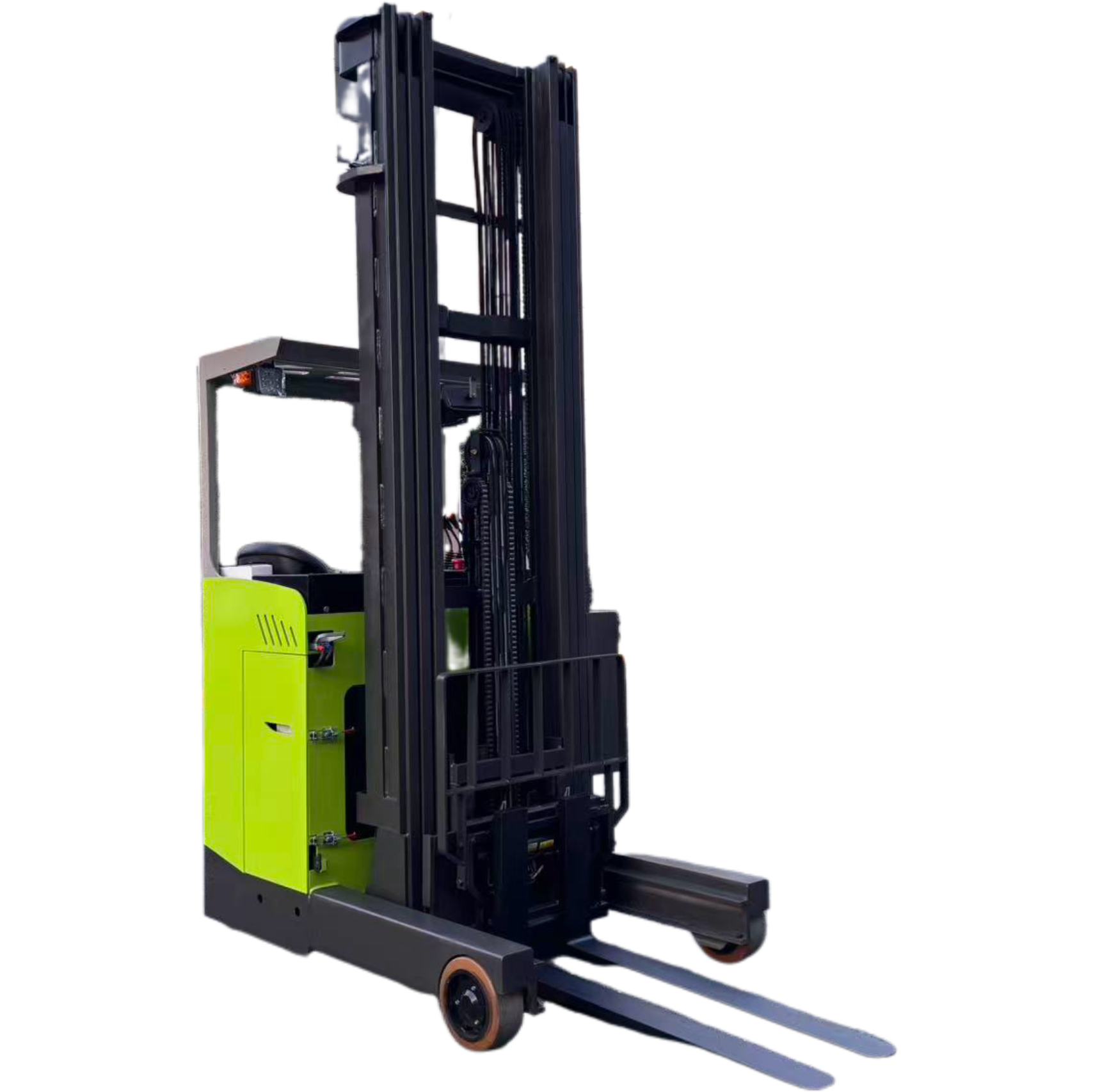
Electric forklifts have a variety of models suitable for automated warehouses, such as narrow-aisle three-way stackers (suitable for high-rise narrow-aisle shelves), reach trucks (suitable for medium and high-rise shelves), and electric pallet trucks (suitable for short-distance transfer between conveyor lines). These models can be targeted to deploy according to the layout of automated warehouses and the characteristics of goods, making up for the lack of flexibility of rigid automation equipment.
4. Stable Operation and Low Failure Rate, Ensuring Continuous Collaboration
The structure of electric forklifts is simpler than that of fuel-powered forklifts, with fewer wearing parts and a failure rate 40%-60% lower than that of fuel-powered forklifts. In automated warehouses that require 24-hour continuous operation, the stable operation of electric forklifts can ensure the continuity of collaborative operations with automation systems, avoiding the interruption of the entire logistics chain caused by equipment failure.
Key Collaborative Insight: The core value of electric forklifts in automated warehouses lies in "flexible connection". They can not only execute tasks assigned by automation systems in an automated manner but also flexibly intervene in special scenarios, forming a "rigid automation + flexible handling" collaborative mode that maximizes the operational efficiency of the warehouse.
III. Core Logic and Strategies: Realizing Perfect Collaboration Between Electric Forklifts and Automation Systems
To realize the perfect collaboration between electric forklifts and automation systems, enterprises need to build a "three-layer collaborative system" covering equipment layer, system layer, and operation layer. The specific strategies are as follows:
1. Equipment Layer: Select and Transform Electric Forklifts for Automation Collaboration
The premise of collaboration is that electric forklifts have the hardware conditions for connecting with automation systems. Enterprises need to select and transform models in a targeted manner:
Automated Warehouse Scenario | Recommended Electric Forklift Configuration | Core Collaborative Hardware |
|---|---|---|
High-rise shelf storage and retrieval (10-30 meters) | Narrow-aisle three-way stacker (electric) | High-precision laser positioning module; height sensor (accuracy ±2mm); WCS system communication interface |
Medium and high-rise shelf handling (5-10 meters) | Electric reach truck | GPS/Beidou positioning module; automatic steering system; goods detection sensor |
Transfer between conveyor lines and shelves | Automatic guided electric pallet truck | Magnetic navigation/laser navigation module; automatic docking device; task execution terminal |
Special goods handling (fragile, oversized goods) | Customized electric forklift (with shock absorption, anti-slip functions) | Pressure sensor; anti-collision radar; real-time video monitoring module |
2. System Layer: Build a Unified Data Interaction Platform
The key to collaboration is real-time and accurate data interaction between electric forklifts and automation systems. Enterprises need to build a unified data interaction platform based on WMS (Warehouse Management System) and WCS (Warehouse Control System):
Task Assignment and Scheduling by WCS System: The WCS system, as the "brain" of the automated warehouse, receives order information from the WMS system, decomposes it into specific handling tasks, and assigns them to electric forklifts and other automation equipment in real time. For example, when the WMS system issues a "goods outbound" order, the WCS system will assign the task of retrieving goods from the high-rise shelf to the three-way stacker, and the task of transferring the goods to the conveyor line to the electric pallet truck, realizing coordinated task execution.
Real-Time Data Sharing: Electric forklifts upload real-time operation data (position, speed, load, battery status, task completion progress) to the WCS system through the communication interface. The WCS system synchronizes the data to the WMS system, which updates the goods inventory and order status in real time. At the same time, the WCS system can adjust the task schedule according to the real-time status of electric forklifts (such as dispatching nearby idle forklifts to handle urgent tasks).
Abnormal Alarm and Emergency Handling: Set up abnormal operation thresholds (such as deviation from the planned path, overload, low battery) in the WCS system. When the electric forklift triggers the threshold, the system will send an alarm to the control center and the forklift operator in real time. For minor abnormalities, the system can automatically adjust the task (such as guiding the forklift to return to the correct path); for major abnormalities (such as equipment failure), the system will assign maintenance personnel to handle it in time, ensuring the stable operation of the collaborative system.
3. Operation Layer: Optimize Scheduling and Maintenance to Ensure Collaborative Efficiency
Scientific operation and maintenance management can further improve the efficiency and stability of collaboration between electric forklifts and automation systems:
Intelligent Scheduling Optimization: Based on the real-time data of the WCS system, optimize the handling path of electric forklifts to avoid path conflicts and idle waiting. For example, the system can calculate the shortest path for each forklift through algorithms, and prioritize the assignment of tasks with the same direction to reduce backtracking. Data shows that intelligent scheduling can improve the handling efficiency of electric forklifts by 20%-30%.
Battery Management for Uninterrupted Operation: For 24-hour continuous operation of automated warehouses, deploy a battery replacement station and backup batteries. The WCS system monitors the battery status of electric forklifts in real time. When the power is lower than 30%, the system will automatically assign the task of returning to the battery replacement station to the forklift. The battery can be replaced in 5-10 minutes to realize "uninterrupted operation". At the same time, use valley electricity prices to charge backup batteries, reducing energy costs.
Collaborative Maintenance System: Integrate the maintenance information of electric forklifts into the WCS system. The system records the operation time, failure history, and maintenance cycle of each forklift, and sends maintenance reminders to the maintenance team in advance (such as reminding to replace vulnerable parts after 1000 hours of operation). Regularly calibrate the positioning module and sensors of electric forklifts to ensure the accuracy of collaborative operation. The monthly maintenance cost of each electric forklift is about 1,000-1,800 RMB, which can reduce the failure rate by 70%.
IV. Case Study: How an Automated Logistics Warehouse Realizes Perfect Collaboration Between Electric Forklifts and Automation Systems
A large-scale e-commerce automated logistics warehouse has a storage height of 20 meters, 50,000 storage locations, and adopts AS/RS, conveyor lines, and other automation equipment. Previously, it faced problems such as poor collaboration between manual-operated forklifts and automation systems, low handling efficiency, and high error rates. Through the following transformation measures, it realized efficient collaborative operation:
Deployed 12 electric forklifts for automation collaboration: 6 narrow-aisle three-way stackers (for high-rise shelf storage and retrieval), 4 electric reach trucks (for medium-rise shelf handling), and 2 automatic guided electric pallet trucks (for transfer between conveyor lines).
Built a unified data interaction platform based on WMS and WCS systems, realizing real-time task assignment, data sharing, and abnormal alarm between electric forklifts and automation systems.
Set up 3 battery replacement stations and 24 backup batteries, and the WCS system automatically schedules battery replacement to ensure 24-hour uninterrupted operation of electric forklifts.
Established a collaborative maintenance system, and the WCS system automatically records the operation data of electric forklifts and sends maintenance reminders. Professional maintenance personnel conduct monthly calibration and maintenance of the forklifts.
Result: After the transformation, the overall operational efficiency of the automated warehouse increased by 50%, the order fulfillment time was shortened from 4 hours to 1.5 hours, and the goods handling error rate decreased from 0.5% to 0.05%. The annual labor cost savings reached 800,000 RMB, and the energy cost savings reached 200,000 RMB compared with the original manual operation mode.
V. Common Pitfalls to Avoid in the Collaboration Between Electric Forklifts and Automation Systems
Many enterprises easily fall into misunderstandings when building the collaborative system between electric forklifts and automation systems, leading to reduced efficiency and increased costs. The following four pitfalls need to be avoided:
Misunderstanding 1: Ignoring Equipment Compatibility: Purchasing electric forklifts and automation systems from different suppliers without confirming the compatibility of communication interfaces, resulting in failure to realize data interaction. Enterprises should unify the technical standards of equipment and choose suppliers that can provide integrated solutions.
Misunderstanding 2: Over-Reliance on Automation and Neglecting Flexible Intervention: Blindly pursuing full automation and deploying a large number of rigid automation equipment, ignoring the need for flexible handling of special scenarios (such as emergency goods outbound, equipment maintenance). The lack of electric forklifts with flexible intervention capabilities will lead to operational bottlenecks.
Misunderstanding 3: Neglecting Data Security and Stability: The data interaction between electric forklifts and automation systems lacks security protection measures, leading to data leakage or interference. At the same time, the lack of backup communication channels may cause the collaborative system to crash due to communication failures.
Misunderstanding 4: Lack of Operator Training on Collaborative Operation: Operators are not familiar with the collaborative operation mode of electric forklifts and automation systems, and cannot handle abnormal situations in time (such as system alarms, equipment deviations), leading to reduced collaborative efficiency and even safety risks.
VI. Summary: Electric Forklifts Are the Key Link to Upgrade Automated Warehouse Efficiency
In automated warehouses, the collaborative operation between electric forklifts and automation systems is the core of realizing efficient, accurate, and continuous logistics operations. Electric forklifts, with their advantages of precise control, easy integration, flexibility, and environmental protection, have become the key link connecting various automation equipment, making up for the lack of flexibility of rigid automation systems and maximizing the operational value of automated warehouses.
To realize perfect collaboration, enterprises need to build a three-layer collaborative system covering equipment layer (selecting and transforming collaborative electric forklifts), system layer (building a unified data interaction platform), and operation layer (optimizing scheduling and maintenance). Only in this way can we fully tap the potential of automated logistics and achieve cost reduction and efficiency enhancement.
With the continuous development of intelligent logistics technology (such as 5G, IoT, AI), the collaboration between electric forklifts and automation systems will become more intelligent (such as autonomous navigation, intelligent task prediction). Enterprises should keep up with the technological trend, continuously optimize the collaborative system, and gain a competitive advantage in the fierce market competition.
Our manager will contact you shortly.
To contact you about our products and services.
Copyright © Xingtai Beiqiang Machinery Manufacturing Factory. 2025.
Technical support:Echola