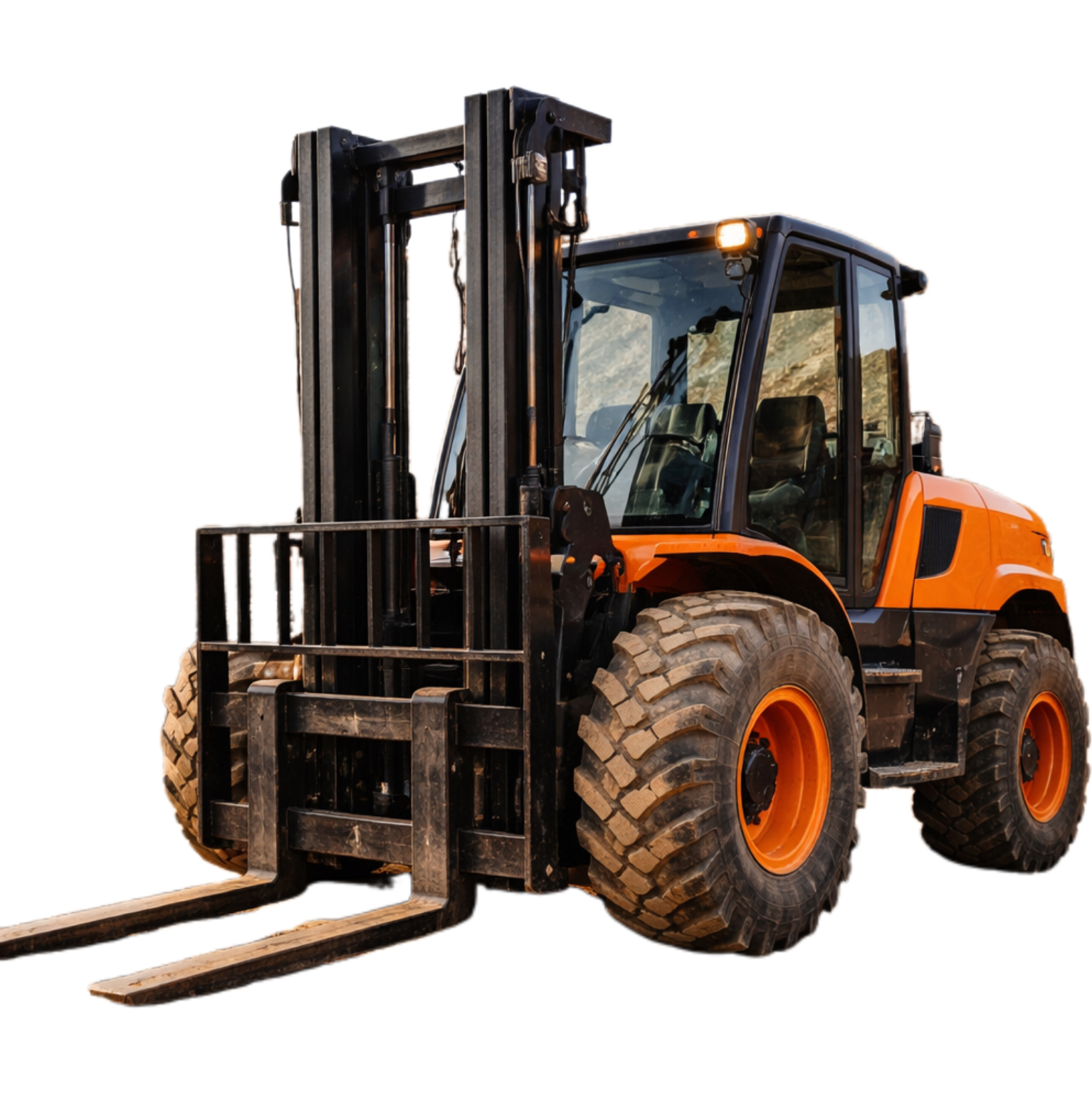


Efficient E-Commerce Warehousing Operations: How Can Electric Forklifts Meet the Challenges of Order Peaks?
For e-commerce enterprises, order peaks (such as Double 11, 618, and year-end promotions) are both opportunities and challenges. During peak periods, order volumes can surge 5-10 times compared to usual, and the requirements for warehousing operations—speed, accuracy, and efficiency—reach the highest level. As the core material handling equipment in warehouses, forklifts directly determine the smoothness of order fulfillment. Traditional fuel-powered forklifts are gradually being replaced by electric forklifts due to issues such as high noise, slow refueling, and environmental pollution. However, how to maximize the value of electric forklifts to cope with the pressure of order peaks has become a key issue for e-commerce SMEs. This article will analyze the core challenges of e-commerce warehousing during order peaks and elaborate on how electric forklifts can break through bottlenecks from five practical dimensions, helping enterprises achieve efficient and low-cost operations.
I. Core Challenges of E-Commerce Warehousing During Order Peaks
Before exploring solutions, it is necessary to clarify the pain points of warehousing operations during peak periods, which is the premise of targeted optimization:
Explosive Growth in Order Volume: A large number of orders require rapid sorting, loading, and unloading, and the handling efficiency of goods directly affects the delivery timeliness. Delays may lead to customer complaints and reputational losses.
High Operational Intensity: Warehousing staff and equipment need to work continuously for a long time (even 24-hour shifts), which puts forward higher requirements for the durability and stability of equipment.
Complex Storage Environment: To maximize space utilization, e-commerce warehouses usually adopt high-rise shelves (5-10 meters), and the handling of goods requires equipment with high lifting stability and narrow-channel maneuverability.
Strict Cost Control Requirements: While ensuring efficiency, enterprises also need to control operational costs (energy consumption, labor, equipment maintenance), and the cost pressure during peak periods is more prominent.
II. Why Electric Forklifts Are the Optimal Choice for Order Peak Response?
Compared with traditional fuel-powered forklifts, electric forklifts have inherent advantages in adapting to e-commerce warehousing order peaks, which are mainly reflected in four aspects:
1. High Efficiency and Fast Response
Electric forklifts are driven by motors, with fast acceleration and smooth operation. The response speed of the operation handle (lifting, tilting, traveling) is within 0.5 seconds, which is 30% faster than that of fuel-powered forklifts. Taking a 2-ton electric forklift as an example, it can complete 8-10 times of goods handling per hour, while the efficiency of fuel-powered forklifts is only 6-7 times. In the scenario of 10,000 orders per day, 5 electric forklifts can complete the handling task that 6-7 fuel-powered forklifts need to undertake, reducing equipment deployment costs.
2. Strong Environmental Adaptability
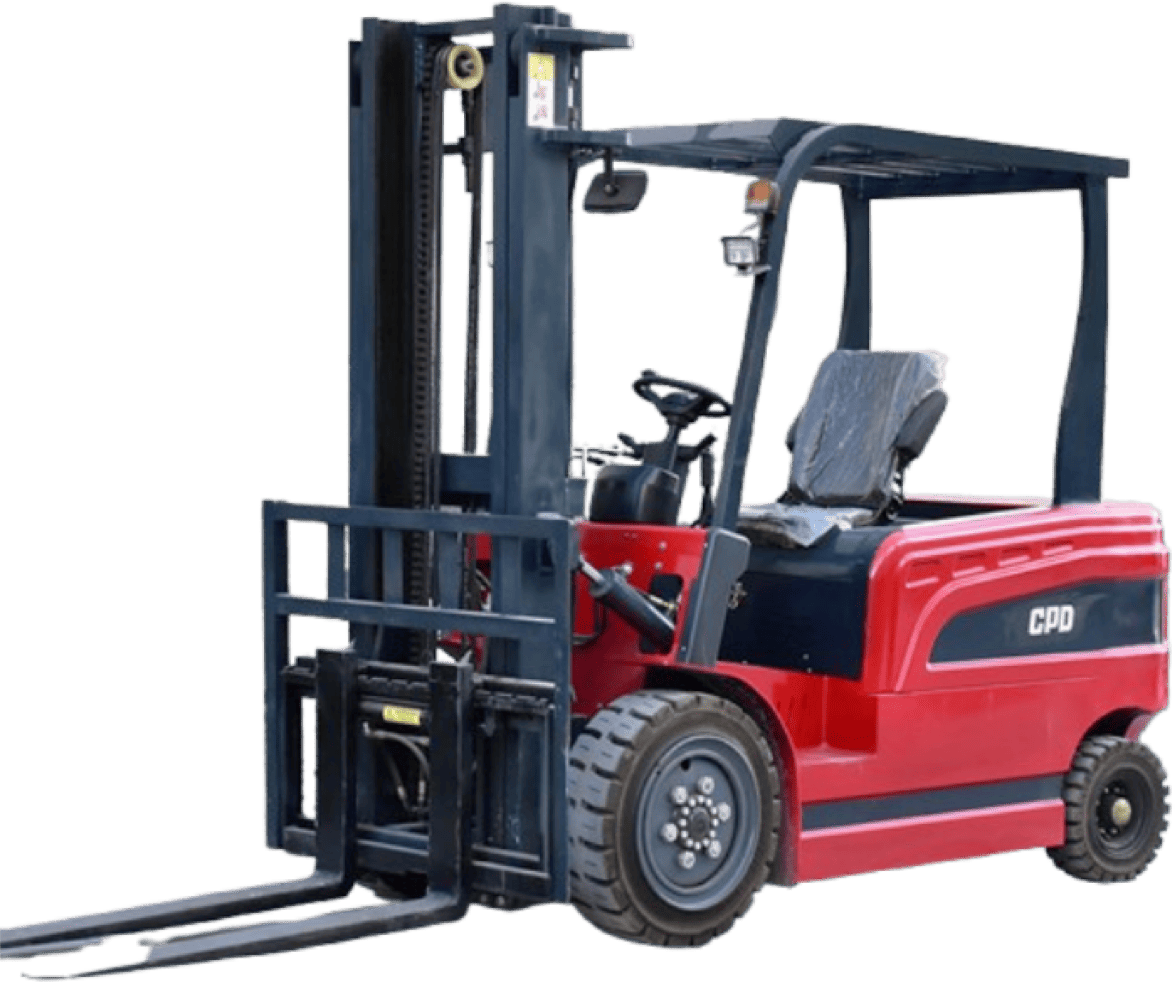
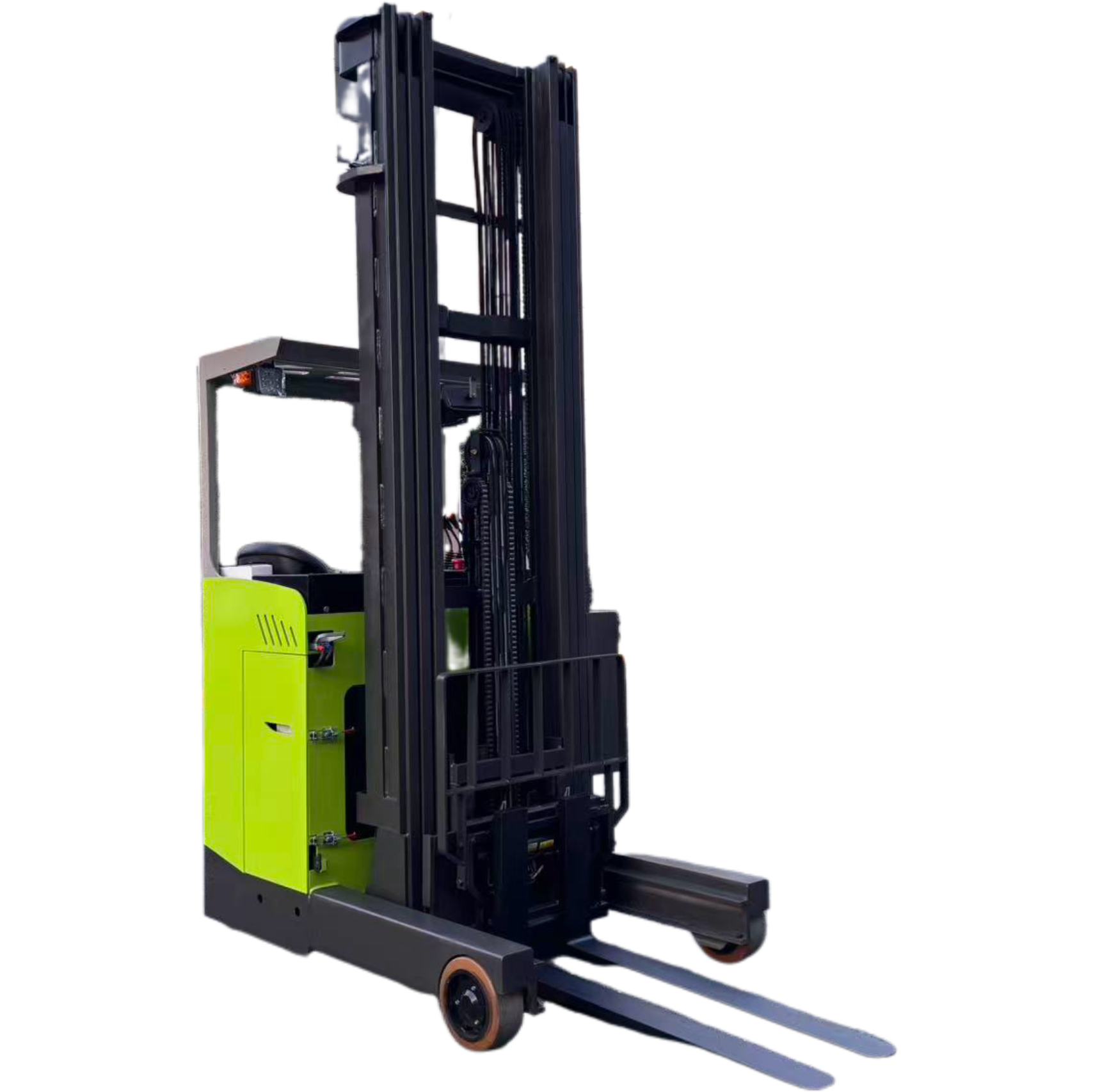
Electric forklifts have no exhaust emissions and low noise (operating noise ≤75dB), which is suitable for closed e-commerce warehouses and avoids air pollution and noise interference to staff. At the same time, there are various models of electric forklifts (narrow-aisle three-way stackers, reach trucks, counterbalanced forklifts) that can adapt to different storage environments: narrow-aisle models (minimum turning radius ≤1.5 meters) are suitable for high-rise shelf warehouses with narrow passages, and reach trucks can easily handle goods on 8-10 meter high shelves, maximizing space utilization.
3. Energy-Saving and Cost-Effective
The energy consumption cost of electric forklifts is only 12%-15% of that of fuel-powered forklifts. During order peaks with long working hours (20 hours/day), a 2-ton lithium battery electric forklift consumes about 60 kWh of electricity per day, with an energy cost of 60 RMB (calculated at 1 RMB/kWh). A fuel-powered forklift of the same tonnage consumes 70 liters of diesel per day, with an energy cost of 490 RMB (calculated at 7 RMB/liter). The daily energy cost can be saved by 430 RMB, and the cost advantage is more obvious during long-term peak operations.
4. Stable and Durable, Low Failure Rate
The structure of electric forklifts is simpler than that of fuel-powered forklifts, with fewer wearing parts (no engine, gearbox, etc.), and the failure rate is 40%-50% lower. During order peaks, the average downtime of electric forklifts due to faults is less than 8 hours, while that of fuel-powered forklifts often exceeds 24 hours due to engine failures, fuel system problems, etc. The stable operation of electric forklifts can effectively avoid the interruption of handling work and ensure the smooth progress of order fulfillment.
III. Practical Strategies for Electric Forklifts to Cope with Order Peaks
To give full play to the advantages of electric forklifts during order peaks, enterprises need to formulate targeted strategies from the aspects of equipment selection, operation management, and maintenance guarantee:
1. Scientific Equipment Selection: Match Models to Scenarios
Different e-commerce warehousing scenarios require different types of electric forklifts. Blind selection will reduce operational efficiency. It is recommended to deploy models in a targeted manner according to the following scenarios:
Warehousing Scenario | Recommended Electric Forklift Model | Core Advantages | Efficiency Improvement Effect |
|---|---|---|---|
High-rise shelf warehouses (5-10 meters) | Reach truck / Three-way stacker | High lifting height (up to 12 meters), stable operation | 30% higher than ordinary forklifts in high-rise goods handling |
Narrow-channel warehouses (passage width ≤2.5 meters) | Narrow-aisle electric forklift | Small turning radius, strong maneuverability | Avoids channel congestion, improves handling frequency by 25% |
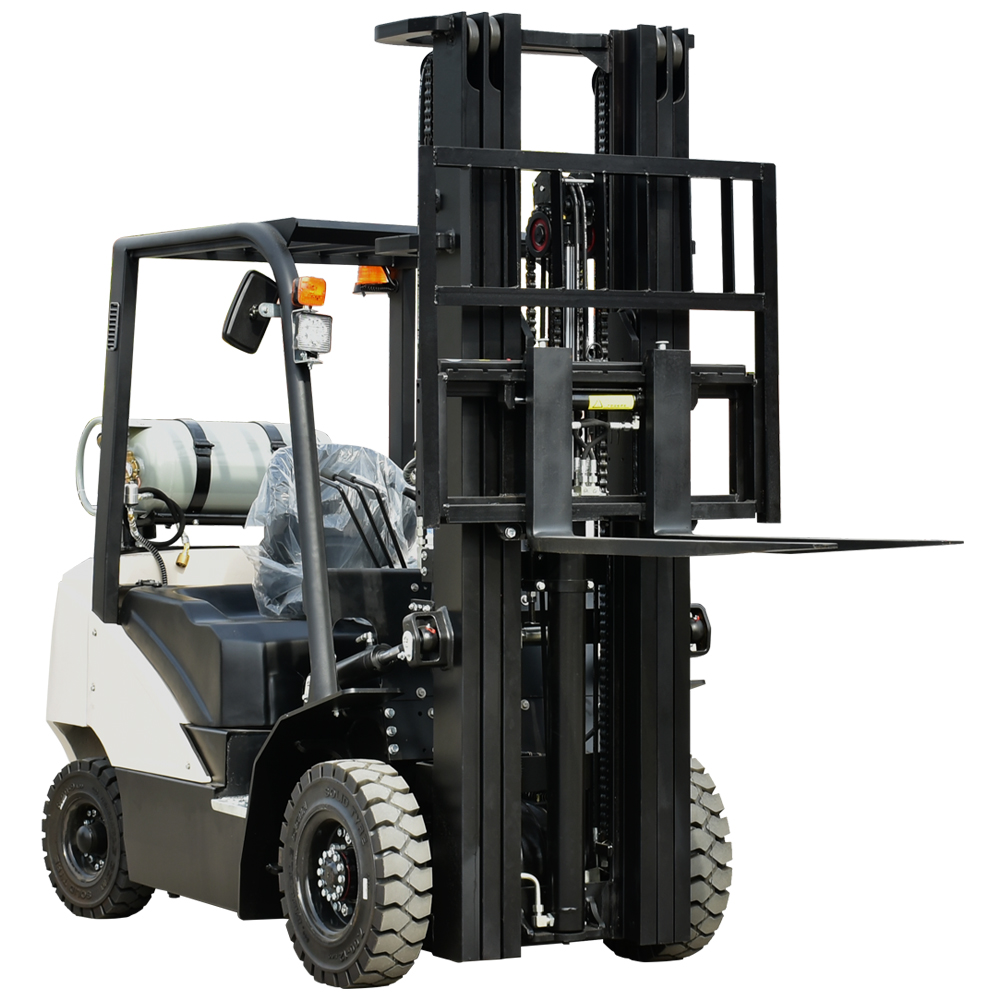
Large-volume bulk goods handling (e.g., cartons, packages) | Counterbalanced electric forklift (2-3 tons) | Large load capacity, fast traveling speed | Can handle 10-12 tons of goods per hour |
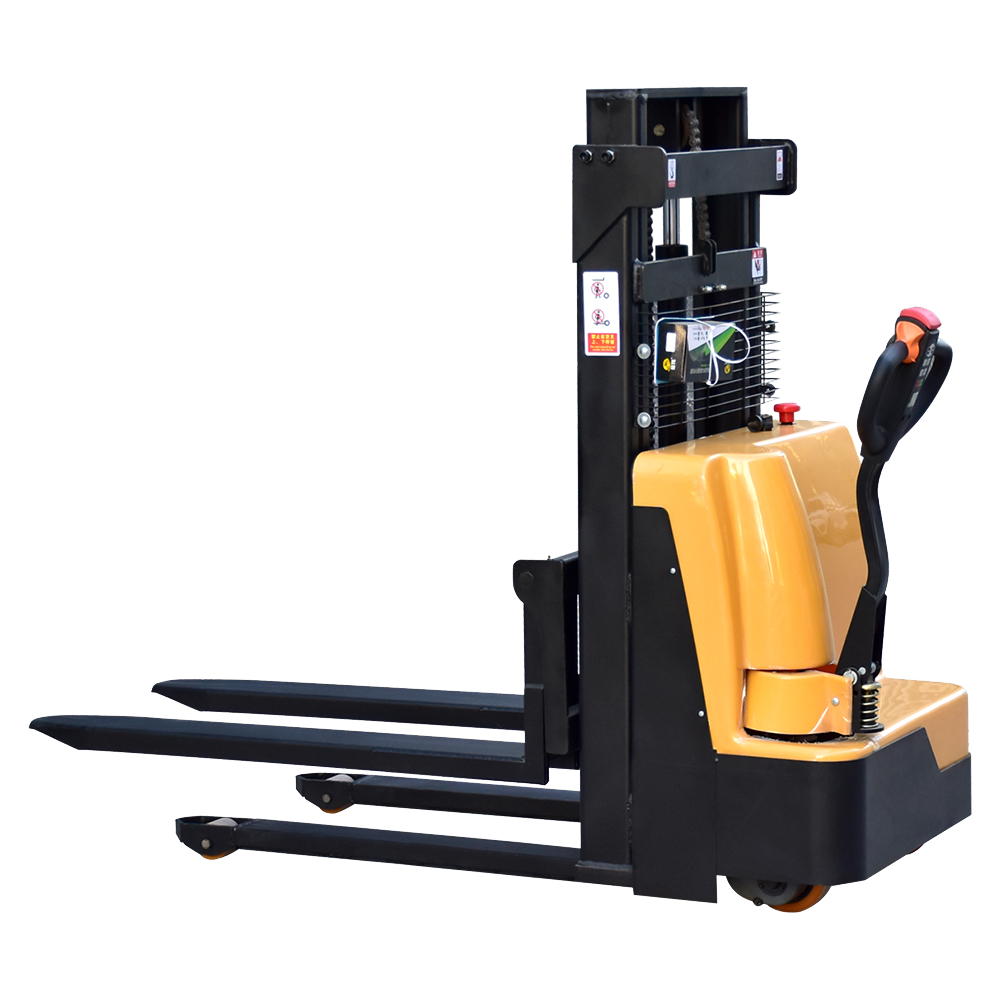
Small-batch and multi-SKU order sorting | Electric pallet truck / Stacker | Flexible operation, suitable for short-distance handling | Reduces manual handling intensity by 60%, improves sorting efficiency |
2. Flexible Lease of Equipment: Avoid Idle Costs During Off-Peaks
The demand for forklifts during e-commerce order peaks is usually temporary (1-3 months). Purchasing a large number of forklifts specifically for peaks will lead to long-term idleness during off-peak periods and heavy capital occupation. Electric forklift leasing is the optimal solution for SMEs to cope with this problem:
Short-Term Lease to Supplement Capacity: Enterprises can lease additional electric forklifts for 1-3 months during peak periods (such as Double 11) at a monthly rent of 3,000-5,000 RMB for a 2-ton model. This avoids the one-time investment of 120,000-150,000 RMB for purchasing, and the deposit (10,000-20,000 RMB) is refundable after the lease ends, reducing capital pressure.
All-Inclusive Maintenance Reduces Burden: Formal operating lease agreements include all maintenance services (routine maintenance, fault repair, battery replacement). During peak periods, enterprises do not need to arrange professional maintenance personnel, and the lessor can dispatch maintenance personnel within 2-4 hours in case of equipment failure, even providing alternative forklifts to avoid downtime losses (500-800 RMB per hour of downtime).
3. Optimize Charging and Battery Management: Ensure Continuous Operation
During order peaks, electric forklifts need to work continuously for a long time, and battery life and charging efficiency directly affect operational continuity. It is recommended to adopt the following management strategies:
Deploy Backup Batteries and Fast Chargers: Prepare 1-2 backup lithium batteries for each electric forklift. When the battery power is lower than 20%, replace the battery in 5-10 minutes to realize "uninterrupted operation". At the same time, use fast chargers (charging current ≥80A) to shorten the charging time of backup batteries—full charge can be completed in 2-3 hours, which is 50% faster than ordinary chargers.
Reasonable Arrangement of Charging Time: Use valley electricity prices (0.3-0.5 RMB/kWh) to charge backup batteries during off-peak hours (23:00-07:00), which can reduce the daily energy cost of each forklift by 20-30 RMB. Avoid charging during peak hours (08:00-11:00, 18:00-23:00) to reduce electricity costs and avoid peak power load.
Regular Battery Inspection: Before the start of order peaks, conduct a comprehensive inspection of the battery (test internal resistance and capacity, check connections). Ensure that the actual capacity of the battery is not less than 80% of the nominal capacity to avoid sudden power loss during operation.
4. Intelligent Management Empowers: Improve Overall Operational Efficiency
Deploying intelligent electric forklifts and management systems can further improve the coordination efficiency of warehousing operations during order peaks:
IoT Monitoring of Equipment Status: Choose intelligent electric forklifts with IoT functions to real-time monitor battery power, operating status, and fault warnings through the background system. When the equipment is abnormal, the system can send an alarm in time, and the maintenance personnel can intervene in advance to reduce failure downtime.
Route Optimization and Task Assignment: Integrate electric forklifts with the warehouse WMS (Warehouse Management System). The system can automatically assign handling tasks according to the location of goods and orders, and optimize the traveling route to avoid repeated travel. Data shows that intelligent route optimization can improve the handling efficiency of electric forklifts by 20%-25%.
5. Pre-Peak Maintenance and Staff Training: Lay a Foundation for Stable Operation
Preparations before order peaks are crucial to avoid equipment failures and operational errors:
Comprehensive Pre-Peak Maintenance: 1-2 weeks before the peak, conduct a comprehensive inspection and maintenance of all electric forklifts, including replacing vulnerable parts (brake pads, seals), checking hydraulic systems and electrical systems, and debugging controllers. The maintenance cost is about 1,500-3,000 RMB per unit, but it can reduce the failure rate during peaks by 60%.
Intensive Staff Training: Train operators on the standard operation of electric forklifts (avoiding overloading, sudden acceleration and braking) and basic fault handling (such as battery replacement, alarm code identification). At the same time, arrange shift work reasonably to avoid operator fatigue affecting efficiency and safety.
III. Case Study: How a Medium-Sized E-Commerce Enterprise Copes with Double 11 Order Peaks with Electric Forklifts
A medium-sized e-commerce enterprise specializing in daily necessities faces the challenge of order volume surging from 2,000 to 15,000 per day during Double 11. Through the following measures, it successfully completed the order fulfillment task with electric forklifts:
Leased 8 additional 2-ton counterbalanced electric forklifts and 4 narrow-aisle electric forklifts for 2 months, with a total rental cost of 64,000 RMB, avoiding the one-time investment of 1.2 million RMB for purchasing.
Deployed 2 backup batteries for each forklift and 10 fast chargers, and arranged charging during valley hours, reducing the daily energy cost of each forklift by 25 RMB.
Integrated electric forklifts with the WMS system to realize automatic task assignment and route optimization, improving handling efficiency by 22%.
Conducted comprehensive pre-maintenance for all forklifts and 3 days of intensive training for operators, with zero equipment failures during the peak period.
Result: The enterprise completed the delivery of 120,000 orders during the Double 11 period, with a delivery timeliness rate of 98.5% (10% higher than the previous year), and the total handling cost was 30% lower than that of using fuel-powered forklifts in the previous year.
IV. Common Pitfalls to Avoid in Electric Forklift Application During Order Peaks
During the intense order peak period, enterprises are prone to operational errors, which may lead to reduced efficiency and increased costs. The following four pitfalls need to be avoided:
Misunderstanding 1: Blindly Increasing Equipment Without Matching Scenarios: Leasing or purchasing a large number of ordinary electric forklifts for high-rise shelf warehouses, resulting in low lifting efficiency and inability to meet the needs of high-rise goods handling.
Misunderstanding 2: Neglecting Battery Backup and Charging Planning: Failing to prepare enough backup batteries, resulting in forklifts stopping operation due to power loss during peak hours, affecting order fulfillment progress.
Misunderstanding 3: Ignoring Pre-Peak Maintenance: Using old electric forklifts without maintenance to cope with peaks, leading to frequent failures and long downtime, which affects the overall operational efficiency.
Misunderstanding 4: Choosing Small Leasing Companies for Low Rent: Leasing electric forklifts from small companies with extremely low rents, but the latter cannot provide timely after-sales service and alternative equipment, resulting in heavy downtime losses.
V. Summary: Electric Forklifts Are the Core Driving Force for E-Commerce Warehousing to Cope with Order Peaks
For e-commerce SMEs, the efficient response to order peaks depends on the rational allocation and scientific management of material handling equipment. Electric forklifts, with their advantages of high efficiency, energy saving, strong environmental adaptability, and stable operation, have become the core equipment for warehousing operations during order peaks. By adopting strategies such as scientific equipment selection, flexible leasing, optimized battery management, intelligent empowerment, and pre-peak preparation, enterprises can maximize the operational efficiency of electric forklifts, ensure the timeliness of order delivery, and control operational costs.
In the context of the continuous growth of e-commerce business, the role of electric forklifts in warehousing operations will become more prominent. Enterprises should abandon the traditional concept of "only pursuing low cost" and comprehensively consider the adaptability and efficiency of equipment. By combining their own warehousing scenarios and business needs, they can formulate targeted electric forklift application strategies, turning the pressure of order peaks into opportunities for business growth.
Our manager will contact you shortly.
To contact you about our products and services.
Copyright © Xingtai Beiqiang Machinery Manufacturing Factory. 2025.
Technical support:Echola