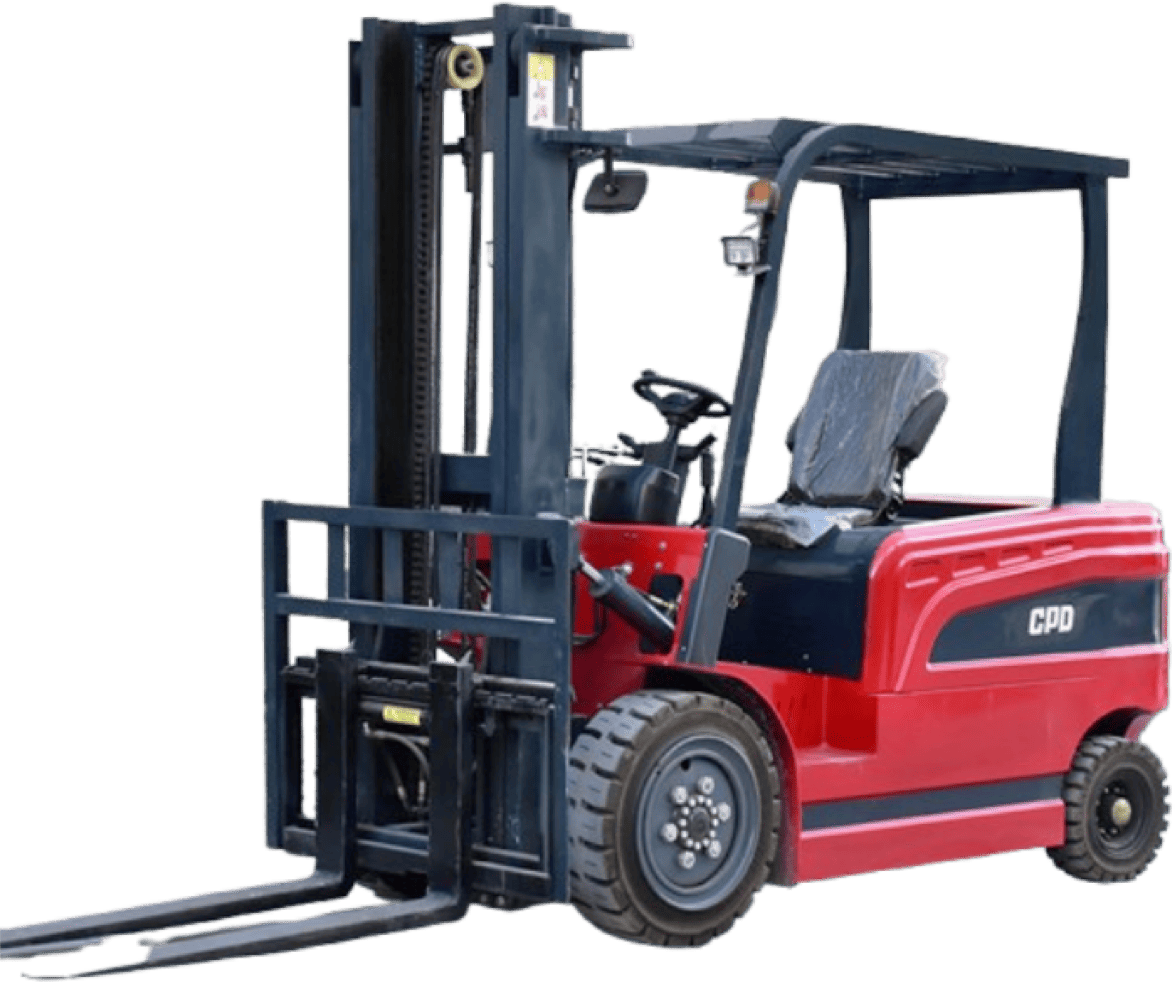
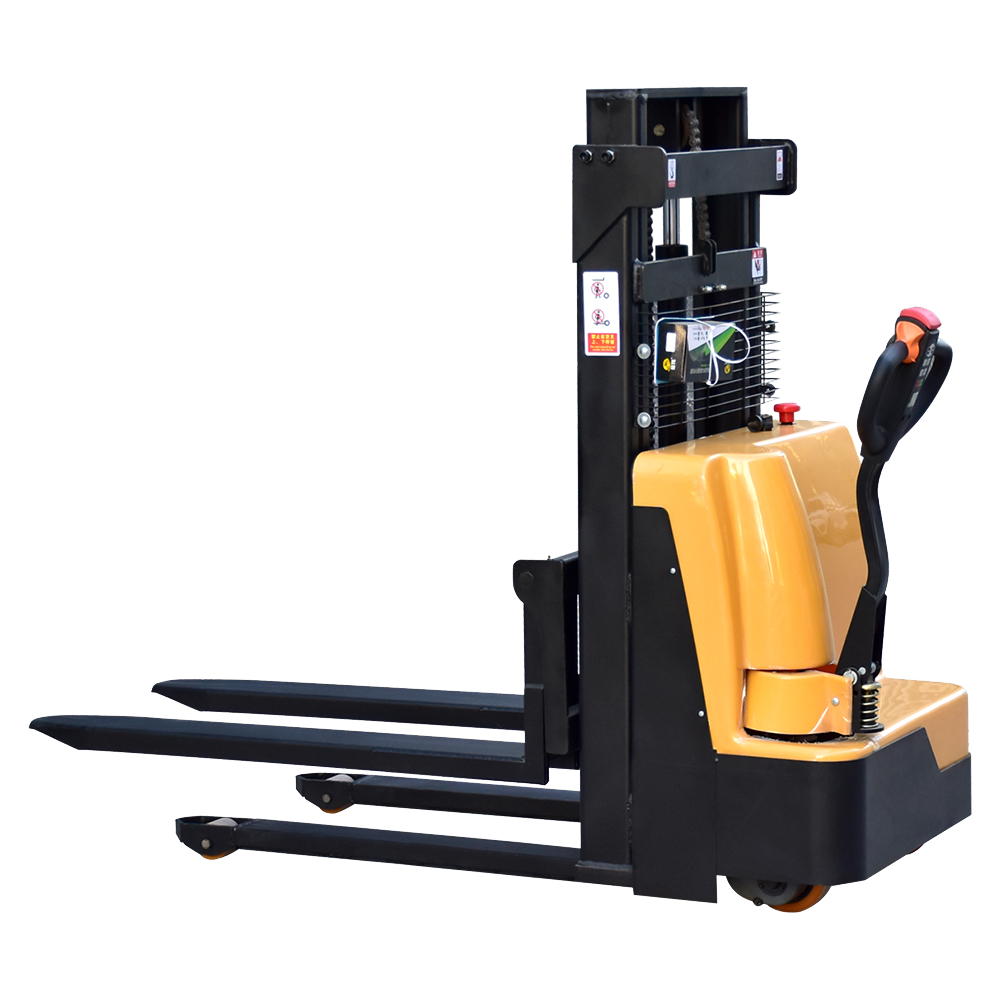
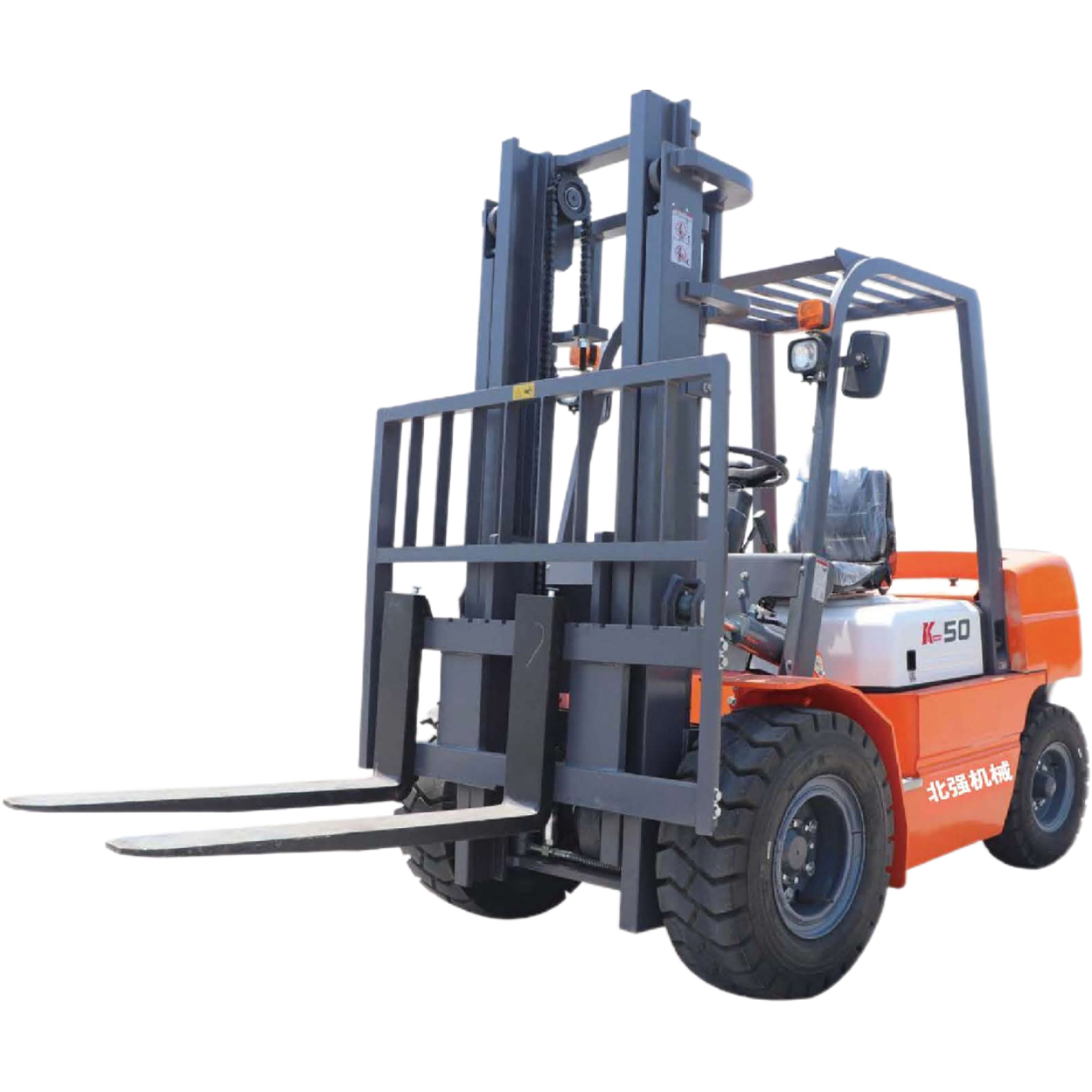
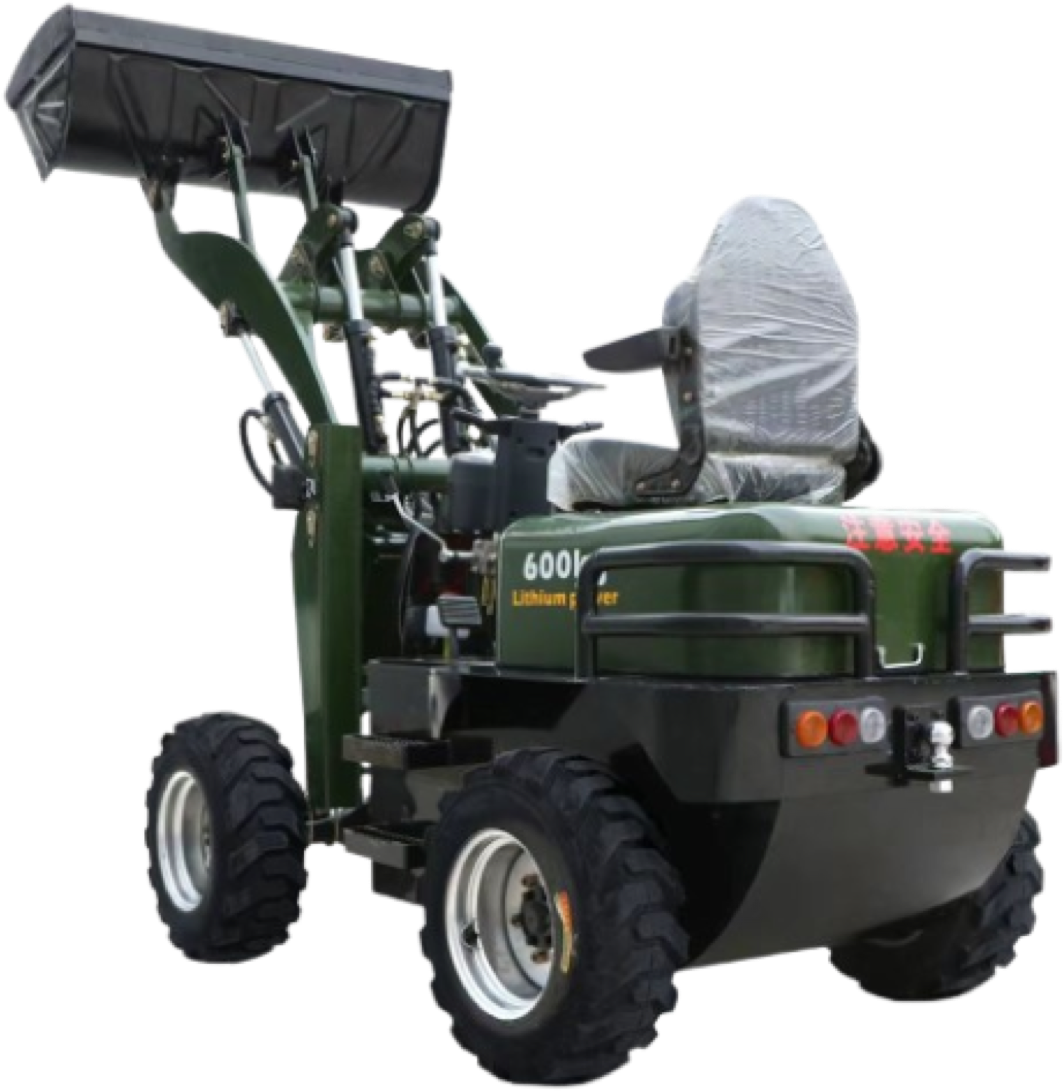
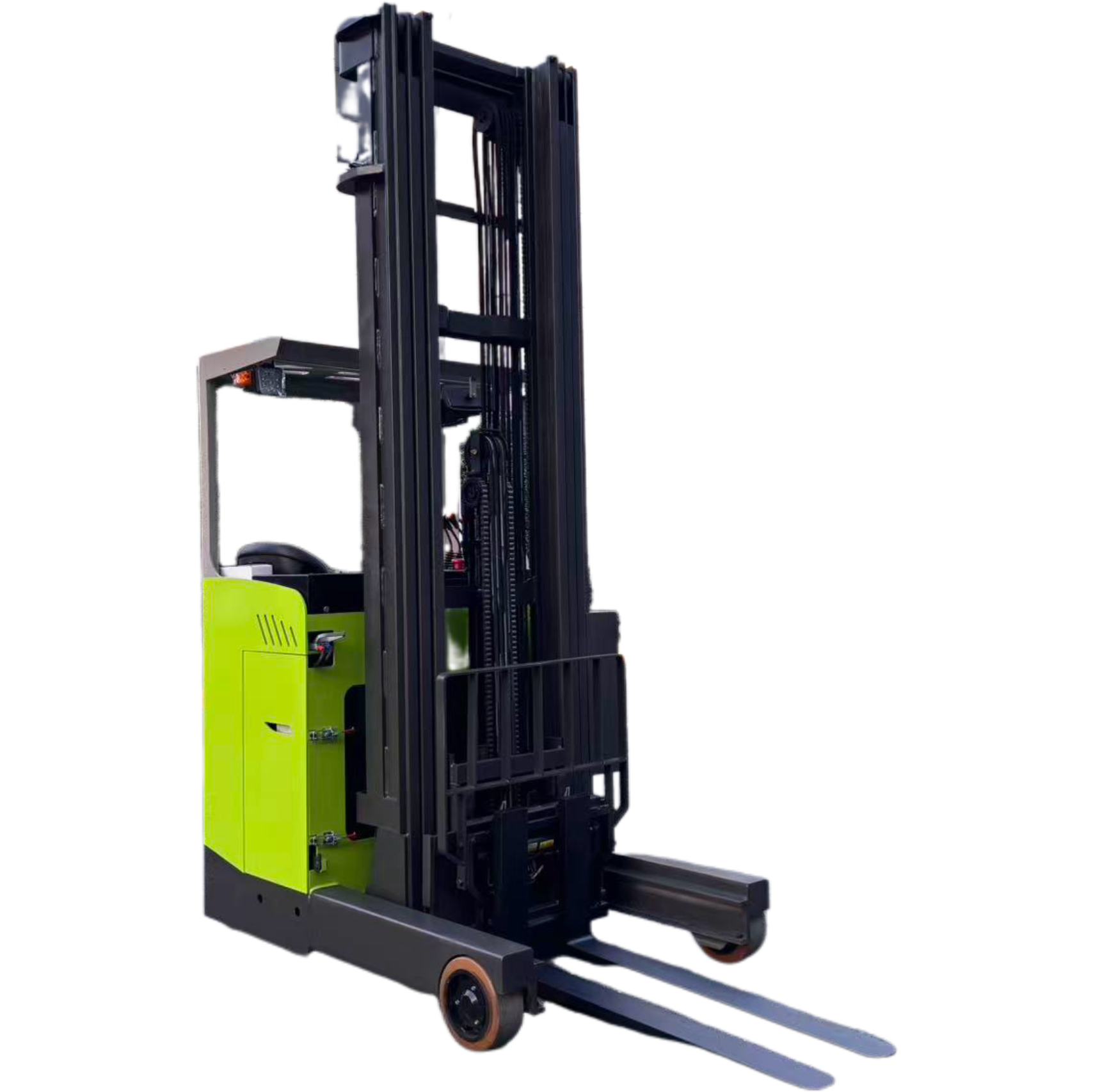
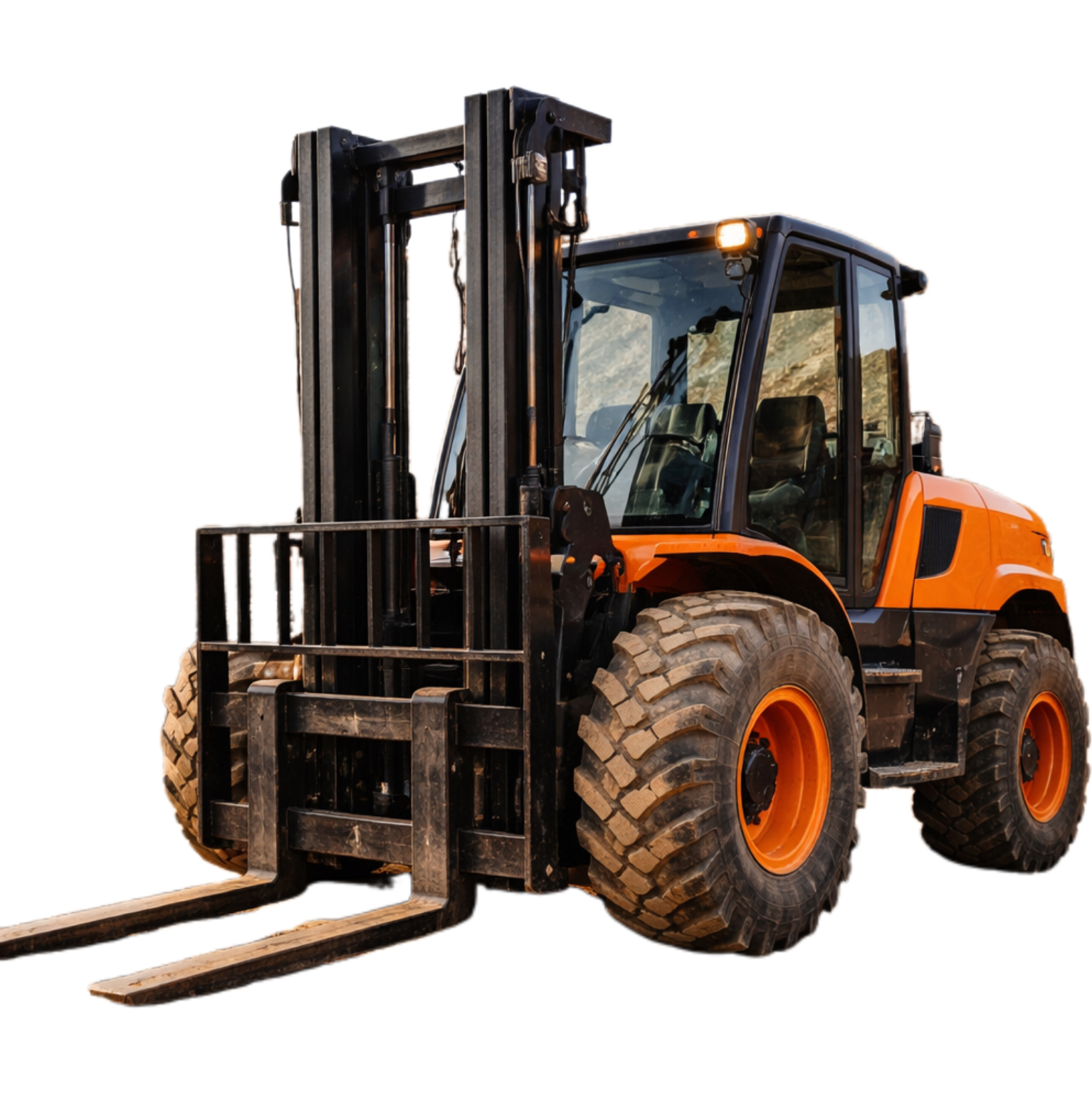


In operational scenarios such as e-commerce warehousing, pharmaceutical cold chain, and food processing, warehouse aisles are often designed to be extremely narrow (common width 2.5-3.5 meters) to improve space utilization. Conventional counterbalanced electric forklifts, with large turning radii (usually over 3.5 meters), are prone to scratches, traffic jams, and other issues in narrow aisles, seriously affecting operational efficiency. However, three-wheel electric forklifts, relying on their "two front and one rear" three-point support structure, have an extremely small turning radius (1.5-2.5 meters) and a compact body design, making them the ideal partner for narrow aisle operations. But not all three-wheel electric forklifts are suitable for various narrow aisle scenarios; precise selection is necessary to maximize their advantages. This article will sort out the core selection tips for three-wheel electric forklifts to help you choose the "efficient equipment" suitable for narrow aisle operations.
I. First, Clarify: Why Must Three-Wheel Electric Forklifts Be Selected for Narrow Aisle Operations?
In narrow aisle scenarios, the advantages of three-wheel electric forklifts are irreplaceable by conventional counterbalanced forklifts, which is the core reason why they become the first choice for narrow aisle operations:
Extreme flexibility, suitable for narrow aisle passage: The three-point support structure makes the body's turning radius 30%-50% smaller than that of counterbalanced forklifts of the same tonnage. A 1.8-meter-wide aisle can realize flexible turning without frequent direction adjustments, avoiding scratches on shelves and goods;
Compact body, improving space utilization: The length of three-wheel electric forklifts is usually 0.8-1.2 meters shorter than that of counterbalanced forklifts of the same tonnage, and the width is 0.3-0.5 meters narrower. When operating in narrow aisles, they do not occupy too much passage space, indirectly increasing the warehouse storage area;
Electric drive, suitable for indoor narrow aisle scenarios: The characteristics of zero emissions and low noise perfectly fit indoor narrow aisle operations with high environmental requirements such as pharmaceuticals and food, without worrying about exhaust pollution or noise interference;
Easy operation, reducing labor threshold: The body is light and the steering resistance is small. Operators do not need to spend too much effort to control the direction, and newbies can quickly get started, making it suitable for high-frequency narrow aisle shuttling operations.
II. Core Selection Tips for Three-Wheel Electric Forklifts: Precise Matching from 5 Dimensions
The core of selection is "scenario adaptation". Combined with the particularity of narrow aisle operations, it is necessary to comprehensively consider 5 core dimensions: aisle parameters, operational needs, technical indicators, safety configurations, and usage costs to avoid operational delays caused by mismatching.
1. Determine Aisle Parameters First: Match Body and Turning Radius to Avoid Passage Blockages
Aisle width is the primary premise for selection, directly determining the upper limit of the body size and turning radius of three-wheel electric forklifts. Before selection, it is necessary to measure the actual width of the warehouse aisle (including the protruding part of the shelves), and then match the parameters accordingly:
Aisle width ≤ 2.0 meters (ultra-narrow aisle): Choose a micro three-wheel electric forklift with a body width ≤ 1.0 meter and a turning radius ≤ 1.6 meters. The rated load is recommended to be 1.0-1.5 tons. For example, Zhongli EPT15-15ET three-wheel forklift has a body width of 0.98 meters and a turning radius of 1.52 meters, which can turn freely in a 1.8-meter-wide aisle;
Aisle width 2.0-2.5 meters (conventional narrow aisle): Choose a standard model with a body width of 1.0-1.2 meters and a turning radius of 1.6-2.0 meters, with a rated load of 1.5-2.0 tons. For example, Heli CPD18S three-wheel forklift has a turning radius of 1.85 meters and is suitable for aisles above 2.2 meters;
Aisle width 2.5-3.5 meters (relatively wide narrow aisle): A large-load model with a body width of 1.2-1.4 meters and a turning radius of 2.0-2.5 meters can be selected, with a rated load of 2.0-2.5 tons, taking into account both narrow aisle passage and heavy-load needs. For example, Jungheinrich EFG 216k three-wheel forklift has a load capacity of 2.0 tons and a turning radius of 2.2 meters, suitable for aisles above 2.5 meters.
Key Reminder: When measuring the aisle width, it is necessary to reserve a safety gap of 0.3-0.5 meters (to avoid protruding goods or personnel passage). For example, if the actual aisle width is 2.0 meters, it is recommended to choose a model with a turning radius ≤ 1.6 meters instead of a model with exactly 1.8 meters.
2. Match Operational Needs: Load Capacity, Lifting Height, and Operational Frequency
The core needs of narrow aisle operations (load capacity, stacking height, operation intensity) determine the core performance parameters of the forklift, which need to be accurately matched to avoid "underloading" or "overcapacity":
(1) Rated Load Capacity: Select Based on the Weight of Frequently Transported Goods + Safety Margin
The load range of three-wheel electric forklifts is mostly 1.0-2.5 tons. When selecting, it is necessary to take the maximum weight of frequently transported goods as the basis and add a safety margin of 10%-20%:
Light-load operations (≤ 1.2 tons, such as pharmaceutical cartons, small electronic components): Choose 1.0-1.5 ton models with lower energy consumption and more flexible operation;
Medium-load operations (1.2-1.8 tons, such as food pallets, ordinary industrial products): Choose 1.5-2.0 ton models, taking into account both load capacity and flexibility;
Heavy-load operations (1.8-2.2 tons, such as heavy parts, large packaged goods): Choose 2.0-2.5 ton models. It is necessary to confirm that the body structure is reinforced to avoid component damage caused by long-term heavy loads.
(2) Lifting Height: Determine Based on Shelf Height + Safety Distance
The lifting height needs to match the maximum stacking height of the warehouse shelves, and a safety distance of 0.3-0.5 meters should be reserved (to facilitate goods access):
Low-level stacking (≤ 3 meters, such as flat warehouses, low-level shelves): Choose a standard mast with a lifting height of 3.0-3.5 meters, which is more cost-effective;
Medium-level stacking (3-5 meters, such as conventional three-dimensional warehouses): Choose a two-stage mast with a lifting height of 5.0-5.5 meters to ensure it can reach the highest shelf level;
High-level stacking (5-8 meters, such as high-position narrow aisle warehouses): A three-stage mast or full-free mast must be selected, and a lifting limit device should be matched to avoid overheight operation risks.
(3) Operational Frequency: Match Battery Capacity and Power System
For high-frequency operations (such as during e-commerce peak seasons, daily operation ≥ 8 hours), focus on battery life and power stability:
High-frequency operations: Choose lithium battery models with a capacity ≥ 48V/200Ah, a battery life of 8-10 hours, and support fast charging (80% full in 1-2 hours), suitable for three-shift operations;
Medium and low-frequency operations (daily operation ≤ 4 hours, such as small warehouses): Choose lead-acid battery models with a capacity of 48V/150Ah, which are more cost-effective and meet daily operation needs.
3. Pay Attention to Core Technical Indicators: Ensure Stability of Narrow Aisle Operations
In narrow aisle operations, the stability of the forklift's steering system, drive system, and braking system directly affects operational efficiency. The following technical indicators should be focused on during selection:
Steering system: Prioritize electric power steering with high steering accuracy and low resistance, so that operators are not easy to fatigue during long-term operations; avoid mechanical steering, which has high operation intensity in high-frequency turning narrow aisle scenarios. At the same time, confirm that the steering angle ≥ 90° to improve turning flexibility;
Drive system: Choose AC drive motors with stable power output and fast acceleration and deceleration response. During frequent start-stop and turning in narrow aisles, there will be no power interruption or jitter; DC motors are suitable for medium and low-frequency operations with lower costs;
Braking system: Must have dual guarantees of electromagnetic braking + mechanical braking. Electromagnetic braking takes effect automatically when the accelerator pedal is released to avoid slipping; mechanical braking serves as an emergency guarantee to ensure stable parking in case of power failure or failure, especially suitable for slope narrow aisle operations;
Protection level: For indoor humid environments (such as cold chain warehouses), choose IP54 or above protection level to avoid moisture intrusion into core components such as motors and controllers, leading to failures.
4. Strengthen Safety Configurations: Key to Risk Prevention and Control in Narrow Aisle Operations
In narrow aisles, visibility is blocked and passage space is limited, making collisions, goods falling and other risks likely. It is necessary to ensure complete safety configurations during selection:
Warning devices: Essential LED flashing warning lights and reversing buzzers. It is recommended to install voice alarms (with customizable warning messages) to remind surrounding personnel and goods;
Visibility optimization: Choose wide-view masts to reduce the obstruction of the front view by the mast; for high-position operations, it is recommended to install cameras + displays to observe the position of goods and shelves in real time;
Goods protection: Equip with anti-slip fork sleeves and side shifters (offset ≥ 100mm) to avoid goods slipping or falling due to inaccurate alignment; heavy-load models need to be equipped with stabilizers to improve body stability during stacking;
Operator protection: Equip with anti-slip pedals and safety handrails. It is recommended to install shock-absorbing seats in the cab to reduce fatigue during long-term operations.
5. Calculate Usage Costs: Balance Procurement and Long-Term Operation and Maintenance
Selection should not only consider the initial purchase price but also comprehensively calculate the full-life cycle usage costs (procurement + energy consumption + maintenance + residual value):
Procurement cost: Three-wheel electric forklifts of the same tonnage are slightly more expensive than counterbalanced forklifts but more than 50% cheaper than narrow aisle stackers, with higher cost performance; lithium battery models are 20,000-30,000 RMB more expensive than lead-acid battery models, but have lower long-term energy consumption and maintenance costs;
Energy consumption cost: The annual energy consumption cost of electric forklifts is only 1/7-1/5 of that of fuel-powered forklifts. Lithium battery models are 15%-20% more energy-efficient than lead-acid battery models, so lithium batteries are more cost-effective for high-frequency operations;
Maintenance cost: Three-wheel electric forklifts have a simple structure, with an annual maintenance cost of only 2,000-3,000 RMB (mainly for battery maintenance and lubrication), which is much lower than that of fuel-powered forklifts (20,000-30,000 RMB/year);
Brand and after-sales service: Prioritize first-tier brands (such as Heli, Zhongli, Jungheinrich). Core components (motor, controller, battery) should have a warranty period ≥ 3 years, and there should be perfect after-sales outlets locally to avoid inability to repair in time after failure.
III. Selection Pitfall Avoidance Guide: 3 Common Misunderstandings to Avoid
Misunderstanding 1: Only focus on turning radius and ignore body width: Some models have small turning radii but excessive body width, which still cannot pass in ultra-narrow aisles. Both should be confirmed during selection;
Misunderstanding 2: Blindly pursue large load capacity and sacrifice flexibility: The core of narrow aisle operations is flexibility. Excessively pursuing large load capacity will make the body heavy and inflexible in turning, which will instead reduce efficiency;
Misunderstanding 3: Ignore battery adaptability, leading to insufficient battery life: Choosing lead-acid batteries for high-frequency operations or ordinary batteries for low-temperature environments (such as cold chains) will cause a sharp drop in battery life. Specialized batteries should be selected according to the operation frequency and environment.
IV. Summary: The Core of Selection is "Precise Adaptation" to Make Narrow Aisle Operations More Efficient
The selection of three-wheel electric forklifts is essentially the precise matching of "aisle parameters, operational needs, technical indicators, safety configurations, and usage costs". First, clarify the warehouse aisle width, then determine the core parameters in combination with load capacity, stacking height, and operation frequency, finally check the technical stability and safety configurations, and at the same time consider the long-term usage costs, so as to select the model suitable for narrow aisle operations.
For narrow aisle operation scenarios, choosing the right three-wheel electric forklift can not only solve the pain point of passage blockage but also improve operational efficiency by more than 30% and reduce labor and operation and maintenance costs. It is recommended to measure the aisle size on site and sort out the operation needs before selection. If necessary, consult professional manufacturers for customized scheme design to ensure perfect fit between equipment and scenarios.
Our manager will contact you shortly.
To contact you about our products and services.


Copyright © Xingtai Beiqiang Machinery Manufacturing Factory. 2025.
Technical support:Echola