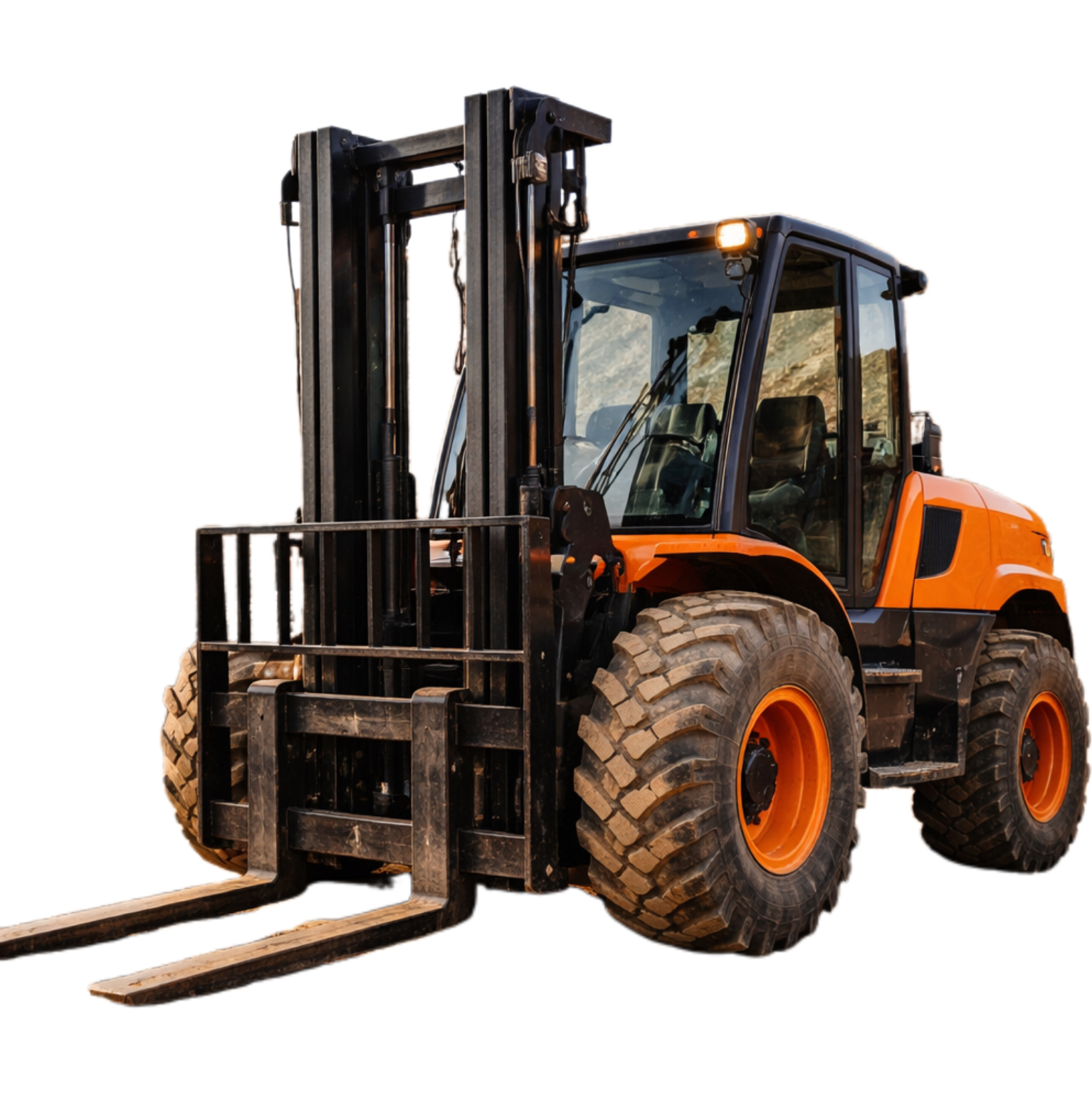


In equipment procurement decisions in industries such as logistics warehousing and manufacturing, many enterprises often fall into the "initial price trap" — seeing that the purchase price of electric forklifts is higher than that of fuel-powered forklifts, they intuitively think that electric forklifts are more "expensive". In fact, the real cost of equipment is not only the purchase price, but the total investment throughout the entire lifecycle of "procurement - use - maintenance - scrapping". In recent years, with the upgrading of battery technology and the tightening of environmental policies, the Total Cost of Ownership (TCO) advantage of electric forklifts has become increasingly prominent. This article will comprehensively break down the TCO composition of electric and fuel-powered forklifts, calculate the cost difference between the two with specific data, and tell you how much money electric forklifts can actually save.
I. First, Clarify: What Does Total Cost of Ownership (TCO) Include?
Total Cost of Ownership refers to all costs incurred during the entire process from procurement to scrapping of equipment. Its core composition includes four major modules, which are also the core dimensions for us to compare the costs of electric and fuel-powered forklifts:
Initial Procurement Cost: One-time investments such as the purchase price, transportation fee, and installation and commissioning fee of the equipment itself;
Operational Energy Consumption Cost: Energy costs consumed during use (electricity fee/fuel fee);
Maintenance Cost: Daily maintenance (lubricating oil, filter replacement, etc.), fault repair (parts replacement, labor costs, etc.);
Residual Value Recovery Cost: The recovery value of the equipment when it is scrapped or resold as second-hand (which can offset part of the total cost).
Note: This article takes the mainstream 2-ton forklift in the market as the research object, sets the service life as 5 years and the annual operating hours as 2000 hours (conventional industry operation intensity). All data refer to the average level of the domestic market, and the specific values vary slightly depending on the brand, region and operating environment.
II. Itemized Breakdown: Cost Comparison Between Electric Forklifts and Fuel-powered Forklifts
1. Initial Procurement Cost: Electric Forklifts Are Slightly Higher, but the Gap Is Narrowing
This is the only link where electric forklifts have an "obvious disadvantage", but with the maturity of battery technology and large-scale production, the price gap between the two is continuously narrowing.
Market Data Comparison (2-ton forklift):
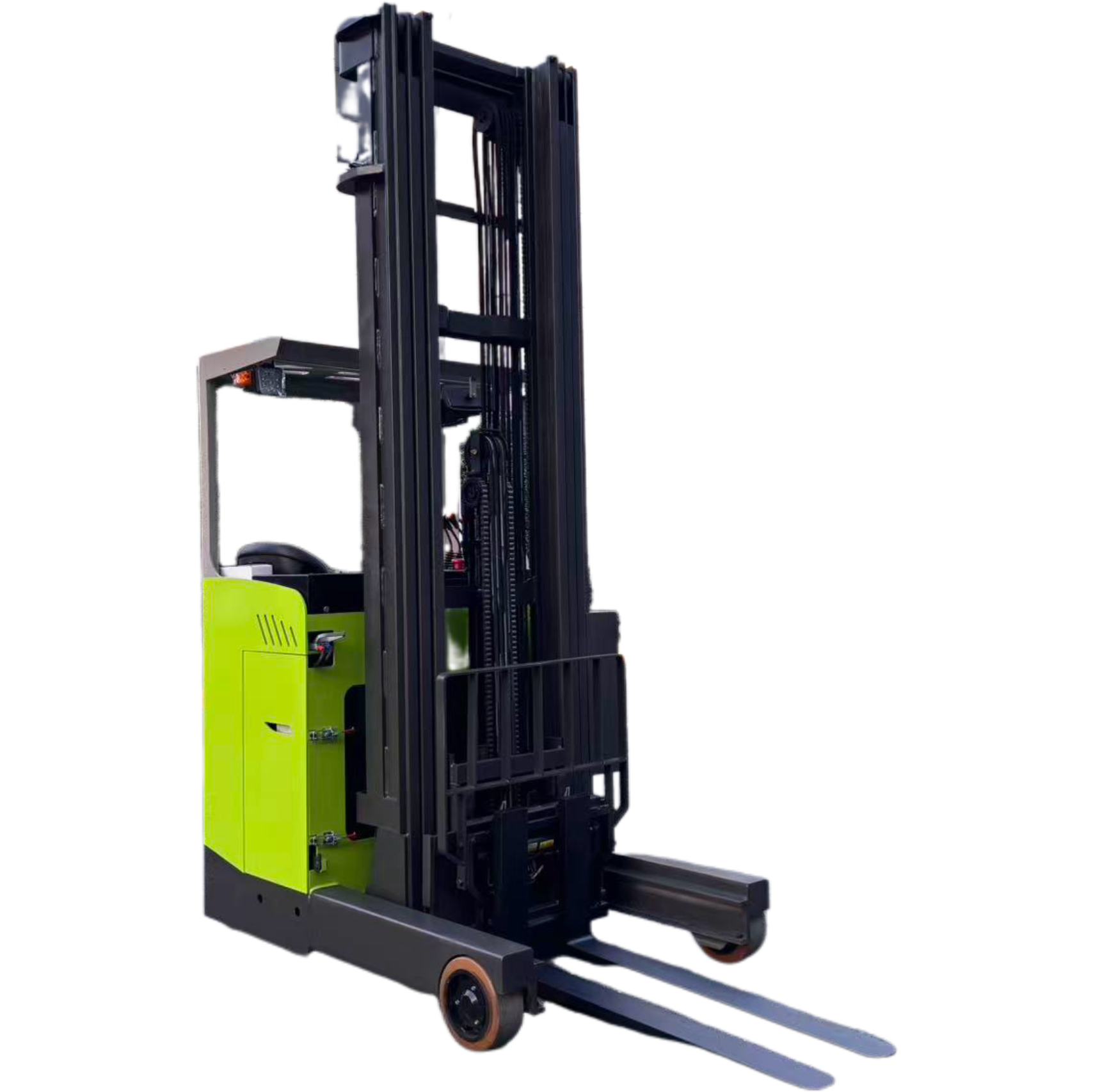
Electric Forklift: The purchase price is about 80,000 - 120,000 RMB (among them, lithium-ion battery forklifts are mostly 100,000 - 120,000 RMB due to high battery costs; lead-acid battery forklifts are about 80,000 - 100,000 RMB). Adding transportation and commissioning fees of about 5,000 RMB, the total initial cost is about 85,000 - 125,000 RMB;
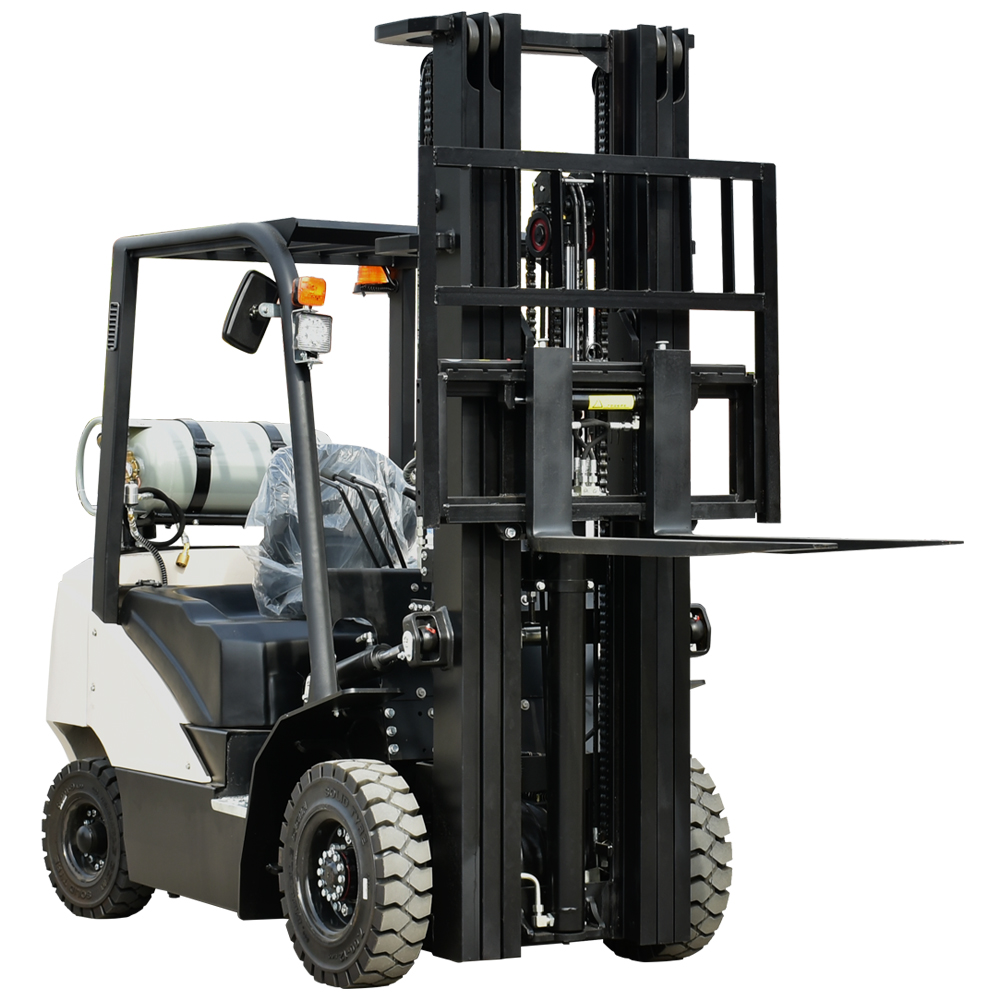
Fuel-powered Forklift: The purchase price is about 60,000 - 80,000 RMB, and the transportation and commissioning fees are also about 5,000 RMB, so the total initial cost is about 65,000 - 85,000 RMB.
Conclusion: The initial cost of electric forklifts is 20,000 - 40,000 RMB higher than that of fuel-powered forklifts. Among them, the price gap between lithium-ion battery forklifts and fuel-powered forklifts is relatively larger, but the gap between lead-acid battery forklifts and fuel-powered forklifts has narrowed to 10,000 - 20,000 RMB.
2. Operational Energy Consumption Cost: Electric Forklifts Have Significant Advantages, Saving Tens of Thousands of Yuan Annually
Energy consumption cost is the longest-lasting and highest-proportion expenditure item in the entire lifecycle, and also the core advantage of electric forklifts. The unit price difference between electricity and fuel, as well as the energy efficiency of the equipment, directly determine the cost gap in this link.
Core Data Calculation (2-ton forklift, 2000 hours of operation per year):
Electric Forklift (Lithium-ion Battery): Energy efficiency is about 1.5 kWh/hour·ton, so a 2-ton forklift consumes about 3 kWh per hour; the average industrial electricity price is about 1 RMB/kWh (after averaging peak and valley electricity prices), so the hourly energy consumption cost is 3 RMB, and the annual energy consumption cost = 2000 hours × 3 RMB = 6,000 RMB;
Electric Forklift (Lead-acid Battery): Energy efficiency is slightly lower, about 1.8 kWh/hour·ton, with hourly power consumption of about 3.6 kWh, and annual energy consumption cost = 2000 × 3.6 × 1 = 7,200 RMB;
Fuel-powered Forklift: Fuel efficiency is about 3 L/hour (diesel), the average price of domestic 0# diesel is about 7 RMB/L, the hourly fuel cost is 21 RMB, and the annual energy consumption cost = 2000 × 21 = 42,000 RMB.
Conclusion: Within a 5-year service life, the total energy consumption cost of lithium-ion battery electric forklifts is 30,000 RMB, that of lead-acid battery electric forklifts is 36,000 RMB, and that of fuel-powered forklifts is 210,000 RMB. Only in terms of energy consumption, electric forklifts can save 174,000 - 180,000 RMB compared with fuel-powered forklifts.
3. Maintenance Cost: Electric Forklifts Have a Simple Structure, Saving 10,000 - 20,000 RMB Annually
The difference in maintenance costs stems from the complexity of the equipment structure: fuel-powered forklifts have complex mechanical structures such as engines, gearboxes, and fuel systems, requiring frequent replacement of engine oil, filters, spark plugs and other components; while the core components of electric forklifts are batteries, motors, and controllers, with a simpler structure, resulting in significantly reduced maintenance frequency and costs.
Maintenance Cost Comparison (2-ton forklift, 2000 hours of operation per year):
Electric Forklift: Daily maintenance only needs to check the battery status, clean the motor, lubricate the mast, etc. The annual maintenance cost is about 2,000 - 3,000 RMB (lithium-ion battery forklifts have slightly lower costs due to simpler battery maintenance; lead-acid battery forklifts need to regularly add distilled water, resulting in slightly higher costs); the total maintenance cost for 5 years is 10,000 - 15,000 RMB;
Fuel-powered Forklift: It is necessary to regularly replace engine oil, oil filters, air filters, fuel filters, etc., and also maintain components such as gearboxes and clutches. The annual maintenance cost is about 20,000 - 30,000 RMB (including parts + labor); the total maintenance cost for 5 years is 100,000 - 150,000 RMB.
Supplement: If a fuel-powered forklift has major problems such as engine failure or gearbox oil leakage, the cost of a single repair can reach tens of thousands of yuan; while the core components of electric forklifts (such as lithium-ion batteries and motors) usually have a 3-5 year warranty, and the maintenance cost during the warranty period is almost zero.
Conclusion: Within a 5-year cycle, the maintenance cost of electric forklifts is 85,000 - 140,000 RMB lower than that of fuel-powered forklifts.
4. Residual Value Recovery Cost: Electric Forklifts Have Higher Residual Value, Further Reducing Total Cost
The residual value of equipment is related to the service life and retention rate of core components: the engine, gearbox and other components of fuel-powered forklifts are severely worn after 5 years of use, resulting in a low residual value rate; while the service life of lithium-ion batteries and motors of electric forklifts can reach 8-10 years, and they still have high use value after 5 years, with a higher residual value rate.
Residual Value Comparison (Calculated Based on Initial Purchase Price):
Electric Forklift (Lithium-ion Battery): The residual value rate is about 30% - 40%. If the initial purchase price is 120,000 RMB, the residual value after 5 years is about 36,000 - 48,000 RMB;
Electric Forklift (Lead-acid Battery): The residual value rate is about 20% - 30%. If the initial purchase price is 100,000 RMB, the residual value after 5 years is about 20,000 - 30,000 RMB;
Fuel-powered Forklift: The residual value rate is about 10% - 20%. If the initial purchase price is 80,000 RMB, the residual value after 5 years is about 8,000 - 16,000 RMB.
Conclusion: After 5 years, the residual value of electric forklifts is 12,000 - 32,000 RMB higher than that of fuel-powered forklifts, and this part of the value can directly offset the total cost.
III. Ultimate Calculation: How Much Can Electric Forklifts Save Compared to Fuel-powered Forklifts in 5-Year Full Lifecycle?
Combining the above four modules, we summarize and calculate the 5-year full lifecycle cost of 2-ton forklifts (taking the median value of each interval):
Cost Composition | Lithium-ion Battery Electric Forklift | Lead-acid Battery Electric Forklift | Fuel-powered Forklift |
|---|---|---|---|
Initial Procurement Cost (10,000 RMB) | 10.5 | 9.5 | 7.5 |
5-Year Energy Consumption Cost (10,000 RMB) | 3 | 3.6 | 21 |
5-Year Maintenance Cost (10,000 RMB) | 1.2 | 1.4 | 12.5 |
5-Year Residual Value (10,000 RMB, offsetting cost) | -4.2 | -2.5 | -1.2 |
5-Year Full Lifecycle Total Cost (10,000 RMB) | 10.5 + 3 + 1.2 - 4.2 = 10.5 | 9.5 + 3.6 + 1.4 - 2.5 = 12 | 7.5 + 21 + 12.5 - 1.2 = 40.8 |
Core Conclusion: Within a 5-year service life, the total full lifecycle cost of lithium-ion battery electric forklifts is only 105,000 RMB, saving 303,000 RMB compared with fuel-powered forklifts (408,000 RMB); even lead-acid battery electric forklifts, with a total cost of 120,000 RMB, can save 288,000 RMB compared with fuel-powered forklifts. On average, electric forklifts save 57,600 - 60,600 RMB per year compared with fuel-powered forklifts.
IV. Additional Hidden Advantages: "Hidden Cost" Savings of Electric Forklifts
In addition to the above direct costs, electric forklifts can also help enterprises save a sum of "hidden costs", which are often ignored but have a significant actual impact:
Environmental Protection Cost: Fuel-powered forklifts emit exhaust gas (including carbon monoxide, particulate matter, etc.). For indoor operations, ventilation equipment needs to be installed, and in some areas, environmental protection taxes and fees also need to be paid; electric forklifts have zero emissions and do not need to bear this part of the cost;
Noise Cost: The operating noise of fuel-powered forklifts is above 85 decibels, requiring operators to be equipped with sound insulation protective equipment. For some noise-sensitive scenarios (such as pharmaceutical warehouses, electronic workshops), additional noise reduction is also needed; the noise of electric forklifts is lower than 65 decibels, requiring no additional noise reduction investment;
Efficiency Cost: Electric forklifts have fast startup and smooth acceleration, and their operational response speed is 15% - 20% faster than that of fuel-powered forklifts, indirectly improving operational efficiency; moreover, they can seamlessly switch operations indoors and outdoors without worrying about exhaust pollution restrictions.
V. Summary: Choosing Electric Forklifts Seems "Expensive" in the Short Term, but Cheaper in the Long Term
From the perspective of full lifecycle cost, the "high initial price" of electric forklifts is only a short-term obvious difference. In the long-term operation and maintenance links, their cost advantages will continue to expand, ultimately achieving economic efficiency far exceeding that of fuel-powered forklifts. Especially in the current context of increasingly strict environmental policies and large fluctuations in energy prices, electric forklifts can not only help enterprises save costs, but also improve operational flexibility and reduce environmental risks, making them a better choice for equipment procurement.
It is recommended that enterprises abandon the single thinking of "only looking at the initial price" when purchasing forklifts, and comprehensively calculate the full lifecycle cost in combination with their own operating hours and scenario needs. For high-frequency operation and indoor operation scenarios, the cost advantage of electric forklifts will be more obvious; even for low-frequency operation scenarios, with the further upgrading of battery technology, the cost performance of electric forklifts will continue to improve.
Our manager will contact you shortly.
To contact you about our products and services.


Copyright © Xingtai Beiqiang Machinery Manufacturing Factory. 2025.
Technical support:Echola