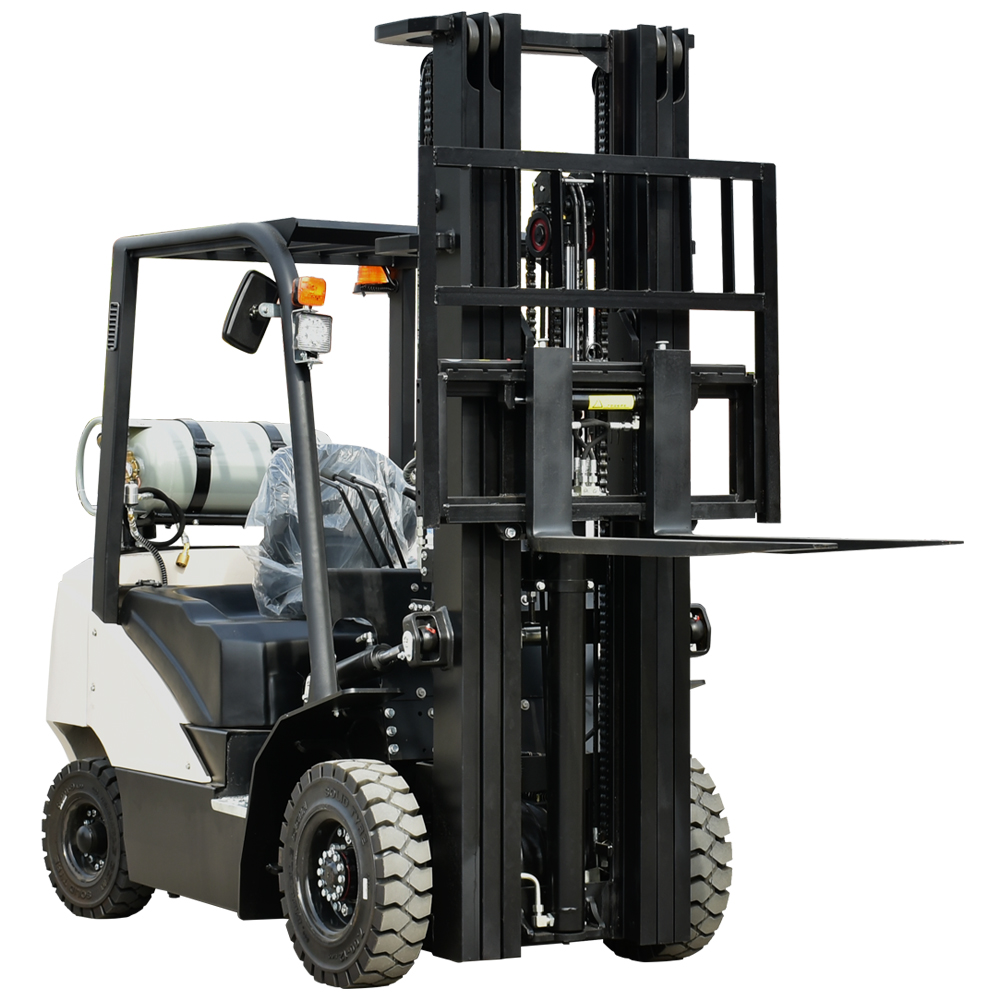
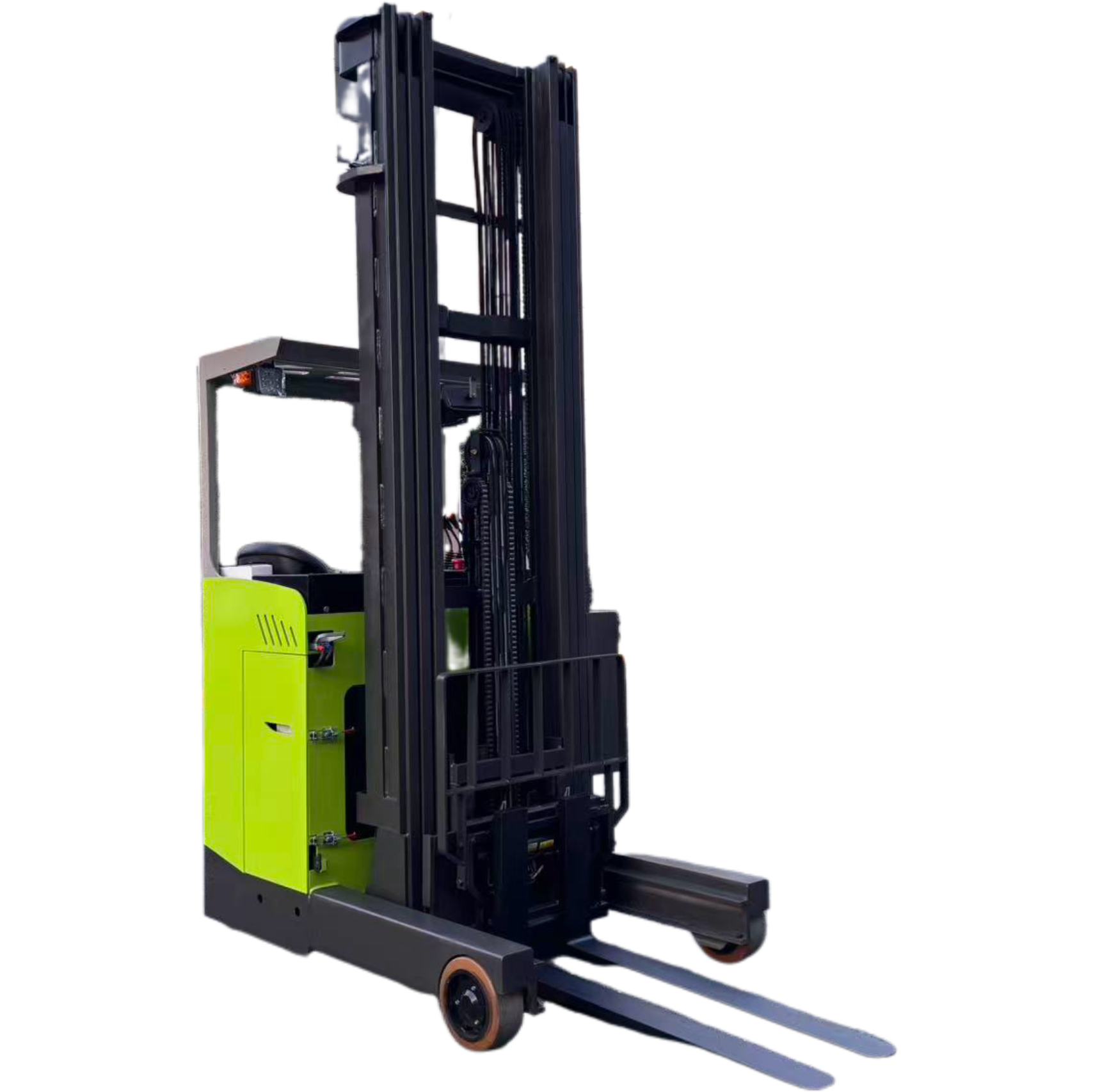
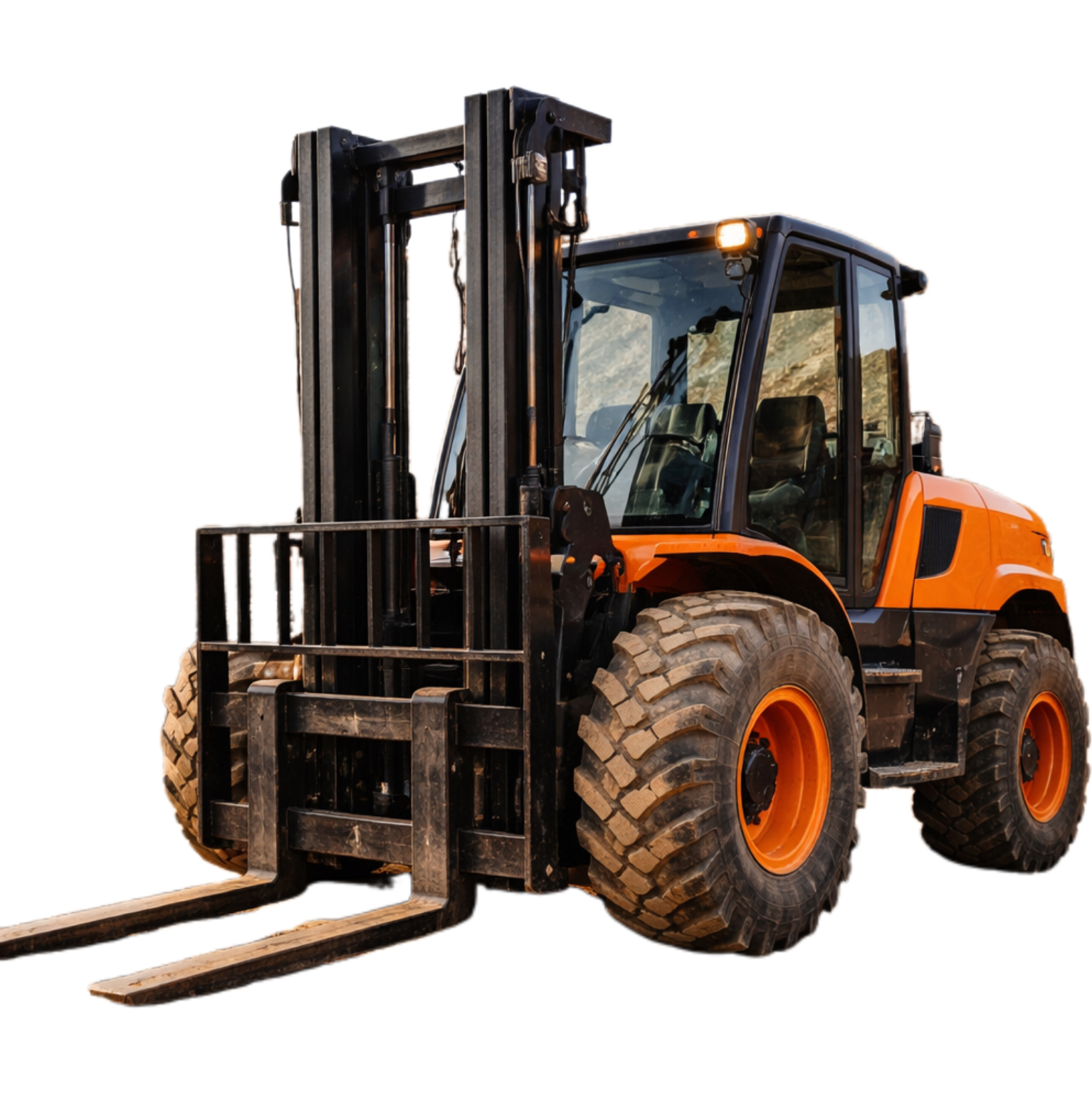


In modern warehouse management, maximizing space utilization has become a top priority for enterprises. With the continuous reduction of aisle widths in high-density storage facilities, three-wheel electric forklifts have emerged as the "narrow aisle expert" due to their compact size and excellent maneuverability. These forklifts are particularly suitable for narrow aisle warehouses, e-commerce small-package storage, and workshop environments with limited space. However, many enterprises still face challenges when selecting the right three-wheel electric forklift. This guide will provide comprehensive selection tips, focusing on core parameters, scenario matching, and common pitfalls to help you choose the ideal equipment for your narrow aisle operations.
I. Core Parameters to Focus on for Three-Wheel Electric Forklifts
When selecting a three-wheel electric forklift for narrow aisle operations, several key parameters directly determine whether the equipment can meet your operational needs. Focus on the following critical indicators:
1. Turning Radius: The Key to Narrow Aisle Adaptability
The most significant advantage of three-wheel electric forklifts is their minimal turning radius, which directly determines whether they can operate in narrow aisles.
Minimum turning radius: For standard 2-ton three-wheel forklifts, this is typically 1.5-1.8 meters, significantly smaller than four-wheel models.
Aisle width requirement: Most three-wheel forklifts can operate in aisles as narrow as 2.0-2.5 meters.
Key recommendation: Measure your warehouse's narrowest aisle width and select a forklift with a turning radius that is at least 30cm smaller than the aisle width to ensure safe maneuverability.
2. Load Capacity: Match Your Actual Needs
Three-wheel electric forklifts typically have load capacities ranging from 1 to 3 tons, with 2-ton models being the most commonly used for general warehousing.
1-ton models: Suitable for light-duty operations such as small-package e-commerce handling and pharmaceutical warehousing.
2-ton models: The most versatile option, ideal for general warehousing, manufacturing workshops, and retail backrooms.
3-ton models: Suitable for heavier loads in narrow spaces, but require careful consideration of stability during high-lifting operations.
Important note: Always reserve a 10-20% load capacity margin to avoid overloading, which can compromise safety and equipment lifespan.
3. Lifting Height: Match Your Shelf Configuration
Three-wheel electric forklifts offer lifting heights from 3 to 6 meters, with most standard models reaching 4-5 meters.
For shelves ≤ 3.5 meters: Choose models with 4-meter lifting height (cost-effective and sufficient for most applications).
For shelves 3.5-5 meters: Select models with 5-6 meters lifting height.
Critical consideration: Three-wheel forklifts have slightly reduced stability during high-altitude operations (>4 meters). If your operations frequently require lifting to heights above 4 meters, consider models with enhanced stability features or opt for a four-wheel forklift if space permits.
4. Battery Type: Lithium vs Lead-Acid for Narrow Aisle Operations
The choice of battery type significantly impacts operational efficiency and total cost of ownership.
Battery Type | Advantages | Disadvantages | Suitable Scenarios |
|---|---|---|---|
Lithium Battery | Fast charging (2-3 hours), long lifespan (3-5 years), minimal maintenance, compact size | Higher initial investment | High-intensity operations (4-8 hours/day), multi-shift operations, scenarios where space for battery replacement is limited |
Lead-Acid Battery | Lower upfront cost, mature technology | Long charging time (8-12 hours), short lifespan (1-2 years), regular maintenance required | Light operations (≤4 hours/day), budget-constrained enterprises with sufficient charging time |
Key recommendation: For narrow aisle operations where equipment utilization is high, lithium battery models are more cost-effective in the long run due to their faster charging and longer service life.
5. Protection Level: Adapt to Your Operating Environment
The IP rating of a three-wheel electric forklift determines its suitability for different environmental conditions:
IP44: Suitable for normal temperature, dry indoor environments such as standard warehouses and workshops.
IP54: Recommended for high-humidity or dusty environments like food processing facilities or construction material storage.
Special cold chain models: For low-temperature environments (-10°C to -30°C), select models equipped with low-temperature-resistant batteries and seals to ensure reliable operation in cold storage facilities.
6. Operator Comfort: Enhance Efficiency in Frequent Maneuvering
In narrow aisle operations, forklifts require frequent turning and precise positioning. Operator comfort directly impacts work efficiency and safety:
Ergonomic controls: Look for models with intuitive, easy-to-reach controls to reduce operator fatigue during long shifts.
Compact operator compartment: While three-wheel forklifts are smaller, ensure the operator compartment provides sufficient space and comfort.
Excellent visibility: Clear visibility of forks and load is crucial in narrow aisles to prevent collisions with shelves.
II. Common Pitfalls to Avoid When Selecting Three-Wheel Electric Forklifts
Many enterprises make avoidable mistakes when selecting three-wheel electric forklifts for narrow aisle operations. Be sure to avoid these common pitfalls:
1. Pitfall 1: Ignoring Stability Requirements for High-Altitude Operations
While three-wheel forklifts excel in narrow spaces, their stability during high-altitude operations is generally weaker than four-wheel models. If your operations require frequent lifting to heights above 4 meters with full load, consider either:
Choosing a three-wheel model specifically designed for high-stability operations
Reevaluating whether a four-wheel forklift might be more suitable if space allows
2. Pitfall 2: Overlooking Floor Condition Requirements
Three-wheel electric forklifts are primarily designed for smooth, flat indoor floors. They are not suitable for uneven surfaces or outdoor operations. If your warehouse has uneven floors or requires occasional outdoor use, consider:
Investing in floor leveling
Selecting models with enhanced suspension systems
Opting for four-wheel forklifts with better terrain adaptability
3. Pitfall 3: Underestimating Charging Infrastructure Needs
Lithium battery models offer fast charging but require appropriate charging infrastructure. Before purchasing, ensure your facility has:
Sufficient power supply capacity for fast charging stations
Designated charging areas near operational zones to minimize downtime
Proper ventilation and safety measures for charging operations
4. Pitfall 4: Neglecting After-Sales Service for Specialized Equipment
Three-wheel electric forklifts have specialized steering systems that require professional maintenance. When selecting a supplier:
Verify they have local service capabilities and spare parts availability
Check for 24-hour emergency service support
Ensure they provide operator training specific to three-wheel forklift operations
5. Pitfall 5: Failing to Consider Future Operational Expansion
While selecting equipment for current narrow aisle needs, also consider future expansion possibilities:
Choose models that can adapt to potential changes in load requirements
Consider scalable battery solutions for increased operational hours
Select brands with a wide range of compatible attachments for future operational needs
III. Scenario-Based Selection Recommendations for Three-Wheel Electric Forklifts
Different narrow aisle scenarios require specific configurations. Here are targeted recommendations for common applications:
1. Scenario 1: Small E-Commerce Warehouse (High-Density Storage)
Core requirements: Aisle width 2.0-2.2 meters, shelf height 3-4 meters, high-frequency short-distance handling
Recommendation: 2-ton three-wheel electric forklift with lithium battery, 4-meter lifting height, ride-on operation mode
Key advantages: Minimal turning radius, long battery life for continuous operation, high space utilization
2. Scenario 2: Pharmaceutical/Cleanroom Warehouse
Core requirements: Narrow aisles, clean environment, precise handling
Recommendation: 1.5-ton three-wheel electric forklift with sealed components, stainless steel parts, and electrostatic protection
Key advantages: Compact size, zero emissions, easy to clean and sanitize
3. Scenario 3: Manufacturing Workshop (Equipment-Dense Environment)
Core requirements: Navigation around machinery, frequent direction changes, medium load capacity
Recommendation: 2-ton three-wheel electric forklift with enhanced safety features (360-degree obstacle detection, automatic speed reduction in tight spaces)
Key advantages: Excellent maneuverability, enhanced safety for complex environments
4. Scenario 4: Cold Chain Warehouse (Low-Temperature Environment)
Core requirements: Operation at -10°C to -25°C, narrow aisles, reliable performance in low temperatures
Recommendation: Special cold chain three-wheel electric forklift with low-temperature-resistant lithium battery, heated cabin, and frost-resistant components
Key advantages: Maintains performance in extreme cold, ensures operator comfort, prevents battery performance degradation
IV. Selection Checklist for Three-Wheel Electric Forklifts
Use this comprehensive checklist to ensure you make the right selection:
[ ] Measure minimum aisle width and confirm forklift turning radius compatibility
[ ] Determine maximum load capacity and required lifting height
[ ] Assess daily operating hours to select appropriate battery type
[ ] Evaluate environmental conditions (temperature, humidity, cleanliness)
[ ] Verify safety features suitable for narrow aisle operations
[ ] Check after-sales service capabilities and spare parts availability
[ ] Calculate total cost of ownership (purchase price + maintenance + energy costs)
[ ] Test equipment in actual operational conditions if possible
V. Conclusion
Selecting the right three-wheel electric forklift for narrow aisle operations requires careful consideration of multiple factors, from technical parameters to operational requirements. The key is to match the equipment precisely to your specific working conditions rather than simply choosing the cheapest option.
By focusing on critical parameters like turning radius, load capacity, and battery type, while avoiding common pitfalls, you can select a three-wheel electric forklift that maximizes space utilization, improves operational efficiency, and provides long-term value for your enterprise.
Remember, the best three-wheel electric forklift is not necessarily the most expensive one, but the one that perfectly fits your narrow aisle operational needs.
Our manager will contact you shortly.
To contact you about our products and services.


Copyright © Xingtai Beiqiang Machinery Manufacturing Factory. 2025.
Technical support:Echola