

Three-Wheel vs Four-Wheel Electric Forklifts: Which Is More Suitable for Your Warehouse?
In the selection of electric forklifts for warehouses, "three-wheel or four-wheel" is one of the most common dilemmas. Both belong to electric counterbalanced forklifts, with the core functions of goods handling and stacking, but they differ significantly in maneuverability, stability, and operation space adaptability. Choosing the right one can double the warehouse operation efficiency, while choosing the wrong one may lead to problems such as "unable to turn", "unable to carry goods", and "frequent failures". In fact, the answer is simple: choose three-wheel for tight spaces, and four-wheel for heavy load and stability. This article will help you thoroughly clarify the applicable boundaries of the two from three aspects: core differences, scenario adaptation, and selection decision-making.
I. First, Understand the Basics: What Are Three-Wheel and Four-Wheel Electric Forklifts?
The core difference between the two lies in the wheel layout and balance principle, which is also the fundamental factor determining their performance differences:
1. Three-Wheel Electric Forklift: A Flexible and Compact "Narrow Space Expert"
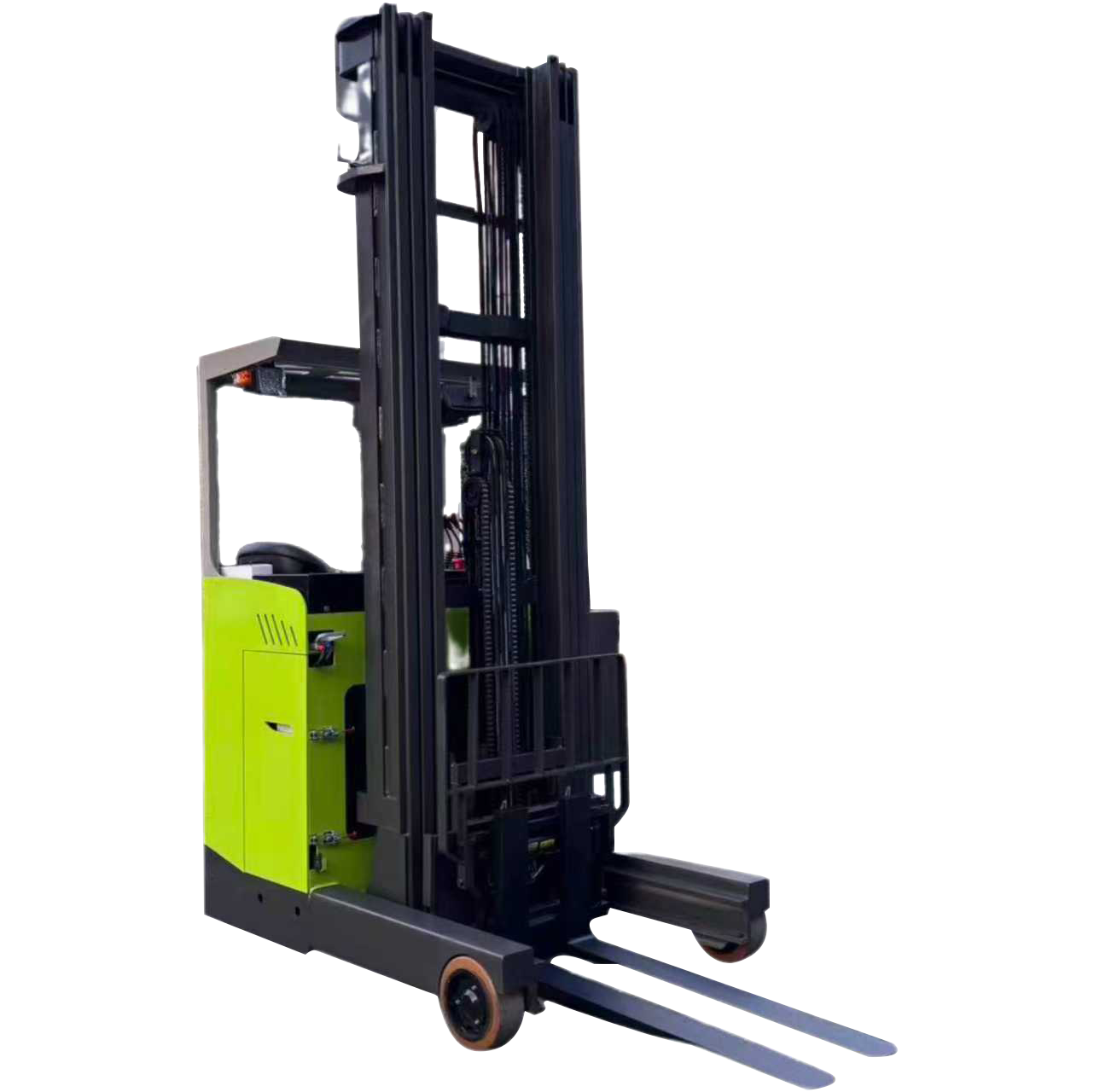
The wheel layout is "two front and one rear": two driving/load-bearing wheels at the front, and one 360° rotatable universal wheel (steering wheel) at the rear. The three fulcrums form a stable triangular support structure. The core advantage of this layout is an extremely small turning radius and a more compact body, specially designed for narrow space operations. The common load capacity range is 1-3 tons, and the lifting height is ≤ 6 meters, suitable for light to medium load handling scenarios.
2. Four-Wheel Electric Forklift: A Stable and Reliable "Heavy Load Undertaker"
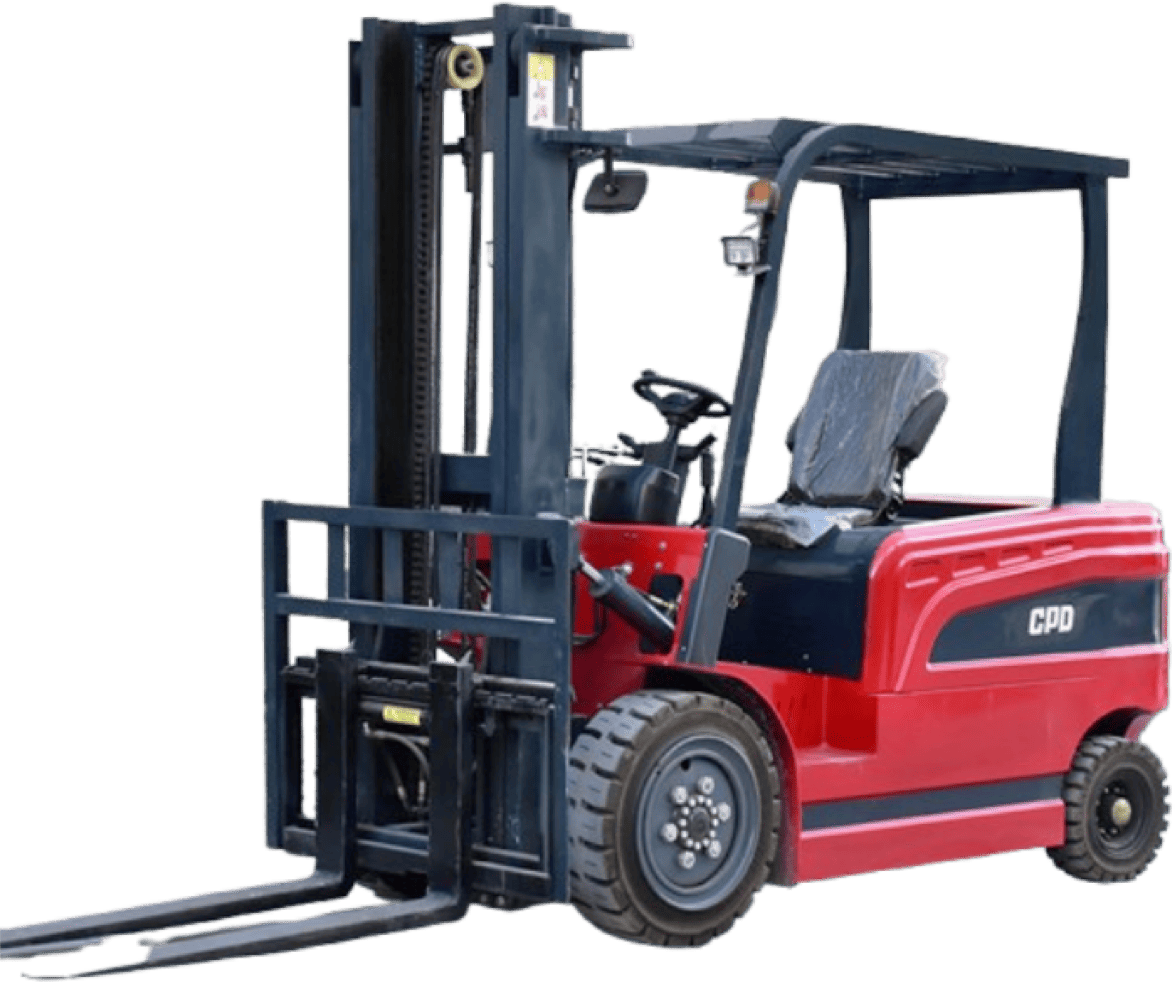
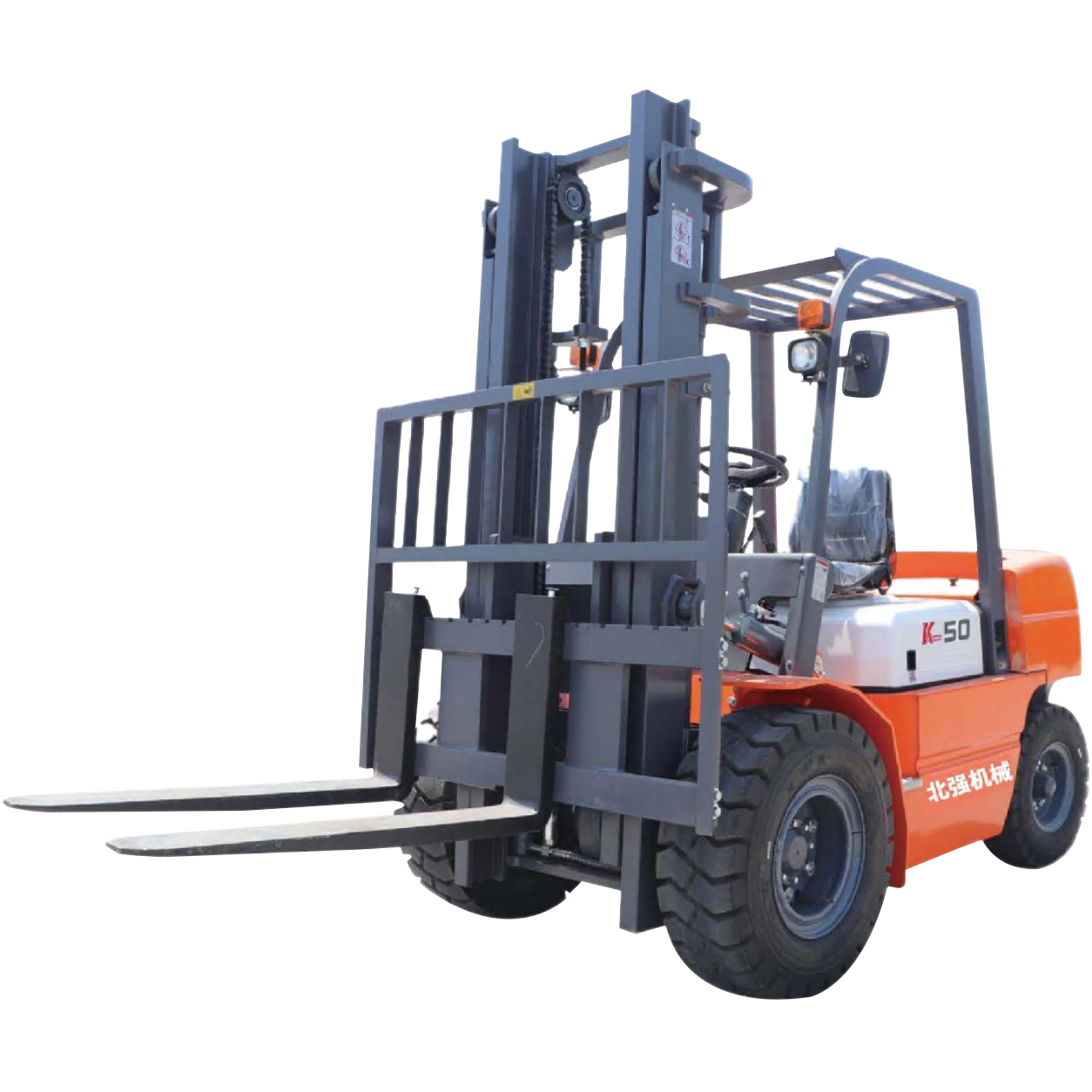
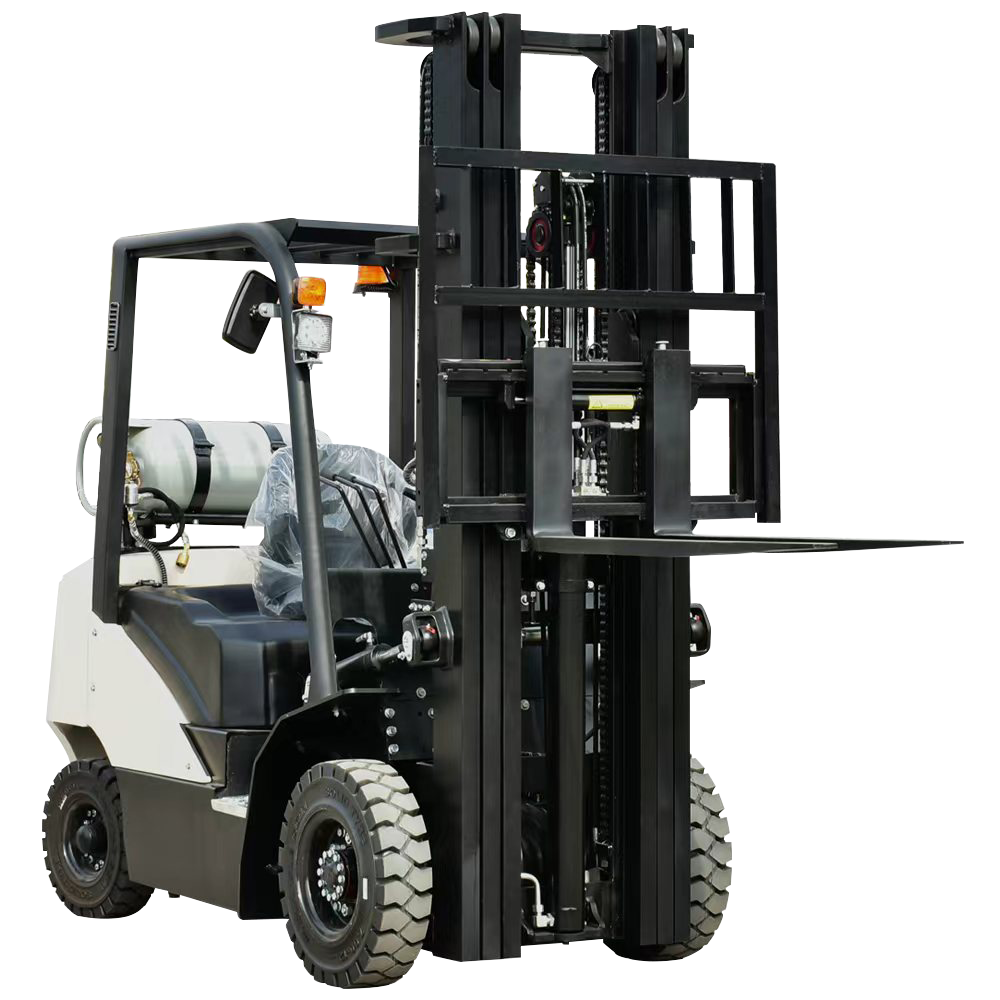
The wheel layout is "two front and two rear": two driving wheels at the front and two steering wheels at the rear. The four fulcrums form a rectangular support structure. The core advantage is extremely strong stability, stronger load-bearing capacity, and higher operating height. The common load capacity range is 1.5-10 tons, and the lifting height can reach 12 meters, suitable for medium to heavy load handling and high-rise shelf stacking scenarios.
II. Core Dimension Comparison: See Key Differences at a Glance
For a more intuitive distinction, we make a detailed comparison from 6 key dimensions that warehouses care most about when selecting, helping you quickly lock in the differences:
Comparison Dimensions | Three-Wheel Electric Forklift | Four-Wheel Electric Forklift |
Maneuverability (Turning Radius) | Extremely small, usually 1.2-1.8 meters, can turn in place or at small angles, with full flexibility | Larger, usually 1.8-2.8 meters, requires more space for turning, general flexibility |
Operation Aisle Width | Narrow, 2.0-2.5 meters for normal operation, suitable for high-density storage warehouses | Wide, requires more than 2.5-3.5 meters of aisle, higher space requirements |
Stability and Load Capacity | Triangular support is stable, but stability is weak during heavy load/high-altitude operations; maximum load capacity is usually ≤ 3 tons, lifting height ≤ 6 meters | Rectangular support has extremely strong stability, no pressure during heavy load/high-altitude operations; maximum load capacity can reach 10 tons, lifting height ≤ 12 meters |
Operation Environment Adaptability | Suitable for closed scenarios such as indoor narrow spaces, small warehouses, and gaps between workshop equipment; not suitable for outdoor or rough roads | Suitable for indoor large-scale warehousing and high-rise shelf operations, can also adapt to outdoor flat roads (some models have rainproof functions) |
Energy Consumption and Maintenance | Lightweight body (10%-20% lighter than four-wheel with the same load), lower energy consumption; simple structure, low maintenance cost, annual maintenance cost about 800-1500 yuan | Heavy body, slightly higher energy consumption; complex structure (dual steering wheel system), slightly higher maintenance cost, annual maintenance cost about 1200-2000 yuan |
Purchase Cost | Lower, 10%-20% cheaper than four-wheel with the same load, low entry threshold | Higher, heavy load/high-altitude models are more expensive, suitable for enterprises with sufficient budget |
III. Scenario Adaptation Guide: Which Is More Suitable for Your Warehouse?
Combined with the core working conditions such as warehouse space size, load demand, operating height, and storage density, the corresponding selection suggestions are as follows:
1. Scenarios Where Three-Wheel Electric Forklifts Are Preferred
If your warehouse meets the following characteristics, three-wheel electric forklifts are definitely a better choice, which can maximize space utilization and reduce costs:
Small warehouses/narrow-aisle warehousing: Aisle width ≤ 2.5 meters, such as e-commerce small-package warehouses, convenience store back-end warehouses, small pharmaceutical warehouses, etc. Three-wheel electric forklifts can turn freely in 2.0-meter-wide aisles, and space utilization is more than 30% higher than that of four-wheel ones;
Light load handling needs: Daily load ≤ 2 tons, lifting height ≤ 4 meters, such as raw material transfer in small and micro enterprise workshops, light goods stacking in food processing plants;
Compact indoor scenarios: Such as operations in gaps between workshop equipment and warehouse corners, which require frequent small-angle steering. The flexibility of three-wheel electric forklifts can avoid frequent route adjustments and improve operation efficiency;
Limited budget: Startups and small and micro enterprises pursuing high cost performance with low daily operation intensity (daily ≤ 6 hours). Three-wheel electric forklifts are more friendly with low purchase and maintenance costs.
Case Reference: A small e-commerce warehouse (aisle width 2.2 meters, load 1.5 tons, lifting height 3.5 meters) improved single-warehouse operation efficiency by 25%, space utilization from 60% to 85%, and annual maintenance cost was only 1200 yuan after selecting three-wheel electric forklifts.
2. Scenarios Where Four-Wheel Electric Forklifts Are Preferred
If your warehouse has needs for heavy load, high altitude or large-scale warehousing, the stability and load-bearing capacity of four-wheel electric forklifts can avoid operation risks and improve long-term efficiency:
Large-scale warehousing/high-rise shelves: Aisle width ≥ 2.5 meters, lifting height > 4 meters (especially 6-12 meters high-rise shelves), such as large e-commerce logistics centers and manufacturing finished product warehouses. Four-wheel electric forklifts have extremely strong stability during high-altitude stacking, which can avoid the risk of goods dumping;
Medium and heavy load handling needs: Daily load > 2 tons (especially 3-10 tons), such as raw material transfer in large manufacturing and loading/unloading of heavy goods;
Mixed operation environment: Need to take into account both indoor warehousing and outdoor flat road operations (such as loading/unloading platforms in logistics parks). The body stability of four-wheel electric forklifts is more suitable for outdoor scenarios, and some models have rainproof and sun protection functions with stronger adaptability;
High-intensity operations: Daily operation > 8 hours (multiple shifts), heavy load and high-frequency operations. The structural strength of four-wheel electric forklifts is more durable, and the failure rate is 15%-20% lower than that of three-wheel ones, suitable for long-term high-intensity operation.
Case Reference: A large home appliance warehouse (aisle width 3.0 meters, load 5 tons, lifting height 8 meters) improved high-rise shelf stacking efficiency by 40%, reduced goods damage rate from 1.2% to 0.3%, and the failure rate of equipment was only 5% after 3 years of continuous operation after selecting four-wheel electric forklifts.
3. Supplementary Suggestions for Special Scenarios
Low-temperature cold chain warehouses: Regardless of which type is selected, a special cold chain model is required; if the aisle is narrow (≤ 2.5 meters), select a three-wheel special cold chain forklift (with low-temperature-resistant battery and seals); if it is heavy load and high altitude, select a four-wheel special cold chain model;
High humidity/corrosive environment (such as food processing workshops, chemical warehouses): Priority is given to four-wheel anti-corrosion models (more stable body, can be fully sealed for protection); if the space is narrow, consider three-wheel anti-corrosion models;
Intelligence needs: Both models can be equipped with intelligent navigation systems, but four-wheel models are more suitable for AGV automated heavy load operations (such as automatic stacking of heavy goods in intelligent warehouses) due to their strong stability.
IV. Three-Step Selection Decision-Making Method: Avoid Pitfalls
If you are still unsure, you can make a quick decision in the following three steps to accurately match your needs:
Step 1: Determine core constraints — first check the warehouse's minimum aisle width and daily maximum load. If the aisle is ≤ 2.5 meters or the load is ≤ 2 tons, prioritize three-wheel; if the aisle is ≥ 2.5 meters and the load is > 2 tons, prioritize four-wheel;
Step 2: Check operating height and environment — if the lifting height is > 4 meters or outdoor operations are required, directly select four-wheel; if only indoor narrow space and light load operations are needed, select three-wheel;
Step 3: Calculate total life cycle cost — if the budget is limited and operation intensity is low, three-wheel is more cost-effective; for high-intensity heavy load operations, four-wheel is more cost-effective in the long run due to its low failure rate and high durability.
V. Reminders on Common Selection Misunderstandings
Misunderstanding 1: "Choose three-wheel for small spaces regardless of load" — if the space is narrow but the load is > 2 tons, you need to select "special narrow-aisle four-wheel forklifts" (some brands have narrow-aisle four-wheel models with a turning radius that can be reduced to 2.0 meters) to avoid unstable heavy load operations of three-wheel forklifts;
Misunderstanding 2: "Choose three-wheel for heavy load if the budget is limited" — heavy load (> 2 tons) of three-wheel forklifts will accelerate the loss of motors and hydraulic systems, increasing the failure rate by 30%. It saves money in the short term but has higher maintenance costs in the long term;
Misunderstanding 3: "Four-wheel is not suitable for indoor use" — four-wheel is more efficient for large indoor warehouses (wide aisles, heavy load and high altitude). The key is to match space and load, not the absolute division of "indoor/outdoor".
Conclusion
There is no absolute advantage or disadvantage between three-wheel and four-wheel electric forklifts. The core is to match the core working conditions of the warehouse: "space + load + operating height". Choose three-wheel for small spaces and light loads to pursue flexibility and efficiency; choose four-wheel for large spaces and heavy loads to pursue stability and durability. When selecting, there is no need to struggle with "which is better", but to focus on the actual operation needs of your own warehouse and make a comprehensive judgment combined with the total life cycle cost. If you can provide specific parameters such as warehouse aisle width, daily load, and lifting height, you can further accurately match the model.
Our manager will contact you shortly.
To contact you about our products and services.
Copyright © Xingtai Beiqiang Machinery Manufacturing Factory. 2025.
Technical support:Echola