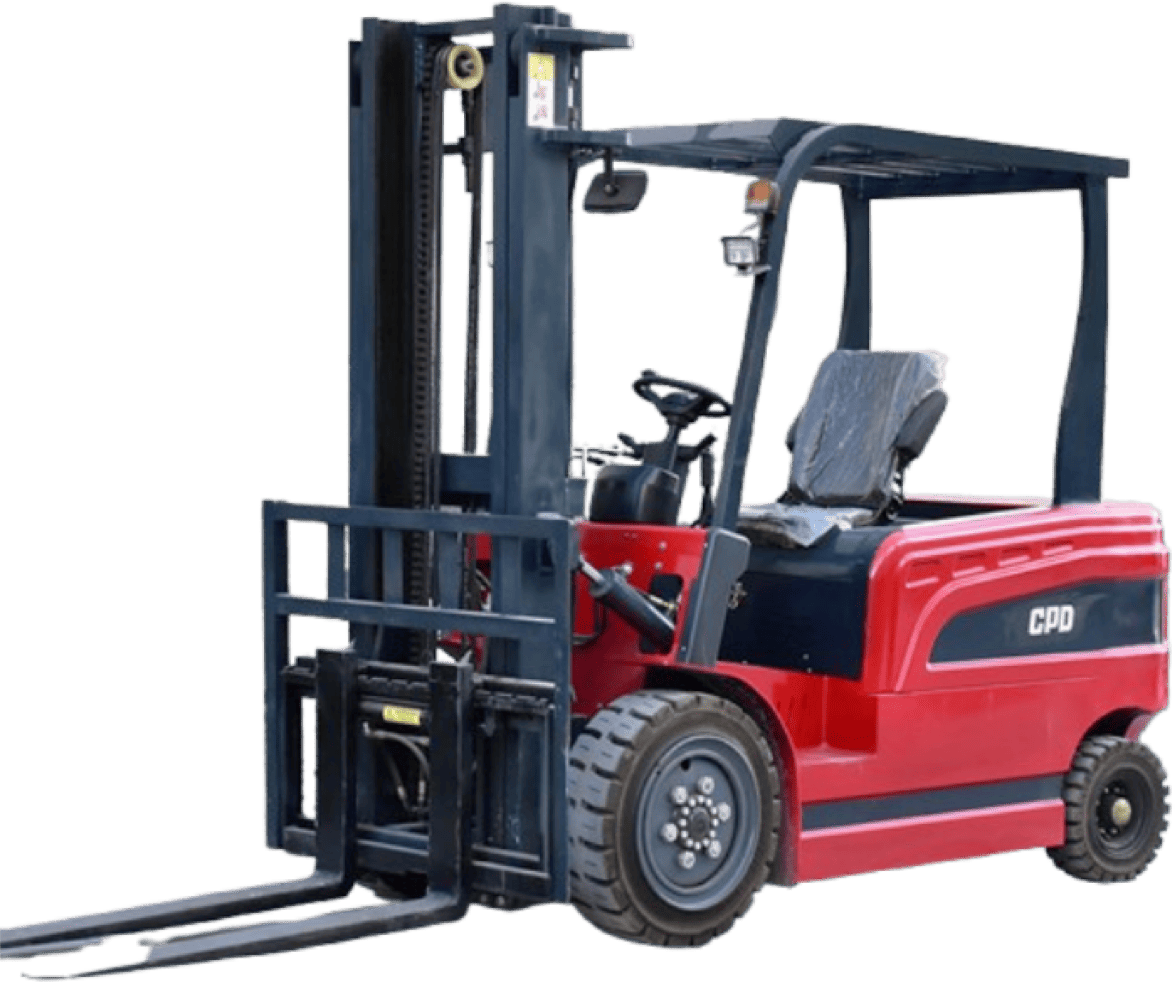
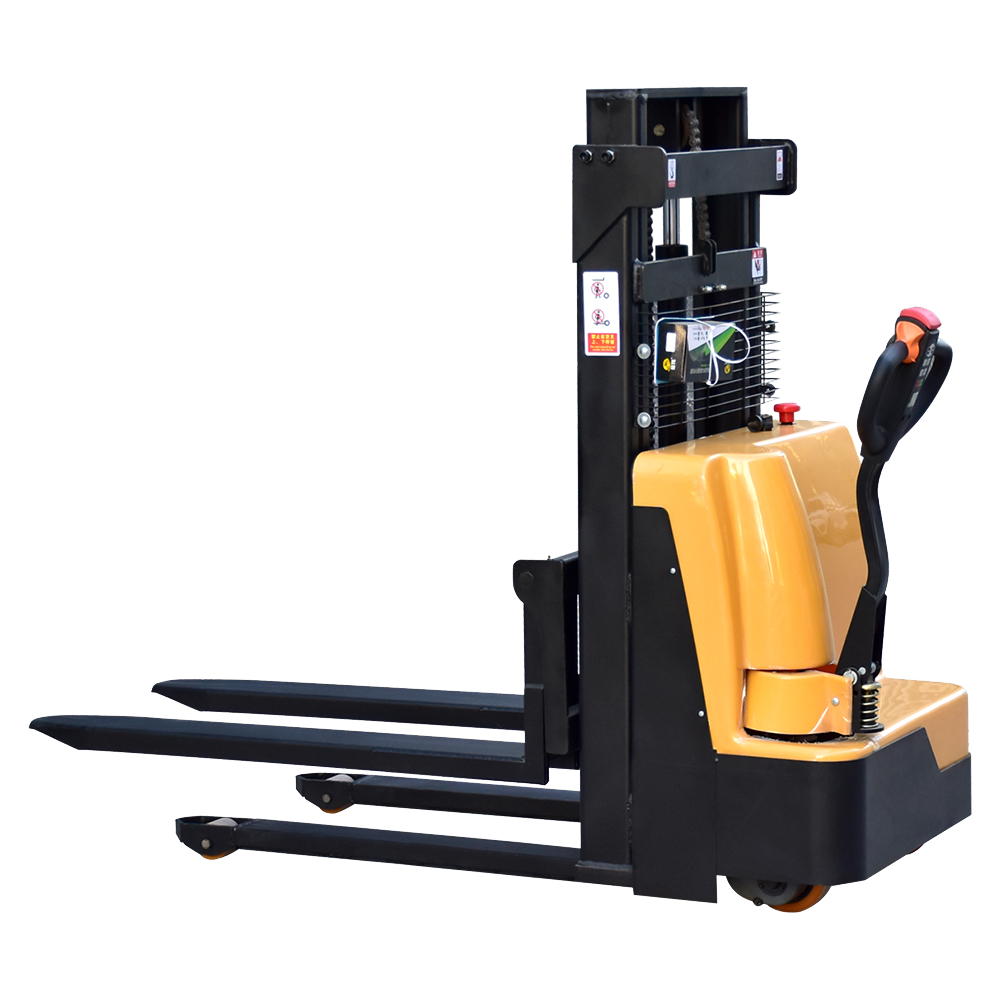
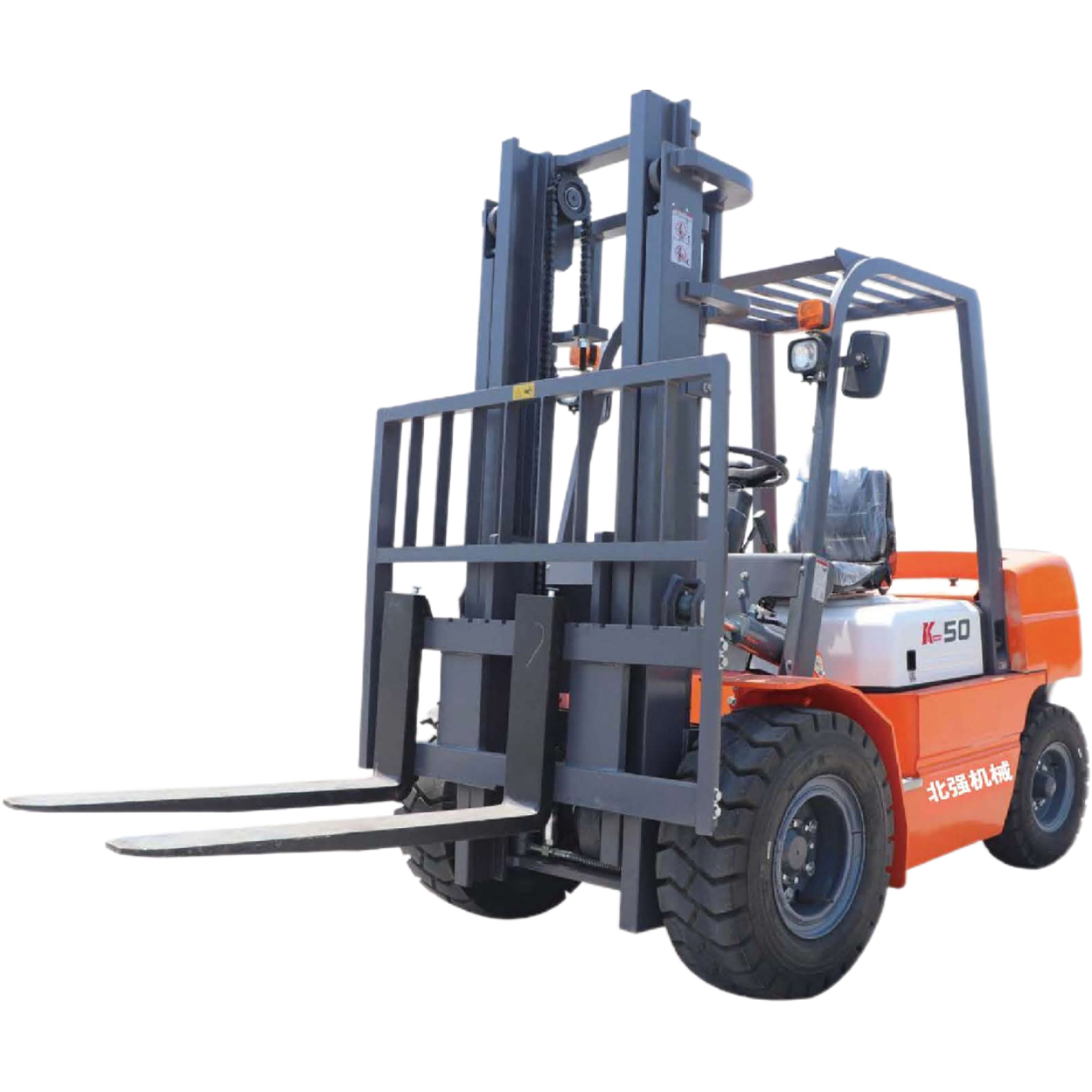
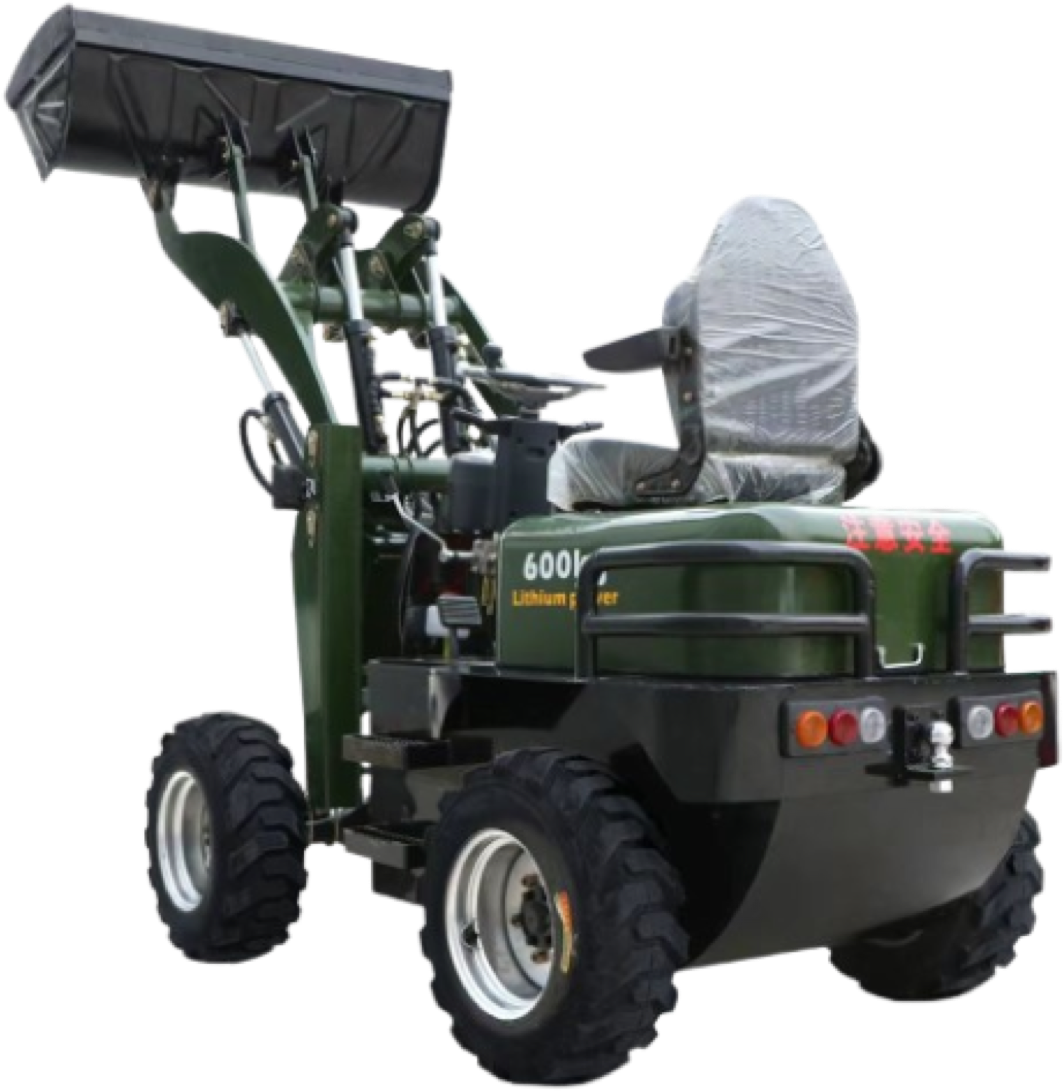
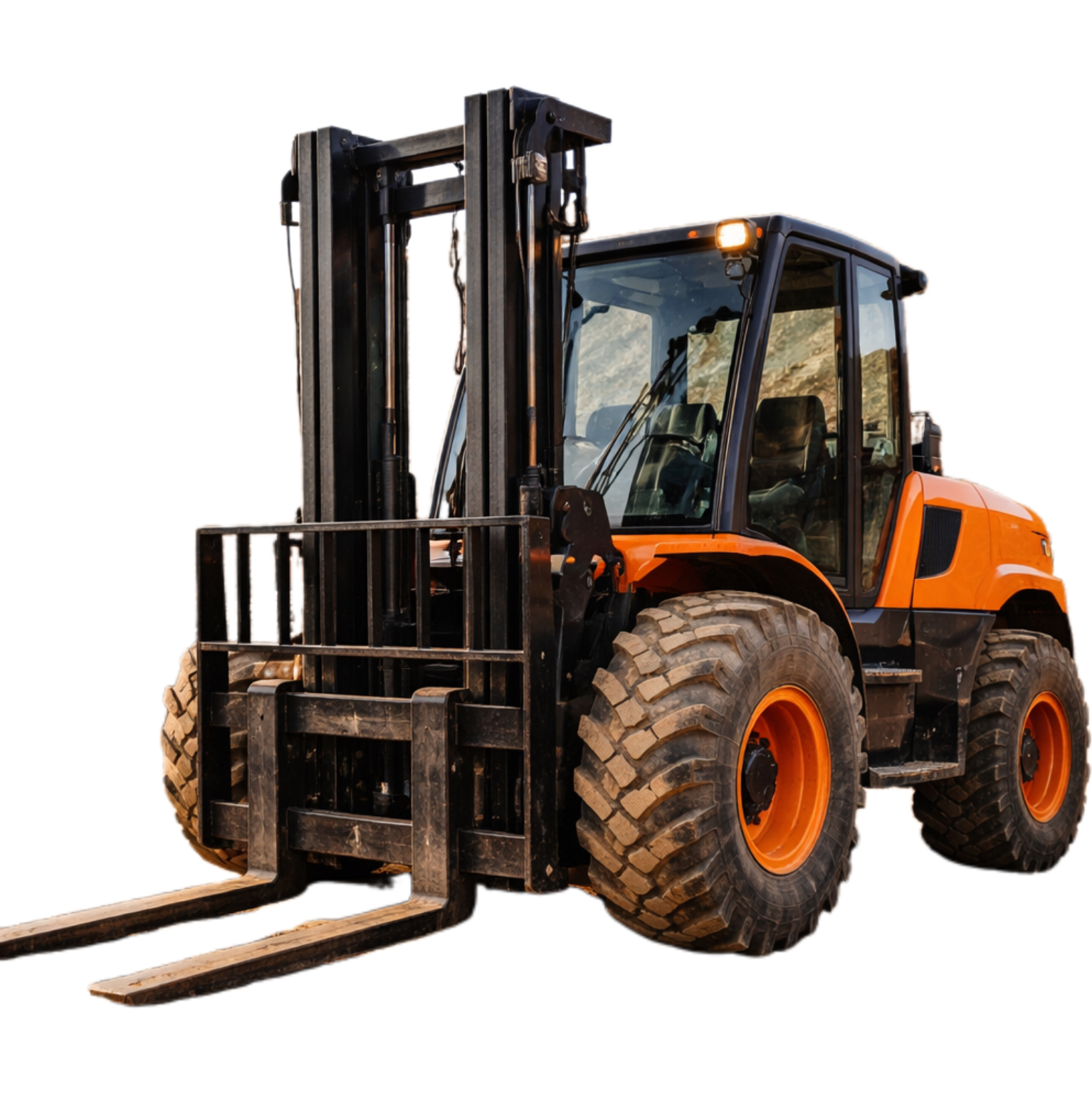


Amid the accelerating global implementation of the "dual carbon" goals, industrial logistics, as a key field of carbon emissions, is undergoing a profound green transformation. As the core handling equipment in industrial logistics, the upgrading of the power form of forklifts has become the key to this transformation—the disadvantages of high emissions and high noise of traditional diesel forklifts have become increasingly prominent, while electric forklifts, relying on the advantages of zero emissions and low energy consumption, have gradually transformed from an "optional alternative" to a "rigid demand". Data shows that in 2025, the global electric forklift market size is expected to reach 4.79 billion US dollars, accounting for more than 70% of the total forklift market size; as the world's largest producer and seller of electric forklifts, China's new energy forklift sales proportion has reached 65%, with lithium battery penetration rate exceeding 40%, and an "oil-to-electricity" revolution sweeping the global industrial logistics field has taken shape. This article will analyze the development status and future trends of the electric forklift industry from three core dimensions: global market pattern, leading enterprise competition strategies and technological differentiation.
I. Global Market Pattern: Obvious Regional Differentiation, China Leads Growth
In 2025, the global electric forklift market presents a pattern of "regional differentiation and China leading". In terms of market size, the global forklift market size is expected to reach 6.84 billion US dollars, of which electric forklifts account for over 70% with a market size of about 4.79 billion US dollars. As the world's largest producer and seller of electric forklifts, China's output in 2025 is expected to exceed 1.8 million units, accounting for more than 45% of the global total. From January to May, sales have reached 602,000 units, a year-on-year increase of 9.3%, and electric forklifts account for over 60%, far exceeding the global average.
Regional markets show different development characteristics: driven by Industry 4.0 and e-commerce, the North American market's electric forklift proportion has risen to 35% with a market size of 2 billion US dollars, where international brands such as Toyota and KION occupy a dominant position; led by countries such as Germany and the United Kingdom, the European market has accelerated the process of electrification and intelligence, with a market size of 1.8 billion US dollars and lithium battery forklift penetration rate exceeding 40%, and brands such as Jungheinrich and Linde occupy the high-end market by virtue of technological advantages; the Southeast Asian market has become the main battlefield for Chinese brands. In 2025, Chinese electric forklifts account for 41% of the Southeast Asian market share. Enterprises such as BYD and Liugong have rapidly seized market share through localized production and service network layout.
II. Leading Enterprise Competition: Differentiated Layouts Between Global Giants and Chinese Leaders
The global electric forklift market has formed a competitive pattern of "international giants positioning in high-end markets, Chinese leaders winning by scale, and small and medium-sized enterprises breaking through in segments". Leading enterprises have launched fierce competitions in the global market through differentiated strategies.
1. International Giants: Technological Leadership, Focus on High-End Markets
International giants such as Toyota, KION and Jungheinrich occupy a dominant position in the global high-end market by virtue of profound technological accumulation and brand influence. Toyota focuses on hydrogen fuel forklift R&D by acquiring local brands, with a global market share of 8%, and its hydrogen fuel forklifts are highly favored in the European and American high-end markets; KION launched digital twin forklifts, which optimize the operation process through virtual simulation technology, with a unit price 50% higher than that of traditional models and a gross profit margin of over 45%; Jungheinrich and Huawei jointly developed 5G forklifts, realizing remote control and cluster scheduling, accounting for 20% of sales in the European market in 2025. Through technological innovation and high-end positioning, these enterprises firmly occupy the profit highland of the global electric forklift market.
2. Chinese Leaders: Scale Advantages, Global Expansion
Chinese leading enterprises such as Anhui Heli and Hangcha Group have rapidly expanded in the global mid-to-low-end market by virtue of scale advantages and cost control capabilities. Anhui Heli has a market share of 24.88%, with leading products covering 1-46 ton forklifts, and comprehensive performance reaching the international advanced level. Its R&D investment in 2025 exceeded 1 billion yuan to accelerate the high-end transformation; Hangcha Group focuses on the intelligent logistics field, with its intelligent production line capable of rolling off one forklift every 6.5 minutes. Its "Banma Robot" series of AGV forklifts accounted for 30% of sales in 2025 with a gross profit margin of over 40%; Taiyuan Heavy Industry Group successfully entered the first echelon by virtue of the technological breakthrough of 65-ton heavy-duty forklifts, filling the gap of domestic heavy industry electric forklifts. In 2025, the export volume of Chinese electric forklifts increased by 67% year-on-year, accounting for 28% of the European market. Enterprises such as BYD and Liugong have built more than 200 charging stations in Europe and the United States, constructing a complete service network and promoting domestic electric forklifts to go global.
3. Small and Medium-Sized Enterprises: Segmented Fields, Differentiated Breakthroughs
Small and medium-sized enterprises have achieved differentiated development by deeply cultivating segmented fields: Shenzhen Boton Flavors & Fragrances developed special electric forklifts for -30℃ low-temperature environments, with a market share of 60%; Zhejiang NHU launched ultra-thin electric forklifts with a minimum turning radius of only 1.5 meters, accurately adapting to narrow space operations; Zhongli Co., Ltd. entered the market with "Little King Kong" electric walk-behind warehouse forklifts, with a market share of 21.89% and export revenue accounting for over 50%. By focusing on specific scenarios, these enterprises have opened up a blue ocean in the market dominated by giants.
III. Technological Differentiation: Competitive Focus in Four Core Tracks
In the competition of the electric forklift industry, technological differentiation has become the key for enterprises to build core competitiveness. Leading enterprises have laid out around four core tracks: battery technology, heavy-load capacity, intelligence and power diversification, forming their own technological advantages.
1. Battery Technology: Competition in Energy Density and Cycle Life
Battery technology is the core support for the performance improvement of electric forklifts. International brands such as Toyota and Jungheinrich mainly adopt lithium batteries from international manufacturers such as Panasonic and Samsung SDI, with an energy density of over 200Wh/kg and a cycle life of over 8,000 times; Chinese enterprises have achieved technological breakthroughs through independent R&D. The Suixing 324Ah Pro version commercial vehicle battery cell launched by REPT LITHIUM ENERGY has an energy density of 198Wh/kg, a full-life cycle of more than 10,000 cycles. The supporting system can achieve zero attenuation operation for two years and a service life of more than 13 years. At the same time, fast charging technology has become a new competitive focus. The 120kW liquid-cooled ultra-fast charging technology combined with optical-storage charging stations can achieve an electricity cost as low as 0.15 yuan per kWh, and full charging can be completed in 1.5 hours with dual-gun fast charging, enabling electric forklifts to achieve 24-hour shift operation without pressure.
2. Heavy-Load Technology: Breaking Scene Limitations, Entering Heavy Industry
Heavy-load capacity is the key for electric forklifts to expand application scenarios. In the past, electric forklifts were mostly limited to light-load warehousing scenarios. In 2025, the 65-ton global largest lithium-ion forklift rolled off the production line by Taiyuan Heavy Industry Group is equipped with a 528kWh super-large battery pack, with a transmission efficiency of 95%, which can lift dozens of household cars at one time. This marks the official entry of electric forklifts into heavy industry and heavy-load scenarios such as steel and ports. Hangcha Group and Bosch Rexroth have jointly overcome the "choke point" technology of high-pressure hydraulic components, increasing the localization rate of high-end components to 50%, solving the stability problem of hydraulic systems in heavy-load scenarios; Anhui Heli has invested 2 billion yuan to build a lithium-ion battery recycling industrial park, constructing a closed-loop system of "production-use-recycling", further improving the full-life cycle economy of heavy-duty electric forklifts.
3. Intelligence: From Single Equipment to Intelligent Logistics Solutions
Intelligence has become the core competitive barrier for electric forklift enterprises. Chinese enterprises have performed prominently in the field of AGV forklifts. The "Banma Robot" series of AGV forklifts of Hangcha Group accounted for 30% of sales in 2025, which can realize automatic path planning, precise positioning and cluster scheduling; international brands lead in the field of intelligent interconnection. The 5G forklifts developed by Jungheinrich in cooperation with Huawei have realized remote control and cluster collaboration, and KION's digital twin forklifts optimize the operation process through virtual simulation technology. In addition, the popularization of maintenance-free BMS battery management systems and intelligent energy recovery systems has further improved equipment operation efficiency. The high-rate pulse charge-discharge battery cells of REPT LITHIUM ENERGY have further empowered electric forklifts to achieve instantaneous output of strong kinetic energy and efficient energy recovery, fully adapting to the needs of continuous climbing and steep descent working conditions in heavy-duty transportation scenarios.
4. Power Diversification: Lithium Battery as the Mainstream, Emerging Routes Such as Hydrogen Fuel and Methanol in Parallel
At present, lithium battery technology is still the mainstream choice for electric forklifts, but emerging power routes such as hydrogen fuel and methanol are accelerating their rise. Toyota focuses on hydrogen fuel forklift R&D. Its hydrogen fuel forklifts have a range of 400 kilometers and only take 3 minutes to refuel, suitable for long-distance and high-intensity operation scenarios; the hydrogen energy and methanol-powered intelligent forklifts laid out by Taiyuan Heavy Industry Group have entered the testing stage, and are expected to achieve breakthroughs in heavy industry and long-distance transportation scenarios; the commercial application of solid-state battery technology will also be put on the agenda, which is expected to further improve battery energy density and safety, solving the range problem in extreme environments.
IV. Future Outlook: Technological Integration and Ecological Collaboration, Opening a New Chapter for the Industry
Looking forward to the next 3-5 years, the global electric forklift industry will usher in a new development stage of "technological integration and ecological collaboration". At the technological level, battery technology will continue to upgrade, and new technologies such as solid-state batteries and sodium-ion batteries are expected to achieve commercial application; intelligence and electrification will be deeply integrated, and electric forklifts will become core nodes of the intelligent logistics network, realizing seamless collaboration with warehouse management systems and unmanned delivery vehicles; the power route will be more diversified, and emerging powers such as hydrogen fuel and methanol will achieve breakthroughs in specific scenarios.
At the industrial ecological level, the battery recycling system will be gradually improved. It is expected that the full-life cycle utilization rate of power batteries will exceed 80% in the next 5 years; intelligent operation and maintenance services will become a new growth point. From 2025 to 2030, innovative models such as integrated optical-storage-charging systems and wireless charging will reshape the industrial ecology, and the added value ratio of intelligent operation and maintenance services will increase to 40%. At the same time, continuous policy guidance and standard improvement will promote the industry's transformation towards "high-endization, greenization and standardization". The global competitiveness of domestic electric forklifts will be further improved, and greater breakthroughs are expected in high-end markets such as Europe and the United States.
Conclusion
The global electric forklift market is in a period of rapid growth. Leading enterprises have launched fierce competitions around technological differentiation, forming a pattern where international giants and Chinese leaders coexist. With scale advantages and technological innovation, Chinese enterprises continue to increase their share in the global market; international giants firmly occupy the profit highland through high-end technology and brand influence. In the future, with the in-depth advancement of technological integration and ecological collaboration, electric forklifts will not only completely replace traditional internal combustion forklifts, but also become the core support of the intelligent logistics system, injecting strong momentum into the green transformation and efficiency improvement of the global supply chain. For enterprises, seizing the opportunities of technological innovation, scenario expansion and overseas markets will be the key to achieving leapfrog development.
Our manager will contact you shortly.
To contact you about our products and services.


Copyright © Xingtai Beiqiang Machinery Manufacturing Factory. 2025.
Technical support:Echola