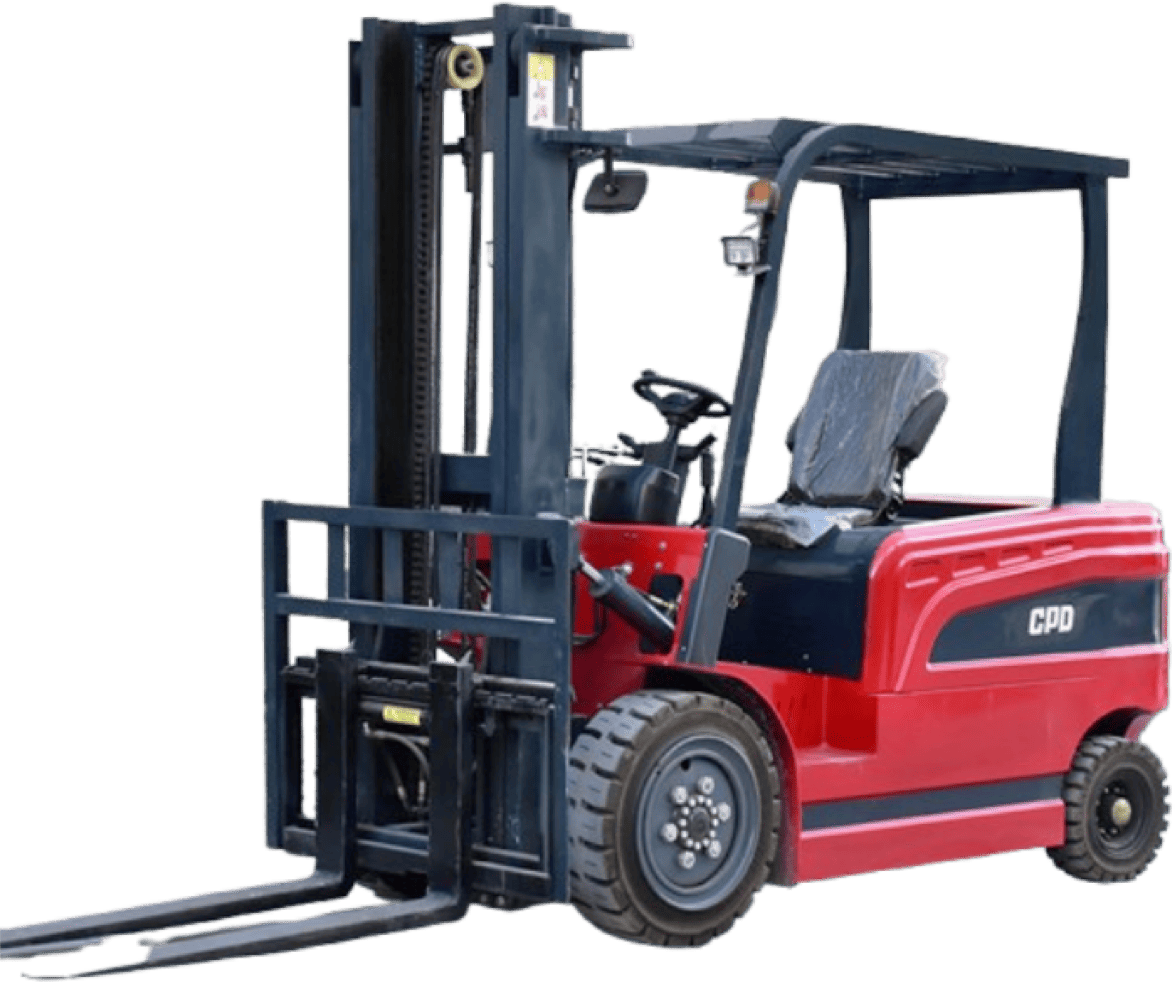
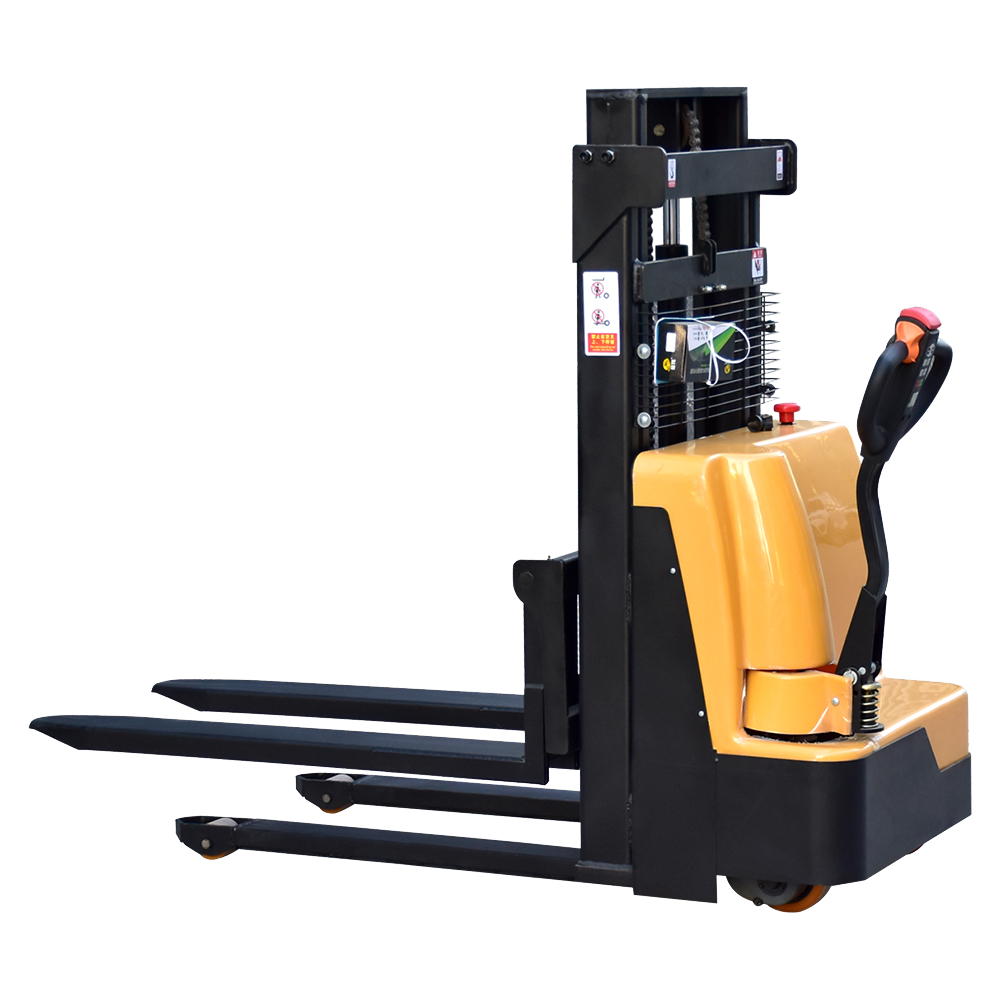
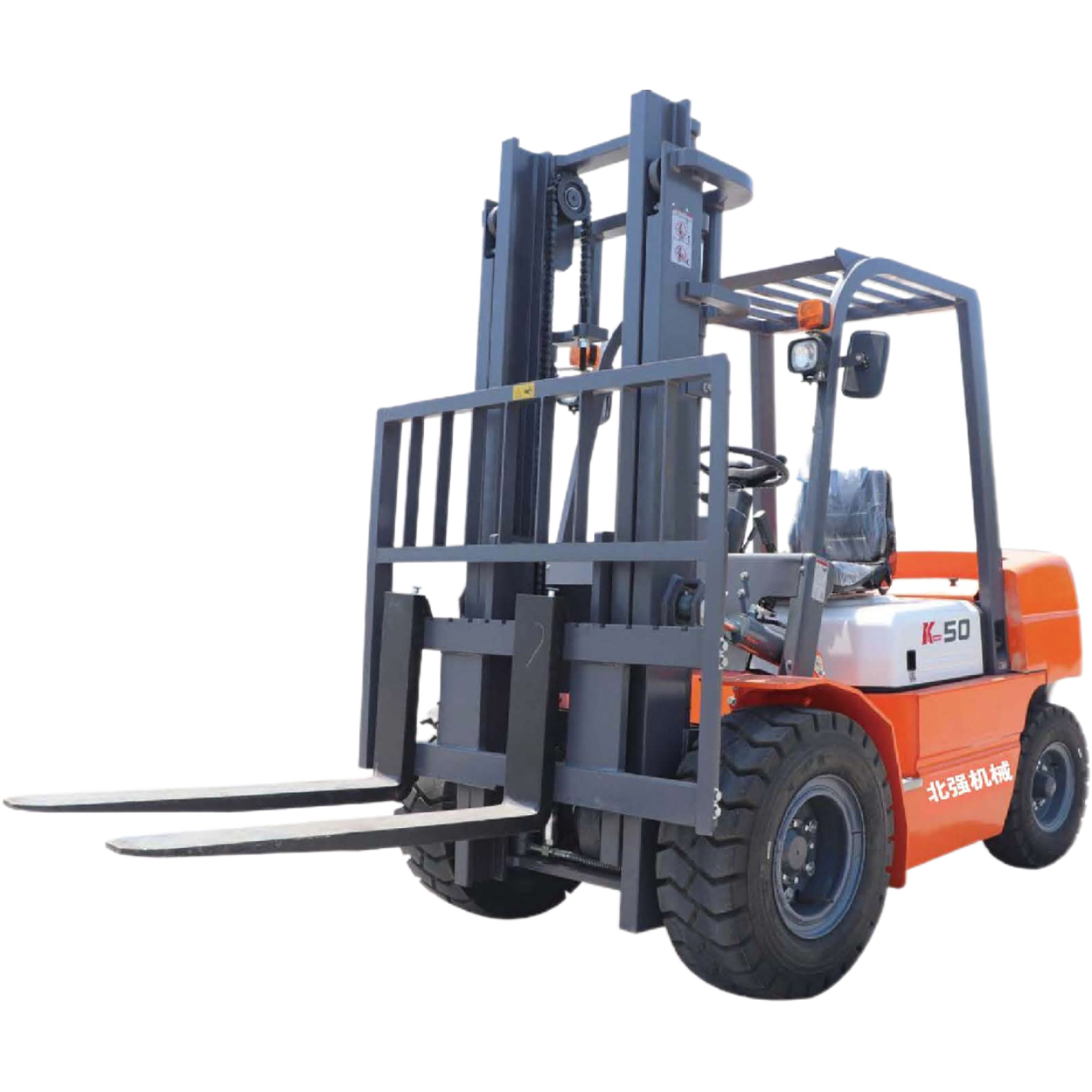
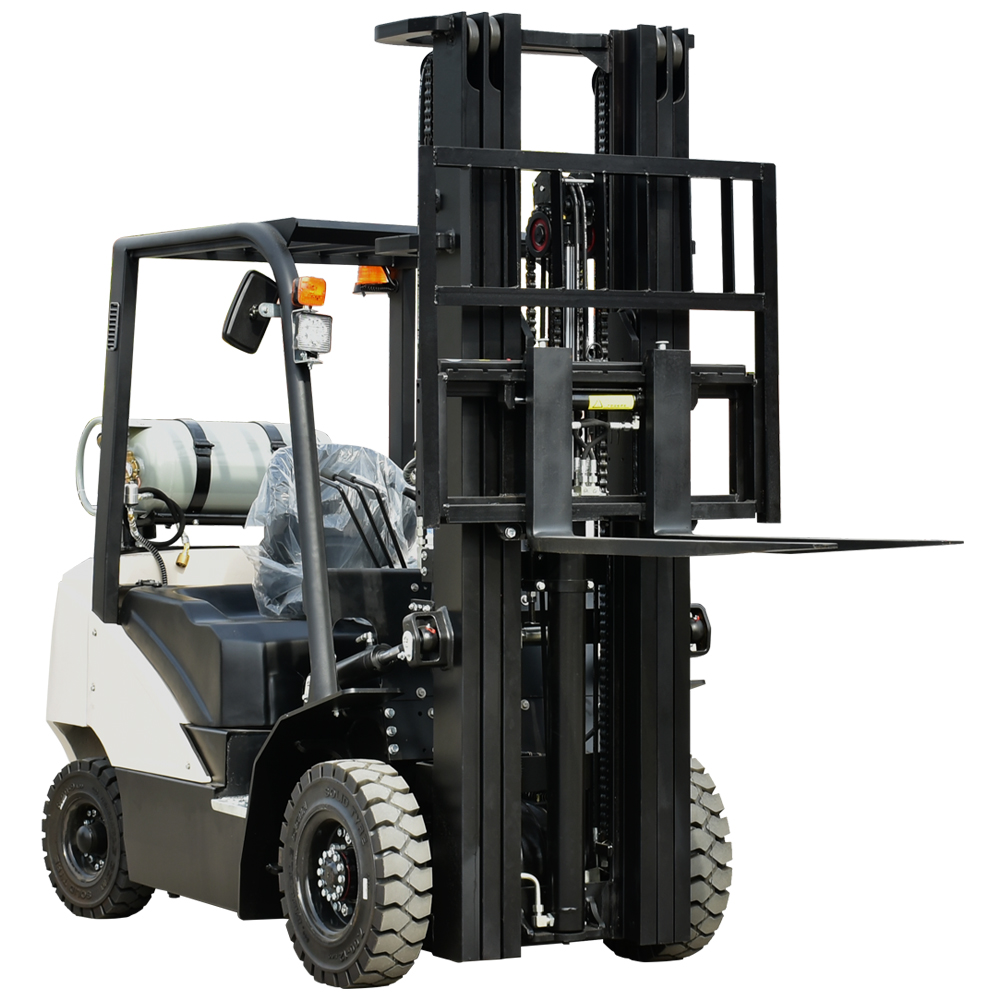
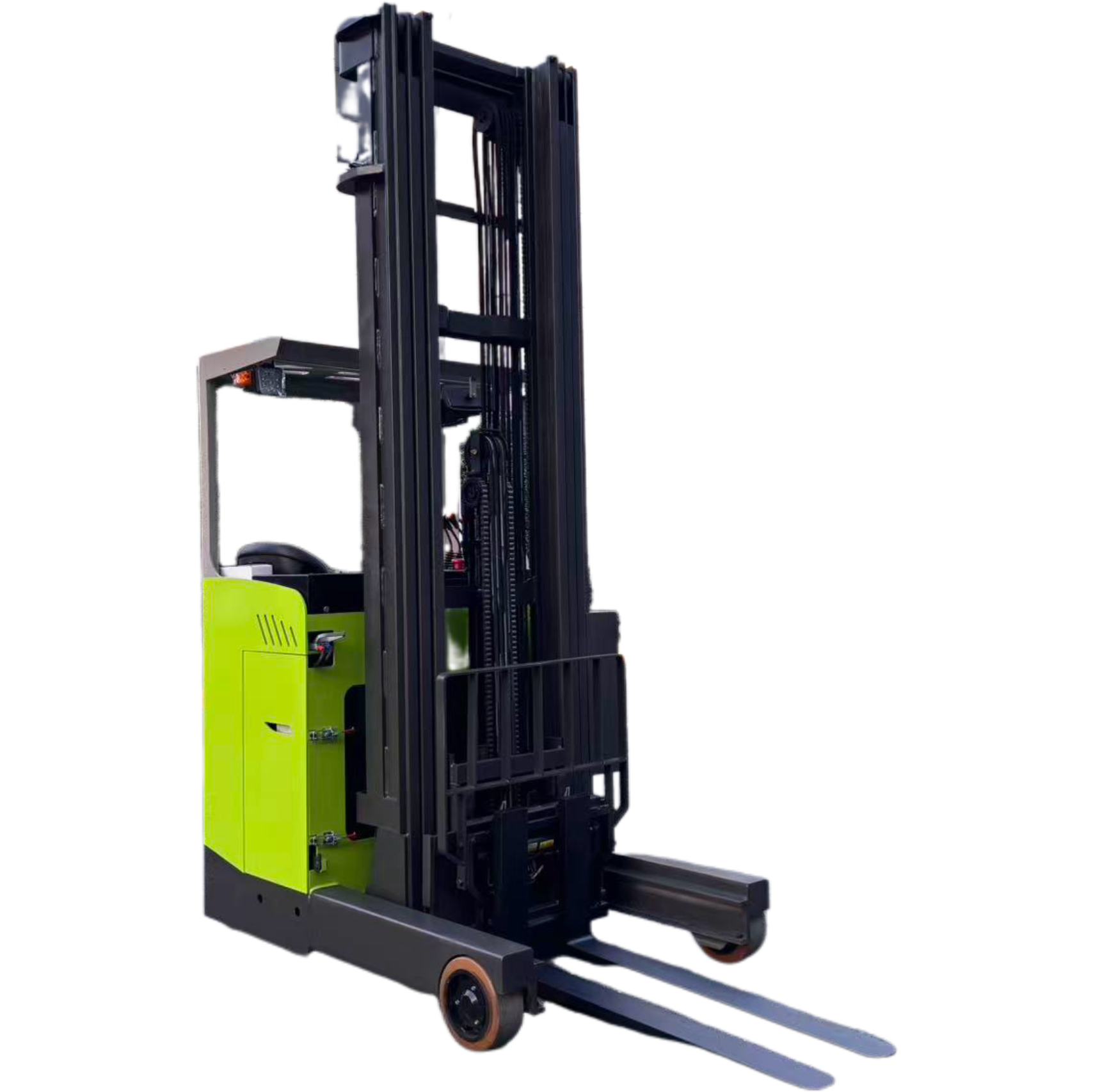
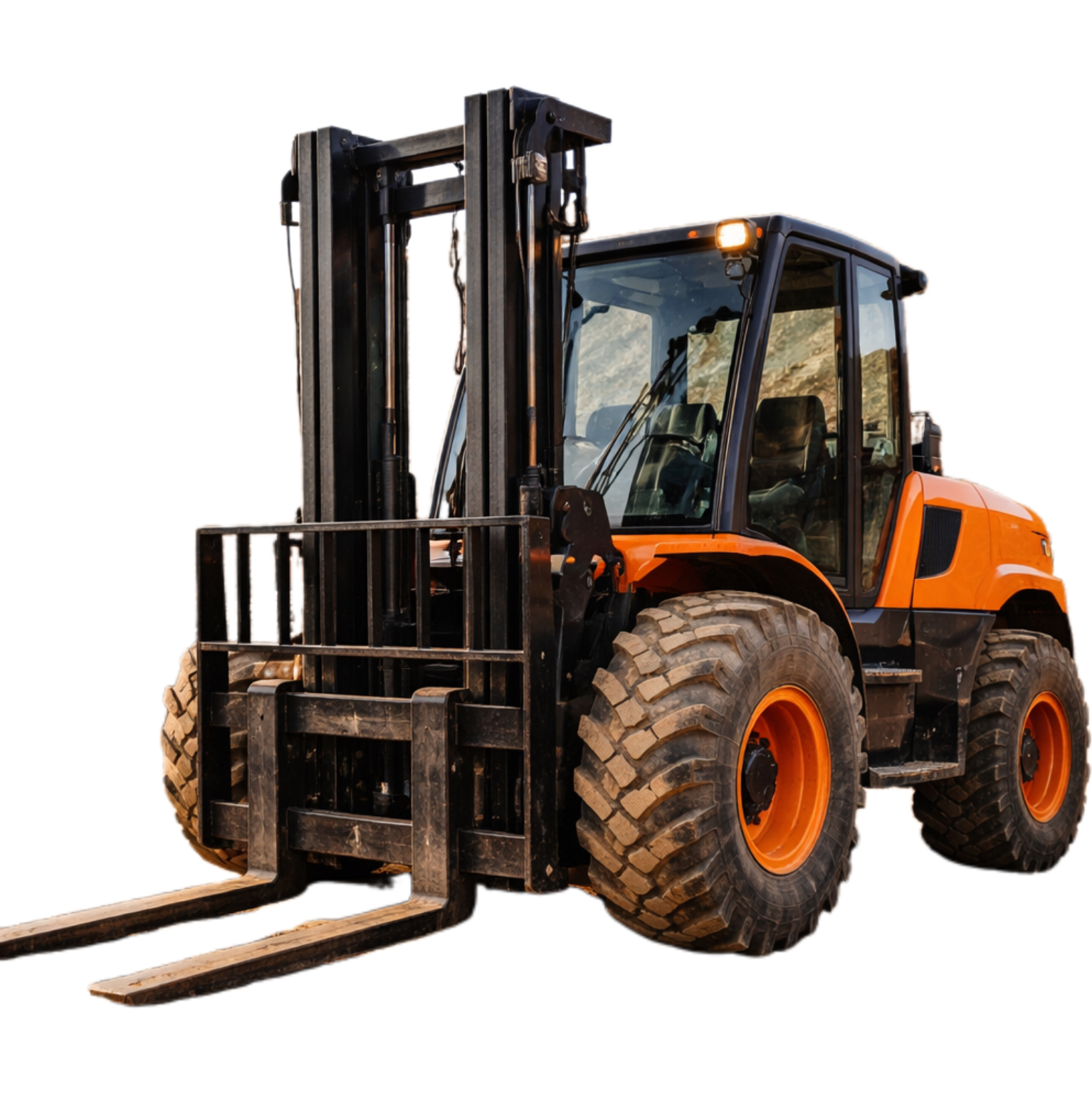


In scenarios such as small and medium-sized warehousing, workshop transfer, and e-commerce sorting, 2-ton electric forklifts have become the mainstay of material handling due to their advantages of "golden load capacity + flexible operation". The core supporting their efficient and safe operation, in addition to the power system and braking technology, is more importantly the load balance design — it directly determines whether the forklift can achieve stable lifting and precise transfer under the rated load of 2 tons, and even relates to the triple safety of personnel, goods and equipment.
Many people mistakenly believe that "load balance" is simply "being strong enough", but in fact, it is a complex system integrating structural mechanics, hydraulic control and intelligent regulation. Today, we will deeply disassemble the core technical details of the load balance design of 2-ton electric forklifts and reveal how it finds the perfect balance between heavy load and flexibility.
I. Basic Guarantee: Support Structure Design — The "Chassis Framework" of Balance
The primary prerequisite for load balance is having a stable support foundation. The core of the support structure design of 2-ton electric forklifts is to build a "rollover-resistant and stable load-bearing" chassis foundation by optimizing the track width, wheelbase and support surface shape, which specifically includes two key designs:
1. Widened Track Width + Optimized Wheelbase to Expand Stable Support Surface
2-ton electric forklifts generally adopt a "two-front-one-rear" three-point or "two-front-two-rear" four-point layout, and the support surface design of both layouts is centered on "maximizing the stable area":
For three-point models, the front track width is usually designed to be 1200-1400mm, and the landing point of the rear wheel and the connection line of the front wheels form an isosceles triangular support surface with an area of not less than 2.2㎡ — this size is precisely calculated to ensure that the center of gravity of the entire vehicle still falls within the support surface when lifting a 2-ton load. Test data shows that this support surface design can make the static stability coefficient of the forklift ≥1.2, far exceeding the industry standard of 1.1.
For four-point models, the wheelbase is optimized to 1500-1700mm, and the track width and wheelbase form a rectangular support surface. At the same time, the micro-angle design of "front wheel camber + rear wheel toe-in" further improves the support stability during steering and avoids the risk of rollover during heavy-load steering.
2. High-Strength Chassis and Mast Design for Deformation-Free Loading
The strength of the support structure is the foundation of balance. The chassis of the 2-ton electric forklift adopts a "U-shaped integrated forming" design, made of Q355 high-strength steel, and processed by double processes of stamping + welding, which increases the torsional strength by 40% and can effectively offset the deformation pressure during heavy loads.
As a direct load-bearing component, the mast adopts a "three-stage telescopic" structure, and the gap between the inner and outer masts is controlled at 2-3mm. Cooperating with high-precision guide rail sliders, it ensures no shaking during the lifting process; at the same time, the connection between the mast and the chassis adopts a "double hinge point" design, which evenly distributes the load pressure to the chassis and avoids imbalance caused by excessive single-point force.
II. Core Key: Center of Gravity Control Design — The "Invisible Steward" of Balance
The core logic of load balance is "controlling the position of the center of gravity" — whether the forklift is driving, lifting or steering, as long as the center of gravity always falls within the support surface, stability can be guaranteed. 2-ton electric forklifts achieve precise control of the center of gravity through the dual design of "active layout + dynamic adjustment":
1. Low Center of Gravity Static Layout to Reduce Risks at the Source
During design, engineers place heavy components such as battery packs and drive motors (accounting for more than 60% of the total vehicle weight) at the bottom of the chassis close to the center of the support surface, controlling the height of the vehicle's center of gravity at 550-650mm, which is 15%-20% lower than that of traditional forklifts of the same tonnage.
At the same time, the length and thickness of the forks are precisely matched: the standard fork length of 2-ton forklifts is 1200mm, the thickness is 50mm, and the fork spacing is adjustable (500-800mm), ensuring that when 2-ton goods of different specifications are placed, the center of gravity can be aligned with the center of the mast to avoid one-sided weight bias.
2. Dynamic Center of Gravity Compensation to Cope with Complex Operating Scenarios
In actual operations, lifting height, driving speed and steering angle will all cause the center of gravity to shift. 2-ton electric forklifts achieve dynamic compensation through two designs:
First, "graded lifting speed control": when the lifting height exceeds 3 meters, the system automatically reduces the lifting speed from 0.5m/s to 0.2m/s to reduce the center of gravity shift caused by goods shaking; second, "steering center of gravity constraint": the intelligent electronic control system real-time monitors the steering angle and load weight. When the steering angle exceeds 30° and the load ≥1.5 tons, it automatically limits the driving speed ≤2km/h to offset the impact of centrifugal force on the center of gravity.
III. Precise Regulation: Hydraulic System Design — The "Power Hub" of Balance
The stability of the lifting and lowering process is an intuitive manifestation of load balance, which relies entirely on the precise regulation of the hydraulic system. The core of the hydraulic balance design of 2-ton electric forklifts is "controllable flow and stable pressure", which specifically includes three key technologies:
1. Dual Pump Confluence + Flow Valve Control for Stable Lifting Without Impact
Adopting a "main pump + auxiliary pump" dual pump confluence design, a single pump works during no-load or light load, and dual pumps work synergistically during heavy load to ensure sufficient lifting power; at the same time, the hydraulic system is equipped with a precision flow control valve, which can automatically adjust the hydraulic oil flow according to the load weight — the flow is controlled at 15L/min when fully loaded with 2 tons, and the lifting process is linear and stable, avoiding goods tilting caused by "sudden lifting and dropping".
2. Hydraulic Buffer Device for Uniform Lowering Without Jitter
A "throttle-type buffer valve" is installed in the mast lowering channel. When the fork lowers with a 2-ton load, the buffer valve automatically adjusts the return speed of the hydraulic oil to keep the lowering speed within 0.3m/s; at the same time, the rubber buffer pad at the bottom of the mast can absorb the impact force at the end of lowering, further improving stability and avoiding rigid collision between goods and forks.
3. Pressure Feedback Monitoring with Automatic Overload Protection
The hydraulic system is equipped with a pressure sensor to real-time monitor the lifting pressure — when the load exceeds 2.2 tons (110% of the rated load), the sensor immediately sends a signal to the controller, and the system automatically cuts off the lifting action and issues an acousto-optic alarm, fundamentally avoiding center of gravity imbalance and equipment damage caused by overload.
IV. Intelligent Support: Electronic Control System Linkage — The "Brain Center" of Balance
With the intelligent upgrade, the load balance of 2-ton electric forklifts has been upgraded from "passive structural guarantee" to "active intelligent regulation", with the core being the linkage and coordination between the intelligent electronic control system and various components:
1. Multi-sensor data fusion: Real-time collect data through load sensors, inclination sensors and speed sensors to accurately calculate the current center of gravity position and support surface boundary. Once the center of gravity is detected to be close to the critical value, adjustment strategies (such as deceleration and steering restriction) are immediately triggered;
2. Linkage with the braking system: During heavy-load steering or downhill, the electronic control system automatically enhances the braking force and adjusts the left and right wheel braking force distribution to avoid center of gravity shift caused by excessive single-sided braking;
3. Operation data recording and early warning: The system automatically records heavy-load operation duration, lifting height, steering frequency and other data. When a parameter exceeds the safety threshold, it reminds the operator to standardize operations, indirectly ensuring load balance.
V. Practical Value: How Does Balance Design Improve Operational Efficiency and Safety?
These seemingly complex balance designs are ultimately transformed into core values in actual operations:
1. Reduce goods damage rate: Stable lifting and transfer can reduce the goods damage rate of 2-ton goods by more than 30%, especially suitable for the handling of special goods such as precision instruments and fragile items;
2. Improve operational efficiency: There is no need to frequently adjust the position of goods, and lifting, steering and driving are completed in one go, increasing the single-shift operation volume by 20%;
3. Ensure personnel safety: The full-dimensional balance design from structure to intelligence can reduce the risk of heavy-load rollover by 90%, allowing even novice operators to work with peace of mind.
VI. Selection Suggestions: How to Judge the Pros and Cons of Load Balance Design for 2-Ton Electric Forklifts?
For enterprise procurement, to judge whether the load balance design of a 2-ton electric forklift is reliable, three core indicators can be paid attention to:
1. Static stability coefficient: Priority should be given to models with a coefficient ≥1.2 for more guaranteed stability;
2. Lifting stability: During the test drive, observe the 2-ton full-load lifting/lowering process, which should be free of obvious shaking and jitter;
3. Intelligent safety configuration: Whether it is equipped with functions such as load monitoring, center of gravity early warning and overload protection to improve dynamic balance safety.
Conclusion: Balance Design is the "Invisible Competitiveness" of 2-Ton Electric Forklifts
In the competition of 2-ton electric forklifts, parameters such as power and battery life are easily concerned, but load balance design is the core competitiveness that determines "whether it is easy to use" and "whether it is safe". Although it seems inconspicuous, it runs through every link from structural design to intelligent regulation, and is the engineers' precise control of "heavy load and flexibility" and "efficiency and safety".
With the continuous improvement of the logistics industry's requirements for operational precision and safety, the load balance design of 2-ton electric forklifts will further upgrade towards the direction of "more intelligent, more precise and more scenario-adaptive" — such as combining AI algorithms to realize dynamic center of gravity prediction and automatically adjusting balance strategies according to the type of goods. In the future, balance design will no longer be a "basic guarantee", but a key grasp for enterprises to improve logistics efficiency and reduce operating costs.
Our manager will contact you shortly.
To contact you about our products and services.


Copyright © Xingtai Beiqiang Machinery Manufacturing Factory. 2025.
Technical support:Echola