

In modern warehousing and logistics scenarios, "space utilization rate" is one of the core competitiveness factors – high-density shelves and narrow aisle layouts have become the mainstream choice to increase warehousing capacity. This layout transformation places strict requirements on handling equipment: it must not only be able to maneuver flexibly and turn accurately in narrow aisles of 1.8-2.5 meters but also ensure stability and safety during heavy-load operations.
The three-point electric forklift is precisely a "space elf" tailored for narrow aisle scenarios. Compared with traditional four-point electric forklifts, it achieves a perfect balance between "flexibility and stability" in extremely narrow spaces through its unique structural design, making it the preferred equipment for e-commerce warehousing, food and pharmaceutical warehouses, small workshops and other scenarios. So, what exactly is the stability principle of three-point electric forklifts? Why can they maneuver freely in narrow aisles?
I. Core Difference: Three-Point vs. Four-Point – Structure Determines Flexibility
To understand the stability of three-point electric forklifts, we first need to clarify the core structural differences between them and four-point forklifts:
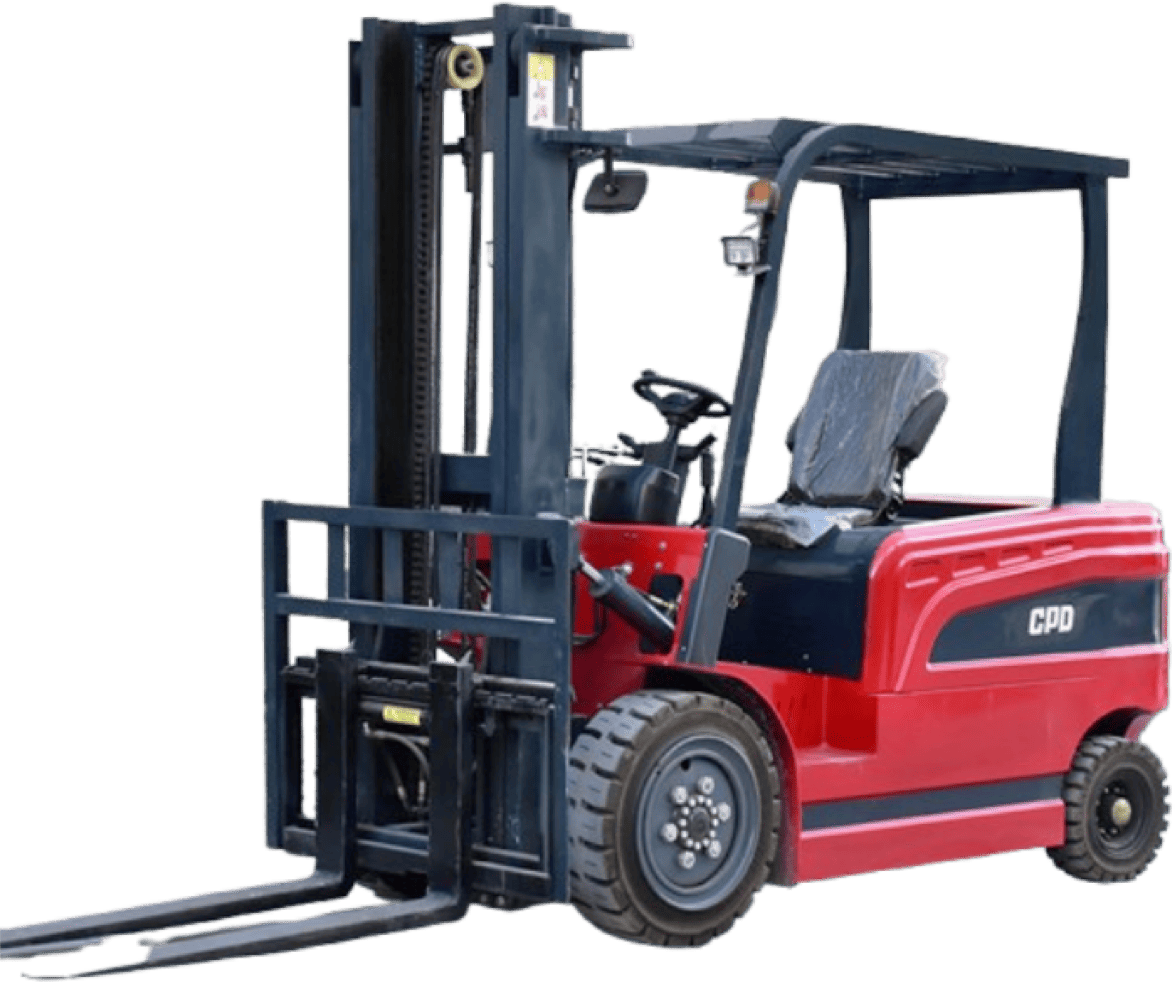
Traditional four-point electric forklifts adopt a "two front and two rear" four-wheel layout, forming a rectangular support surface. Their stability relies on a large support area, but this also results in a large turning radius (usually more than 2.5 meters), making it difficult to adapt to narrow aisles. In contrast, three-point electric forklifts adopt a three-point support layout of "two front and one rear" or "one front and two rear", where the centralized design of drive wheels and steering wheels is the key premise for their flexible operation in narrow aisles.
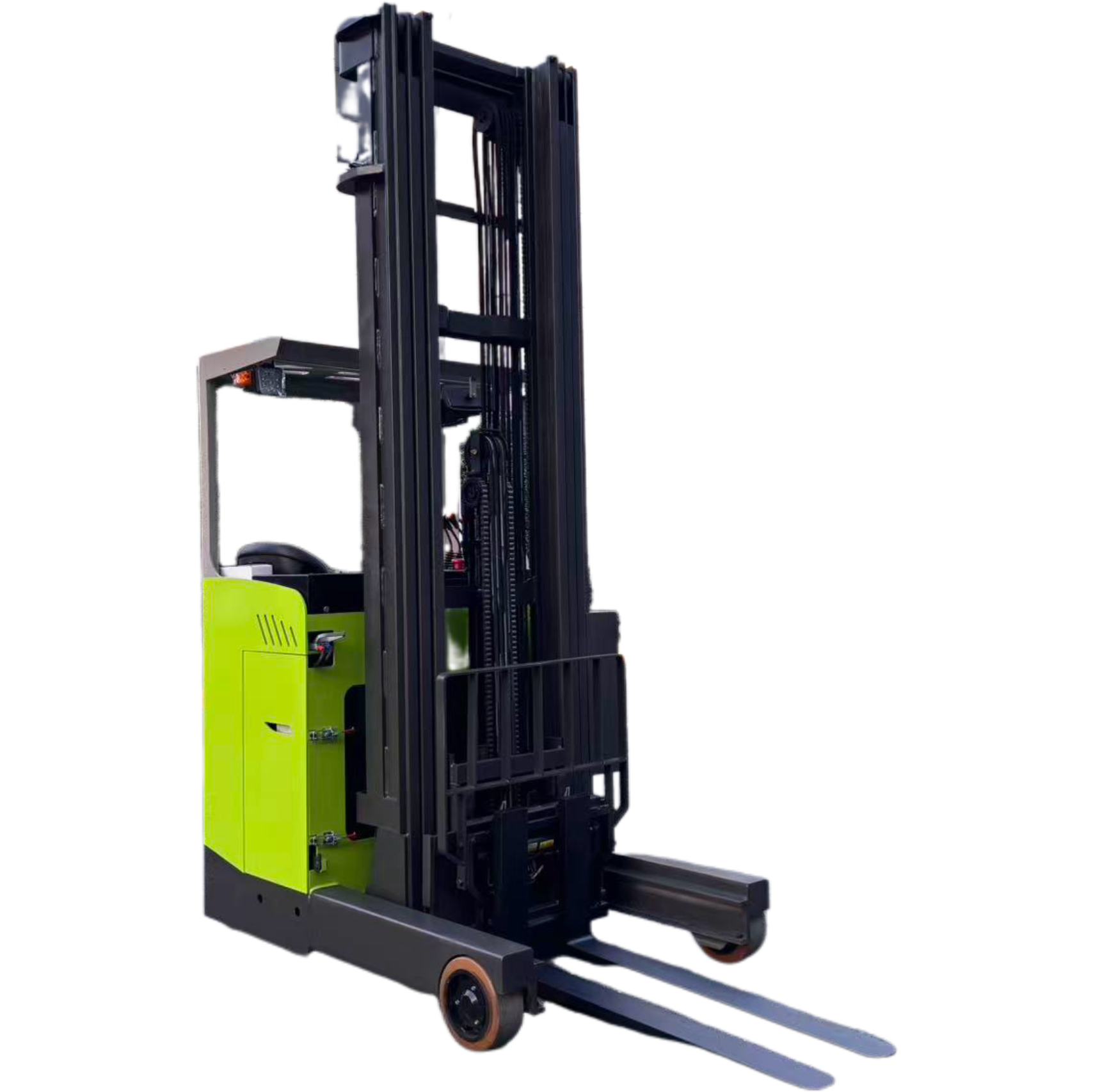
Taking the mainstream "two front and one rear" layout as an example: the two front load-bearing wheels are responsible for main load-bearing and guidance, and the single rear steering wheel can achieve 180° or even 360° in-place steering. The minimum turning radius can be reduced to 1.2-1.8 meters, which is only 60%-70% of that of four-point forklifts of the same tonnage. This structural design allows three-point electric forklifts to easily complete U-turns, right-angle turns and other actions in narrow aisles, and their stability stems from the mechanical balance system formed by the three-point support.
II. Stability Principle: Three Points Form a Surface, Precise Control of Mechanical Balance
The core of the stability of three-point electric forklifts lies in the mechanical characteristics of the "triangular support surface" – in plane mechanics, the triangle is the most stable structure. The support triangle area formed by the three fulcrums can evenly distribute the forklift's own weight and the load weight, forming a stable force balance. It can be analyzed from three specific dimensions:
1. Triangular Support Surface: Foundation of Dynamic Balance
The three wheel landing points of the three-point electric forklift form an isosceles triangular support surface. Whether the forklift is in driving, steering or lifting state, its center of gravity is always constrained within this triangular area – this is the core premise to ensure stability.
During the design process, engineers accurately calculate the side length and angle of the support triangle according to the rated load of the forklift (such as the mainstream 2.5-ton model): usually, the distance between the front wheels is the core base, and the landing point of the rear wheel is located at the vertex of the isosceles triangle, ensuring that the center of gravity of the forklift still falls within the triangular area during heavy-load lifting. Test data shows that although the support triangle area of 2.5-ton three-point electric forklifts is smaller than that of four-point forklifts, the static stability coefficient can reach more than 1.2 by optimizing the triangle ratio, which fully meets the needs of heavy-load operations.
2. Low Center of Gravity Design: Key to Reducing Rollover Risk
The core logic of stability is the matching relationship between "height of center of gravity" and "support surface" – the lower the center of gravity, the harder it is to break through the boundary of the support surface, and the smaller the rollover risk. Three-point electric forklifts adopt "global low center of gravity" optimization in design:
Heavy components such as battery packs and drive motors are placed at the bottom of the vehicle body close to the center of the support triangle, which not only reduces the height of the overall center of gravity (usually 15%-20% lower than that of four-point forklifts of the same tonnage) but also makes the distribution of the center of gravity more uniform; at the same time, the lifting mechanism of the mast and fork adopts a compact design, so that the center of gravity of the goods is as close to the support triangle area as possible during heavy loads, avoiding the decrease in stability caused by the offset of the center of gravity.
Especially when turning in narrow aisles, the low center of gravity design can effectively offset the impact of centrifugal force. When a 2.5-ton three-point forklift turns at a speed of 5km/h in a 2-meter narrow aisle, the rollover torque of the centrifugal force on the vehicle body is only 50% of that of a four-point forklift, which greatly improves the stability during the turning process.
3. Steering System Optimization: Core Guarantee of Dynamic Stability
The core challenge of operation in narrow aisles is the dynamic stability during the turning process. The steering system of three-point electric forklifts adopts a combined design of "single-wheel drive + precise electronic control", ensuring stability from two aspects:
First, controllable steering trajectory: the single rear steering wheel is driven by hydraulic pressure or electricity, which can achieve precise angle control. When turning, the vehicle body rotates around the center of the support triangle, avoiding the "tail swing" phenomenon of four-point forklifts and preventing collisions with shelves on both sides of the aisle; second, linkage between speed and steering: the intelligent electronic control system will real-time monitor the steering angle. When the steering angle exceeds 30°, it will automatically limit the driving speed (usually reduced to below 2km/h), offsetting the impact of centrifugal force through "slow steering" to ensure dynamic balance.
III. Scene Adaptation: How Does the Stability Principle Support Efficient Operation in Narrow Aisles?
The stability principle of three-point electric forklifts is ultimately embodied in the efficient operation capability in narrow aisle scenarios, specifically reflected in three core application advantages:
1. Passing Through Extremely Narrow Aisles, Improving Space Utilization
Based on the triangular support and small turning radius design, the 2.5-ton three-point electric forklift can achieve two-way passage in a 1.8-meter-wide aisle, which is more than 30% less than the minimum aisle width required by four-point forklifts (more than 2.5 meters). This means that the warehousing warehouse can reduce the aisle width and increase the number of shelf rows – calculated based on a 1000㎡ warehouse, the use of three-point forklifts can arrange 5-8 more rows of shelves, and the warehousing capacity can be increased by 15%-20%.
2. Heavy-Load Precise Operation, Balancing Efficiency and Safety
In the operation of accessing goods from high shelves in narrow aisles, the stability advantage of three-point electric forklifts is particularly obvious. When the lifting height reaches 4-5 meters (suitable for 2.5-ton load), the low center of gravity design and triangular support can effectively suppress the shaking of the vehicle body, and the positioning accuracy of the fork can reach ±5mm, avoiding collisions between goods and shelves; at the same time, the intelligent electronic control system will real-time monitor the load weight and lifting height. When the load is close to the rated value and the lifting height is high, it will automatically limit the steering speed to further ensure safety.
3. Flexible Scheduling in Small Spaces, Adapting to Multi-Scene Needs
In addition to standard narrow aisle warehousing, three-point electric forklifts can also adapt to more extreme space scenarios such as small workshops, underground warehouses, and the interior of containers. Their compact body design (length usually within 2.5 meters) and flexible steering ability can complete "point-to-point" precise handling in complex spaces without manual secondary transfer, and the operation efficiency is increased by more than 25%.
IV. Key Selection Criteria: Core Adaptation Scenarios for 2.5-Ton Three-Point Forklifts
It should be noted that the stability advantage of three-point electric forklifts is not "universal", and they are more suitable for specific scenarios: for mainstream 2.5-ton models, the most suitable scenarios are "indoor narrow aisles + medium-low lifting + high-frequency light to medium load", such as the transfer of small and medium-sized goods in e-commerce warehousing, the operation in clean areas of food and pharmaceutical warehouses, and the process connection in small manufacturing workshops.
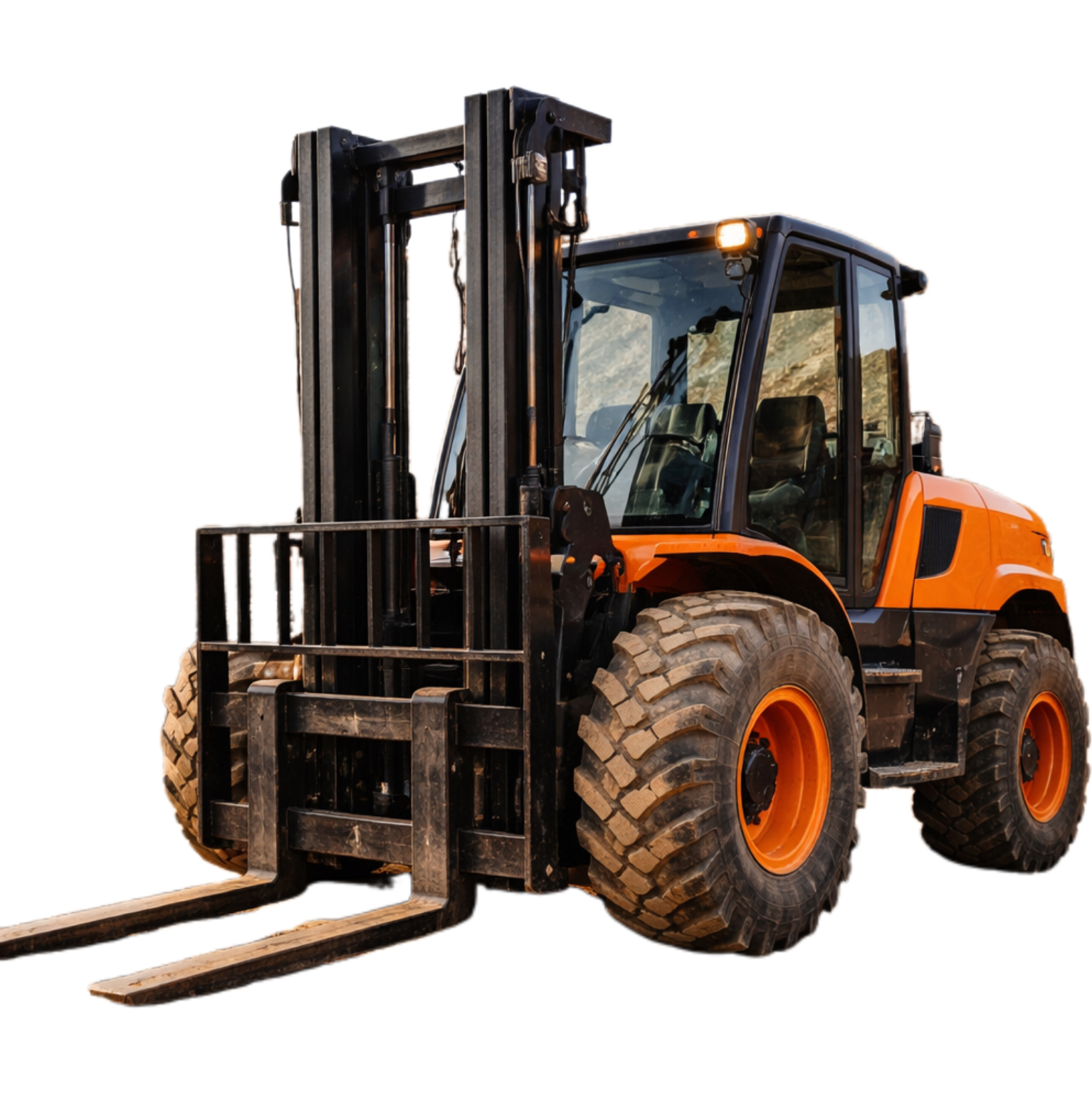
If it involves outdoor rough roads, long-term heavy-load climbing and other scenarios, the support area advantage of four-point forklifts is more obvious. Therefore, when selecting models, enterprises need to comprehensively judge according to the core parameters of their own operation scenarios such as aisle width, load weight, lifting height, and combined with the stability characteristics of three-point forklifts.
Conclusion: The Revolution of Efficient Space Utilization Driven by Structural Innovation
The reason why three-point electric forklifts can maneuver freely in narrow aisles is that they break the space limitation of traditional four-point forklifts through the stability principle of "triangular support + low center of gravity design + intelligent steering control". Its emergence not only solves the handling problem in narrow aisle scenarios but also promotes the transformation of the warehousing and logistics industry towards "high-density layout and high-efficiency operation".
With the development of intelligent warehousing technology, three-point electric forklifts will further integrate technologies such as unmanned navigation and automatic obstacle avoidance, and their stability principle will be further optimized through intelligent algorithms. In the future, in logistics scenarios where "space is value", the application range of three-point electric forklifts will continue to expand, becoming one of the core equipment to improve warehousing efficiency and reduce operating costs.
Our manager will contact you shortly.
To contact you about our products and services.


Copyright © Xingtai Beiqiang Machinery Manufacturing Factory. 2025.
Technical support:Echola