

The excavator, a symbol of modern construction, has a history as deep and transformative as the trenches it digs. Its evolution from rudimentary manpower to steam, diesel, and now digital power mirrors the story of industrialization itself. Looking forward, it stands on the cusp of an even more revolutionary shift. This article traces that journey and explores the future of this indispensable machine.
Part 1: The Past – A Legacy of Mechanical Ingenuity
The excavator’s roots lie in the steam shovel. The first widely recognized machine was William Smith Otis’s steam-powered, rail-mounted "Otis Steam Shovel" patented in 1839. These early behemoths were crucial to the Industrial Revolution, building canals (like the Panama Canal) and railroads. They were cable-operated, using a system of winches and ropes to move the boom and bucket, limiting precision and force.
The transformative leap came with the invention of practical hydraulic systems in the mid-20th century. The development of reliable high-pressure seals and pumps in the post-WWII era allowed for direct hydraulic actuation. Companies like Poclain in France (inventing the first fully hydraulic excavator in 1951) and others pioneered machines where fluid power replaced cables. This enabled:
Greater Force: Hydraulic cylinders provided much higher breakout power.
Infinitely Better Control: Smooth, proportional joystick control revolutionized precision.
The 360-Degree Swing: The fully rotating upper house became standard, drastically improving versatility over the limited swing of early shovels.
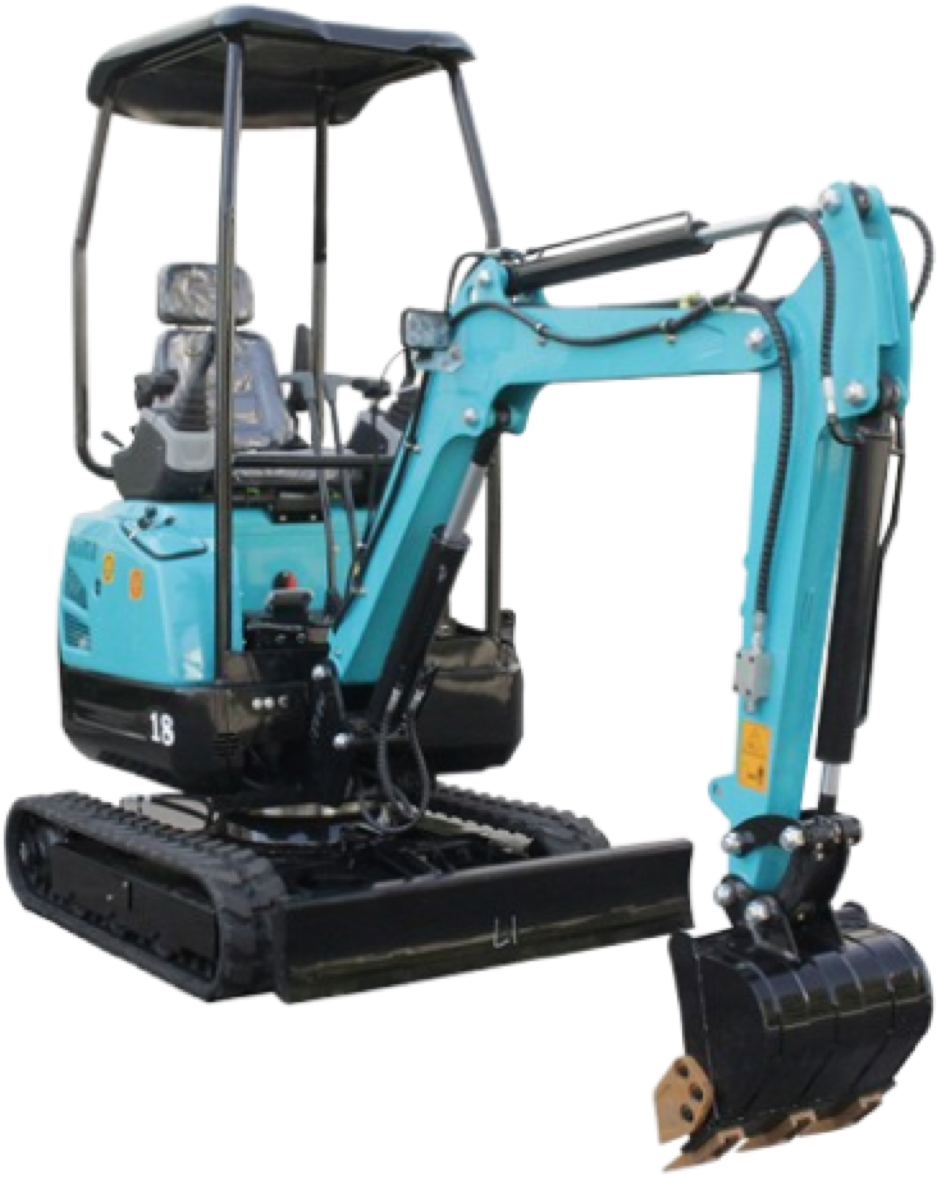
The subsequent decades saw refinement in power (via more efficient diesel engines), durability, operator comfort, and the proliferation of different sizes—from massive mining giants to the compact mini excavator, which emerged in the 1970s and democratized machine digging for smaller contractors.
Part 2: The Present – The Age of Intelligence and Efficiency
Today’s excavator is a computer-augmented powerhouse. While the fundamental hydraulic principle remains, it is now wrapped in layers of technology:
Advanced Hydraulics: Load-sensing, variable-displacement systems that deliver power only when and where needed, cutting fuel waste.
Operator-Assist Technology: Automated functions like boom buffering (to prevent material spillage), swing assist, and powertrain modes (Eco/Power) that enhance efficiency and reduce operator workload.
Grade Control & 3D Machine Control: GPS and GNSS systems allow the excavator’s bucket to follow a pre-loaded digital site plan with centimeter accuracy, eliminating stakes and survey checks.
Connectivity (Telematics): Machines constantly stream data on location, fuel consumption, idle time, and component health to the cloud, enabling predictive maintenance and fleet optimization.
Part 3: The Future – Autonomous, Electric, and Sustainable
The next chapter is being written now, focusing on three interconnected trends:
Electrification: The shift from diesel is accelerating. Battery-electric excavators offer zero tailpipe emissions, drastically lower noise, reduced operating costs, and simpler maintenance. They are ideal for urban projects, indoor work, and sites with strict emissions regulations. The challenge remains battery energy density and charging infrastructure for large machines.
Automation & Autonomy: From semi-autonomous functions (like repetitive trenching cycles) to fully autonomous excavators operating in controlled environments like mines or landfills, AI and advanced sensors (LiDAR, cameras) are taking over. These machines can work 24/7, follow precise digital instructions, and enhance safety by removing operators from hazardous areas.
Enhanced Human-Machine Interaction: The role of the operator is evolving from a manual controller to a site manager. Future cabs may feature augmented reality (AR) displays that overlay buried utilities or design models onto the real-world view. Advanced joysticks will provide haptic feedback, "feeling" the resistance of the ground.
Conclusion: An Unstoppable Evolution
The excavator’s journey from the coal-fired steam shovels of the 1800s to today’s silent, electric, and semi-intelligent machines is a testament to human innovation. It has continually adapted to meet the demands of progress—whether building continents-spanning infrastructure or delicately landscaping a city park. As we face global challenges like climate change and labor shortages, the excavator is once again evolving. Its future lies not just in moving earth, but in doing so autonomously, efficiently, and sustainably, solidifying its place as a pivotal tool in shaping the world of tomorrow. The age of the smart, silent, and self-aware excavator has begun.
Our manager will contact you shortly.
To contact you about our products and services.


Copyright © Xingtai Beiqiang Machinery Manufacturing Factory. 2025.
Technical support:Echola